How Much Does Decoupling Cost in Singapore?

Quick answer:

Decoupling costs buyer’s stamp duty on the transferred share, two sets of legal fees, a valuation and any loan charges. Seller’s stamp duty applies only inside the holding period, and ABSD only in specific cases.

The total moves with the share’s value. The CPF refund isn’t a cost: it goes back into your own CPF account.

Still checking whether decoupling applies to you? Start with what decoupling is and who can do it.

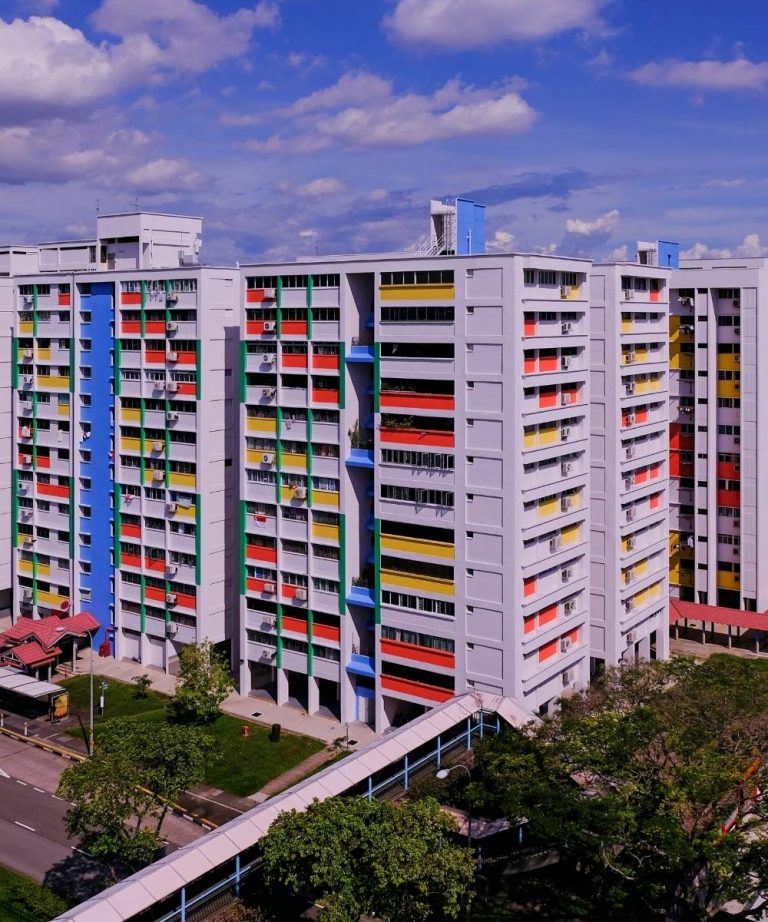
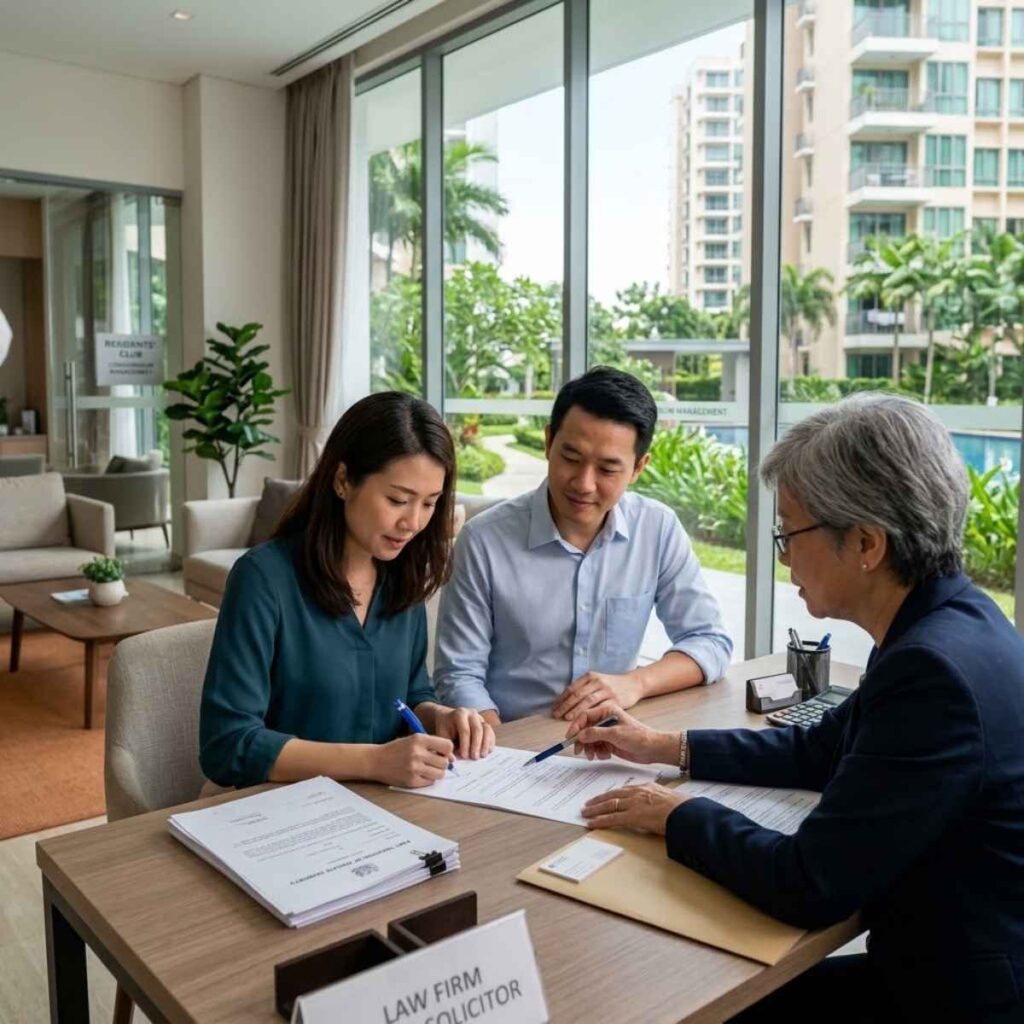
Private condominium in Singapore where one co

Table of Contents

Decoupling cost breakdown: what you actually pay

The largest cost in most decouplings is buyer’s stamp duty on the share being transferred. Everything else is smaller, and two duties apply only in certain cases.

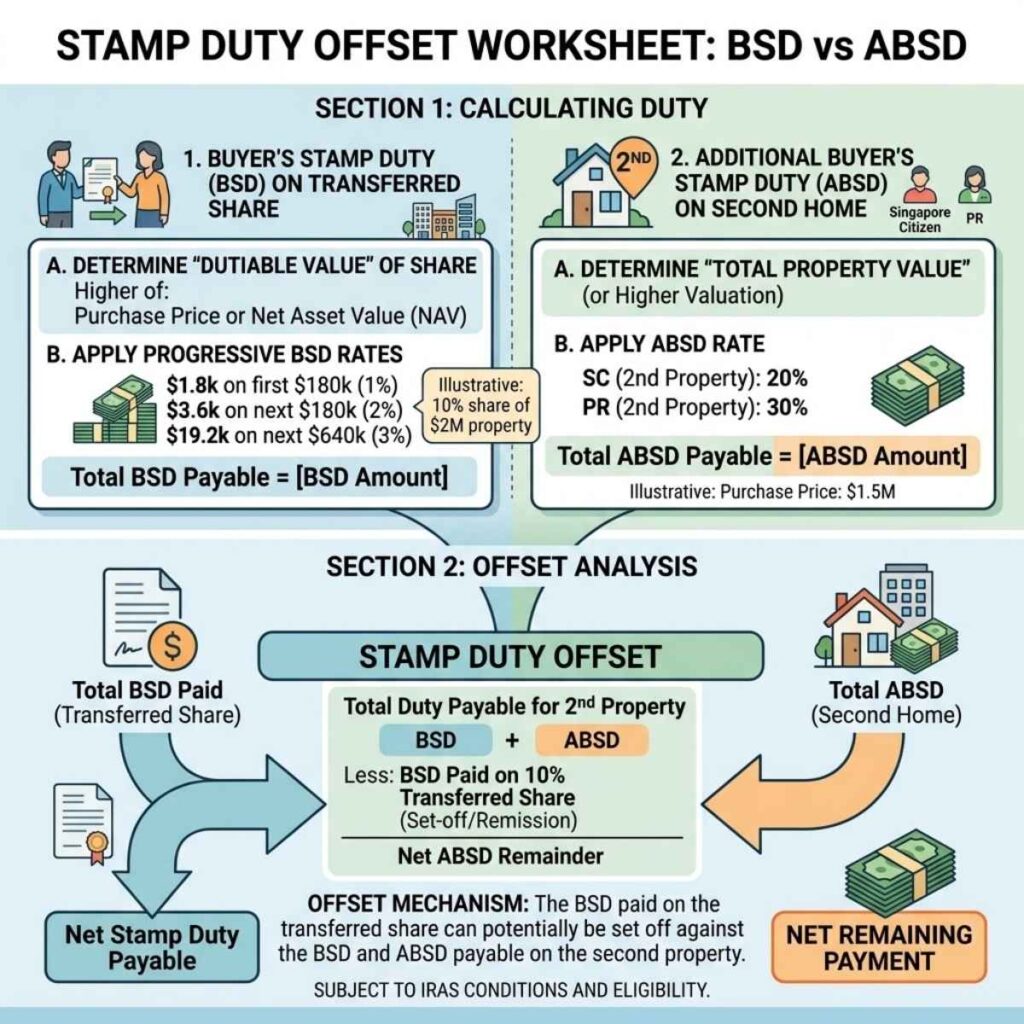
Buyer's stamp duty on the transferred share

The staying owner pays BSD on the share they take over.

IRAS assesses BSD on the higher of the price or the market value, so a transfer priced below market does not lower the duty.

The tiers apply to the share’s value, not the whole property.

Buyer's stamp duty (BSD) tiers for residential property, applied to the transferred share's value
Portion of the share's valueBSD rate
First S$180,0001.0%
Next S$180,0002.0%
Next S$640,0003.0%
Next S$500,0004.0%
Next S$1,500,0005.0%
Above S$3,000,0006.0%

Rates from 15 Feb 2023. Checked October 2026 against IRAS stamp duty rates.

ABSD, only in specific cases

A Singapore Citizen who owns only this home pays no ABSD on taking over the co-owner’s share, IRAS confirms.

ABSD applies if the staying owner already holds another residential property.

A permanent resident pays ABSD on the share, which IRAS remits down to the first-home rate.

Check your profile on the stamp duty calculator.

Seller's stamp duty, only inside the holding period

The exiting owner pays SSD only if their share changes hands within the holding period.

IRAS counts each part from the date it was acquired, so the clock runs from when the exiting owner bought in.

Seller's stamp duty (SSD) rates for residential property, by holding period and purchase date
Holding periodBought 11 Mar 2017 to 3 Jul 2025Bought on or after 4 Jul 2025
Up to 1 year12.0%16.0%
1 to 2 years8.0%12.0%
2 to 3 years4.0%8.0%
3 to 4 years0.0%4.0%
Over 4 years0.0%0.0%

Checked October 2026 against MOF and IRAS.

Legal fees, valuation and loan costs

You pay two sets of legal fees. Singapore’s conveyancing rules generally stop one law firm acting for both sides of the same sale, so each owner appoints their own.

Ask two firms for quotes.

A valuation sets the market value that both duties and the CPF sums rest on.

If the loan is still in its lock-in period, the bank may charge a redemption fee.

The staying owner then refinances in one name and must qualify alone; the affordability calculator shows where you stand.

Is the CPF refund a cost of decoupling?

No. The CPF refund is the exiting owner’s own money going back into their own CPF account.

CPF requires the amount used, plus accrued interest, to be refunded when a share is sold.

Back in the Ordinary Account it keeps earning, at 2.5% a year from October to December 2026, and can be used again for the next home within CPF’s rules.

It is retirement money returning to where it belongs.

What the refund changes is cash in hand.

The exiting owner receives the share price, less their part of the loan, less the CPF refund.

A large refund can mean less cash for the next downpayment, even though nothing has been lost.

If the proceeds fall short of the full refund, a sale at market value doesn’t need a cash top-up; CPF applies a formula instead. So the refund belongs in the plan for the next move, not on the cost list.
Is decoupling worth it? How to work out the break-even

In cost terms, decoupling is worth it when the friction of the transfer is smaller than the ABSD it removes from the next purchase.

That answer is specific, not general.

It moves with the share’s valuation, the loan against it, how much CPF each owner used, and the price of the next home.

Illustrative decoupling example: costs on a 50% share, set against the ABSD on a second home
ItemIllustrative figure
Condo valuationS$2,000,000
Share transferred (50%)S$1,000,000
BSD on the shareS$24,600
ABSD (citizen, no other home)S$0
SSD (bought 2018)S$0
Legal fees, valuation, loan chargesYour quotes
ABSD otherwise due on a S$1,500,000 second homeS$300,000

Note: These figures are illustrative and opinion-based, produced with calculation tools — not a valuation or financial advice. Human error is possible; verify against official sources before relying on them.

The BSD is 1.0% of S$180,000, 2.0% of the next S$180,000 and 3.0% of the remaining S$640,000.

The S$300,000 is 20% ABSD on a citizen’s second home.

Here the duty is a small fraction of the ABSD removed.

The second test is funding: whether the exiting owner’s cash and restored CPF cover the next downpayment, and whether each owner passes the loan test alone.

IRAS assesses the duty and your conveyancing lawyer handles the transfer. My part is the property side: financing, which asset, the order of moves and the exit.

Decoupling is one route. Here's the other.

Selling the home and buying two also frees a name, and it suits different owners.

Neither route frees more by default.

Which releases more depends on the share’s valuation, the loan against it and how much CPF each owner used, and not every owner used CPF.

Run the sums on both before choosing.

Decoupling or selling one and buying two: how the two routes differ
FactorDecoupleSell one, buy two
What changes handsOne shareThe whole property
The homeKeep one you value, which may be hard to find againChange size, location or age
DisruptionNo sale commission, no moveA sale, a purchase and a move
Next loansStaying owner refinances aloneTwo names, two first housing loans

The full side-by-side is on our sell one buy two guide.

Should you decouple or sell?

Now that the costs are on paper, the next question is whether this is a home you want to keep.

The short self-assessment below sorts the factors that point each way, so you can see where your situation leans.

Two short steps. First, whether each route can be financed. Then, where your reasons for moving actually sit.

Step 1 — Can each route be financed?
Can one income alone support the loan on the home you want?

Banks cap total monthly debt repayments at 55% of gross monthly income.

If you kept the property and bought out your spouse's share, would the buyout fit within a 75% loan and the remaining owner's income limits?

Banks cap total monthly debt repayments at 55% of gross monthly income.

Do you already have a firm buyer for your current home?
Step 2 — Where do your reasons sit?
The condition and age of the place is starting to show
The facilities no longer suit how we live
The view or the stack is not what we want long-term
The place is too big for us now
The place is too small for us now
The area has not grown the way we expected
The value has been flat for a while
Moving would disrupt school, work or family arrangements
I am attached to this home in a way that is hard to put a number on
Replacing this property would cost more than it is worth to us
I would buy this property again today, at today's price

Answer the three questions in Step 1 to continue.

Note: This reflects the answers you gave, not advice. It does not value your property or assess your finances.

About the author

Rick Long is an Associate Senior Division Director at Huttons Asia.

Through YouHome.sg — Right Property Matters — he shares the frameworks, tools and field experience behind his advisory work, helping Singapore buyers and sellers across HDB, EC and private residential decisions with structured, calm, next-step guidance.

CEA Reg. R026818Z · Huttons Asia · YouHome.sg

For more Singapore property planning tips, follow me on Instagram.

@agent_rick_long

Your support means a lot.

Decoupling next steps: five figures to gather

Five figures decide what decoupling costs you and whether it breaks even. Gather these before you speak to a lawyer or a bank:

  • A recent valuation of the whole property
  • The outstanding loan, and whether it is still in its lock-in period
  • How much CPF each owner used, plus accrued interest (shown on your CPF home ownership dashboard)
  • The date you bought, which decides any SSD
  • The price of the next home you have in mind

With those five in hand, the sum is short work — and the decision stays yours.

Guide read: 20% complete.

What's left is the part no guide can do — your own figures. Send me the valuation and your outstanding loan, and I'll work out whether it breaks even.

YOUR PROGRESS 20%

✓ Guide read — you've done the groundwork.

2. Which figures do you have to hand? (optional)

Tap any you already have. Tap again to remove. Nothing is shared until you send.

3. How much time shall we set aside?
4. Pick a day to meet Rick
5. What time of day?
Request sent — 100% ✓
Rick will confirm the session with you directly on WhatsApp.
If WhatsApp didn't open, tap here

This sends a session request via your own WhatsApp — Rick confirms the timing and meeting place with you personally. Nothing is stored on this page.

Common questions about decoupling costs

Can we transfer the share at a lower price to cut the stamp duty?

No. IRAS assesses BSD on the higher of the price or the market value, so a lower price doesn't lower the duty. SSD on the exiting owner's share works the same way.

Do we need two lawyers to decouple?

Yes. Singapore's conveyancing rules generally stop one firm acting for both the buyer and the seller in the same sale, so each owner appoints their own. Get quotes from two firms.

Does the CPF refund come back to us in cash?

No. It goes back into the exiting owner's CPF account with accrued interest, where it keeps earning and can be used toward the next home within CPF's rules. Only what's left after the loan and the refund is paid in cash.

These figures are illustrative and opinion-based, produced with calculation tools — not a valuation or financial advice. Human error is possible; verify against official sources before relying on them.

What My Clients Say | Genuine Experiences

Real stories, real experiences—because your journey deserves nothing less than the best.

Awards and Accolades

Rick Long · Associate Senior Division Director, Huttons Asia · CEA R026818Z

Rick Long is an Associate Senior Division Director at Huttons Asia (CEA Reg. R026818Z). Through YouHome.sg — Right Property Matters — he shares the frameworks, tools and field experience behind his advisory work, helping Singapore buyers and sellers across HDB, EC and private residential decisions with structured, calm, next-step guidance.

Leave a Reply