Freehold vs Leasehold Condo in Singapore: Which Is Better?

Quick answer:

Neither tenure is better on its own. A freehold condo has no lease to run down. A 99-year leasehold does, slowly at first and faster later. In the early decades, location, entry price and project size usually separate two projects more than tenure does.

Tenure matters more as the lease shortens, and the region changes the answer.

This guide covers private condos. For HDB flats, see HDB lease decay.

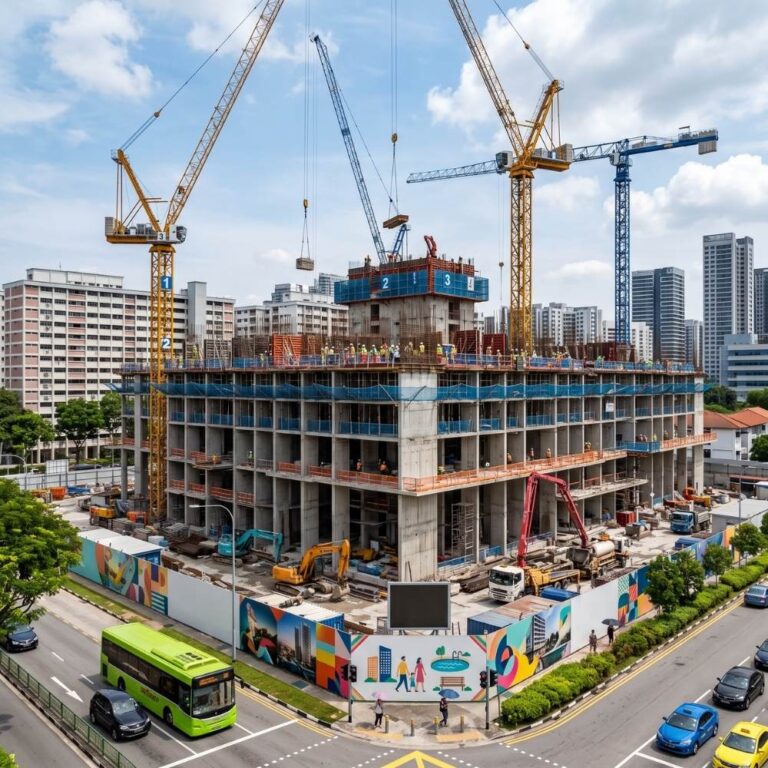
Freehold and 99-year leasehold condominium blocks in Singapore, the two tenures compared in this guide

Table of Contents

What is the difference between freehold and leasehold?

Freehold has no end date. A leasehold runs for a fixed term from the lease start date, not your purchase date, then returns to the State.

Singapore private homes come in three tenures:
Tenure How long it lasts At the end CPF age-95 test
Freehold No end date Nothing expires Always met
999-year leasehold 999 years from lease start Returns to the State, centuries away Met in practice
99-year leasehold 99 years from lease start Returns to the State Met while the lease covers the youngest buyer to 95

Source for the CPF column: CPF Board, using CPF when the lease does not cover the youngest buyer to age 95.

Is freehold a better buy than leasehold?

Not as a rule: in our read of URA resale data from 2022 to 2026, freehold condos rose more in the Core Central Region (CCR), while 99-year leaseholds rose as much or more in the Rest of Central Region (RCR) and Outside Central Region (OCR).

Median change in resale price per square foot, calendar 2022 vs Sep 2025–Aug 2026, by region and tenure. Years of lease left are measured as at 2026, and the number of projects is in brackets:
Region Freehold / 999-yr 99-yr, 83+ yrs left 99-yr, 68–82 yrs left 99-yr, 67 or fewer yrs left
CCRCore Central Region +9.3% (55) −6.9% (8)* +4.6% (20) +6.0% (6)*
RCRRest of Central Region +13.8% (52) +17.3% (23) +20.7% (33) +17.0% (11)
OCROutside Central Region +17.3% (67) +17.6% (85) +23.5% (74) +17.3% (20)

*Only eight and six projects sit behind these two cells. The −6.9% even turns positive when we ask for more sales per project, so it is too thin to build anything on.

Source: YouHome.sg analysis of URA Data Service private residential transactions, pulled 22 Sep 2026. We also ran it with a three-resale minimum, and against calendar 2025: the regional pattern held both times.

How we worked this out: for each project we took the middle resale psf in 2022 — the median — then the middle psf in the latest 12 months, and compared the two.

Then we took the middle project in each cell.

We use the middle figure rather than the average because one unusual unit, a penthouse or a ground-floor unit with a large terrace, can pull an average a long way.

A project counts only if it sold at least five times in each period.

Resales of private condominiums and apartments only: new sales, sub-sales, bulk deals and executive condominiums (ECs) are all left out, as is URA’s catch-all “residential apartments” label, which groups unrelated buildings.

The freehold column also holds other 900-year-plus leases.


Limits: this is one market phase, not a long-run rule, and the two starred cells are thin.

Tenure is mixed up with location, age and entry price, and this is price change, not profit. The transactions are URA’s; the groupings, the bands and the reading of them are our own research, so another method will give other figures.
Kovan Residences vs D'Pavilion: what separated them?

Tenure didn’t separate them: in Navis Atlas’s PrimeKey case study both scored 5 out of 5 on tenure at their 2008 launch, and the gaps were MRT distance, project size and rental yield.

Kovan Residences is a 99-year leasehold and D’Pavilion is freehold, both in District 19, a few minutes apart.

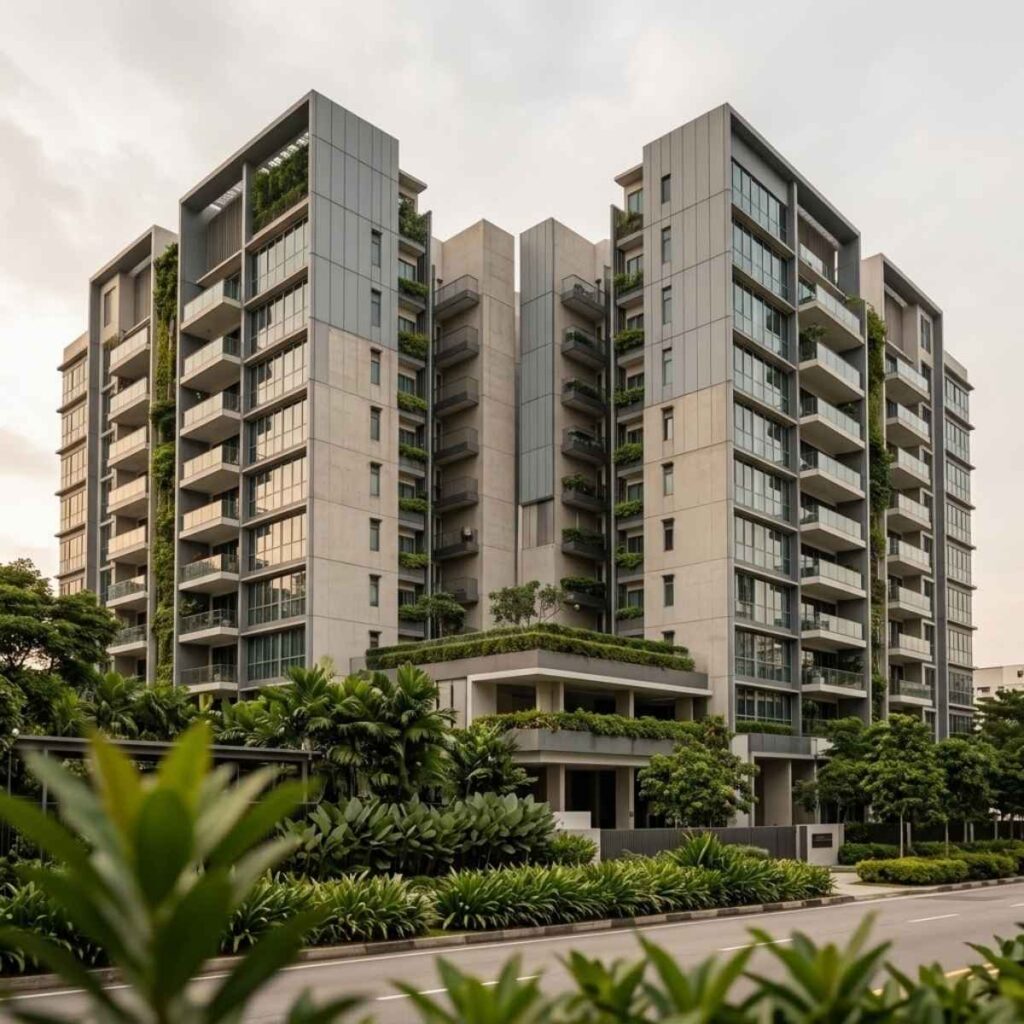
Kovan Residences and D'Pavilion, a 99-year leasehold and a freehold condo in District 19

Over a longer window, the gap widened.

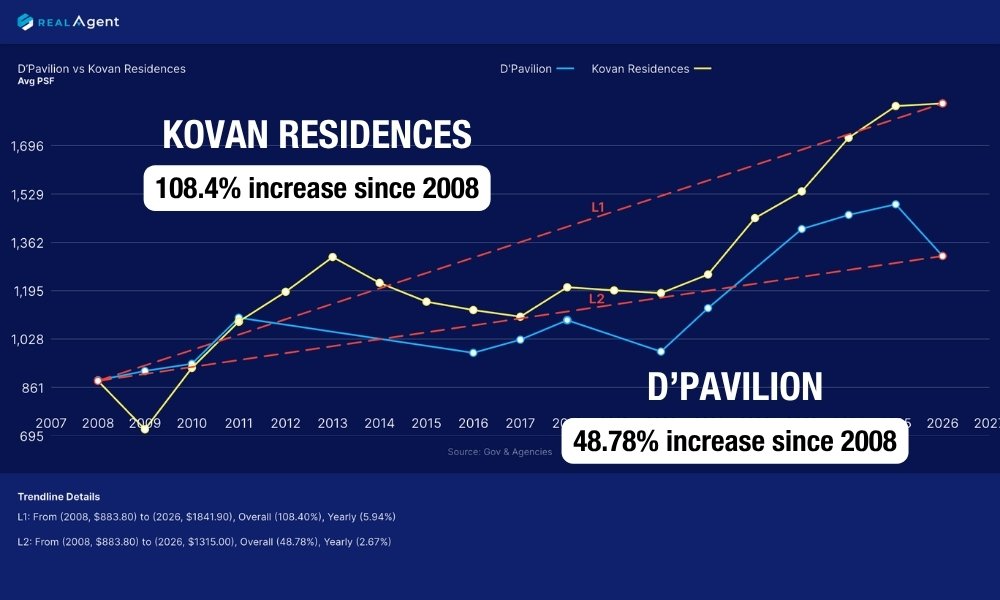
From 2008 to 2026, average resale psf at Kovan Residences rose about 108%, against about 49% at D’Pavilion.

Two things to hold alongside that.

This chart uses yearly averages rather than the medians used in the table above, so single unusual sales move it more.

And D’Pavilion transacts rarely — nine resales in the last five years — so several of its yearly points rest on one or two sales.

The direction is clear; the precision is not.

Navis's retrospective 2008 PrimeKey factor scores, each out of 5:
Factor Kovan Residences D'Pavilion
MRT54
Growth hotspot11
GLS / en bloc55
Project size51
Tenure55
Primary schools23
MOP cluster55
Rental yield53
Total33 / 4027 / 40

Scoring method: PrimeKey analysis.

Worth noting how those scores were set.

Navis scored both projects as they would have in 2008, on what was knowable at the time — station distance, project size, the rental market, the stock of nearby flats reaching their MOP.

The project that scored higher is the one that went on to perform.

One pair cannot prove a scoring tool works, but it does show what the exercise is for: weighing a purchase on the factors that tend to matter years later, which is what a buyer with resale in mind is really trying to do.

Scoring method: PrimeKey analysis.

URA’s records show the same thinness. Kovan Residences recorded 95 resales from September 2021 to September 2026, with a 2025 median of S$1,838 psf across 20 sales. D’Pavilion recorded 9, none in 2022, and a 2025 median of S$1,494 psf from two sales.

Fewer resales can mean owners who are happy to stay, or fewer buyers.

Either way, there is less price evidence. One comparison illustrates a pattern; it does not prove cause.

One factor you can judge for yourself

Layout belongs there too. It is the one thing on the list you can feel for yourself, standing in the room.

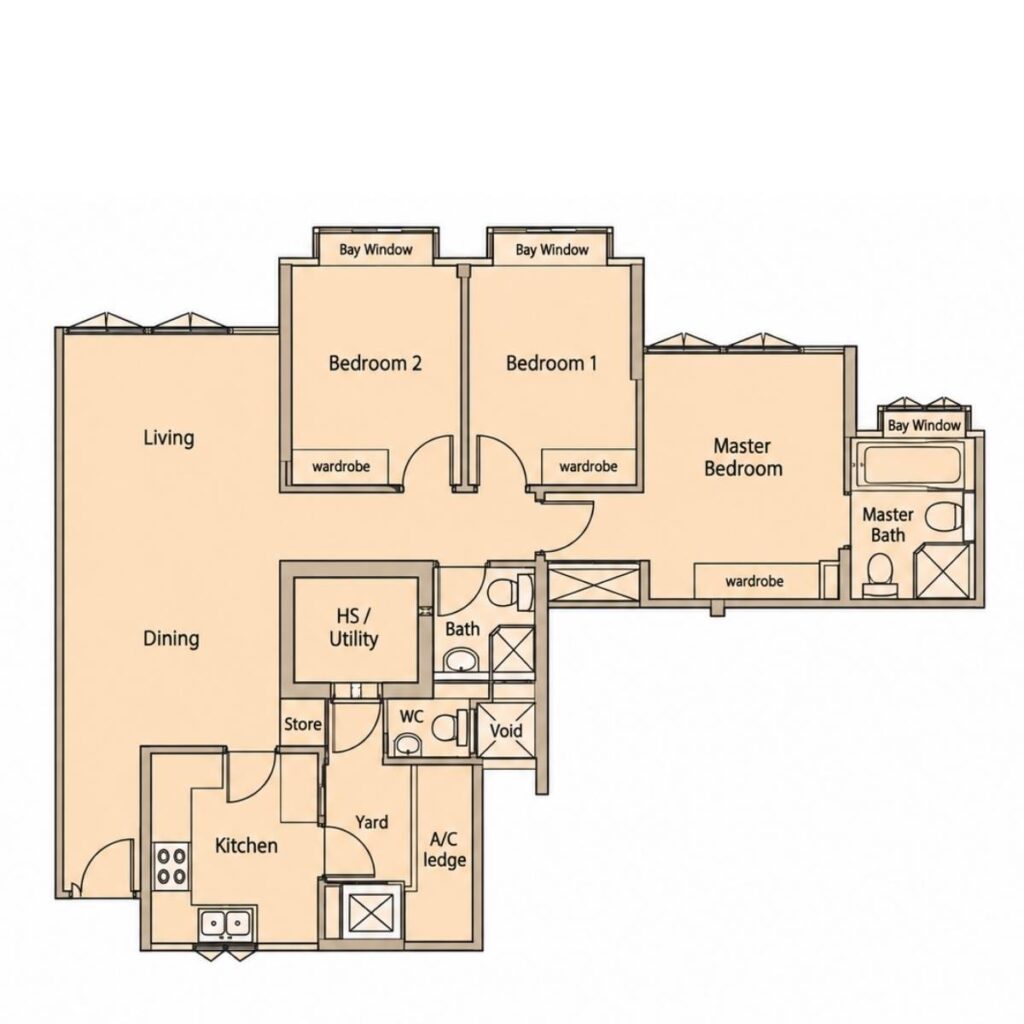
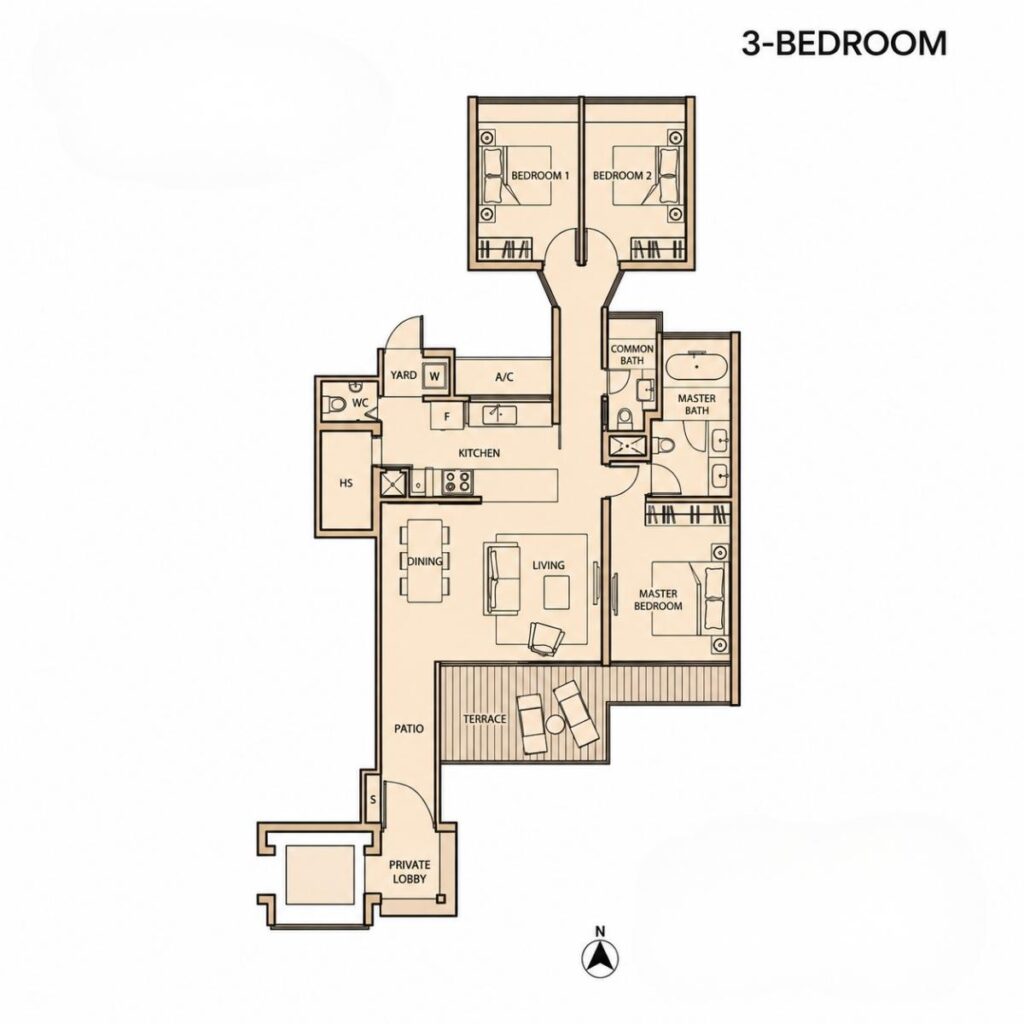
Two units can carry the same bedroom count and live very differently.

Floor plan of a 3-bedroom condominium unit with bay windows in both bedrooms, the master bedroom and the master bath, plus a void, an a/c ledge and a yard
Bay windows, a void and an a/c ledge all count in the floor area you pay for.
Floor plan of a 3-bedroom condominium unit where a private lobby and corridor lead to a separate two-bedroom wing, with a terrace and patio off the living area
A private lobby, a corridor and a terrace — space that shapes how the home lives.

The first fits bay windows to all three bedrooms, plus a void and an a/c ledge.

Each counts in the floor area you pay for, and none of it holds furniture.

The second spends its area differently: a private lobby and a corridor to reach the two bedrooms, and a terrace off the living room.

Neither is wrong. They suit different buyers, and buyers notice at the viewing.

When does tenure start to matter?

Tenure starts to matter when the remaining lease gets too short for your future buyer to use CPF in full. That happens when the lease no longer covers the youngest buyer to age 95.

For a buyer in their mid-30s, that means fewer than about 60 years left. Before that, location, entry price and project size usually separate projects more.

Will your buyer's CPF still work?

Two steps, no formula. First, the years left on the lease today; a listing usually states it.

Second, take off however long you plan to hold. That is what is left when you sell.

Years left on the lease when you sell, and the youngest buyer it fully covers to age 95
Years left when you sell Fully covers a buyer aged
7025 and above
6035 and above
5045 and above
4055 and above

Below that line, the buyer’s CPF use is pro-rated while at least 20 years remain.

Take Kovan Residences as an example. Its lease started in 2007, so about 80 years are left in 2026.

Hold 20 years and you sell with 60 left, covering a buyer of 35 or older; hold 30 and you sell with 50 left, covering only 45 and above.

SLA’s leasehold table, known as Bala’s Table, draws the same shape: 96% of freehold value with 99 years left, 80% at 60 and 60% at 30.

Our region table agrees: a gradual lag, not a cliff.

More in Bala’s Curve.

What moves the threshold

  • Your likely buyer. Younger buyers need more years left.

  • Your holding period. Your sale year sets the test, which makes it part of your property exit strategy.

  • Bank lending on short leases. Each bank sets its own practice, so check with your banker.

  • Redevelopment cost. Redeveloping an old leasehold site means paying the State to top the lease up to 99 years, under SLA’s Land Betterment Charge rules.
    Shorter leases cost more to top up (see the FAQ).

  • Region. In our data, tenure showed up most in the CCR.

Should you buy leasehold over freehold? Start with these six questions

It depends on six answers only you can give. None has a pass mark; each can point either way.

  1. How long do you plan to hold?
  2. Is this a home you want to pass on to the next generation?
  3. How many years will be left when you sell, and which buyers does that cover?
  4. What premium are you paying for freehold here, against nearby transacted psf?
  5. Which region is it in?
  6. How easily does the project resell? Fewer recent resales means less price evidence.
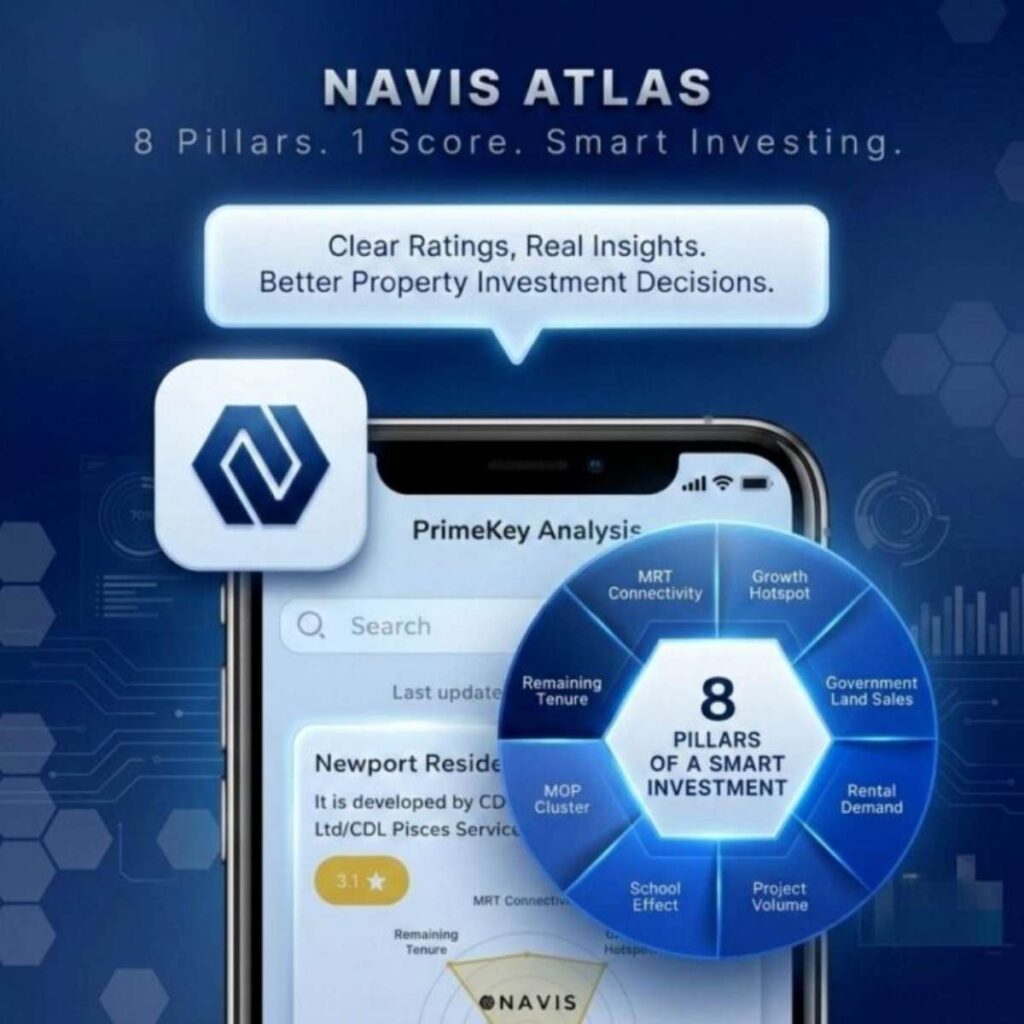
Navis Atlas PrimeKey diagram showing its eight scoring factors — MRT connectivity, growth hotspot, government land sales, rental demand, project volume, school effect, MOP cluster and remaining tenure
PrimeKey's eight factors.

Those six are about you.

The project itself is judged on a separate set: Navis Atlas’s PrimeKey Tool scores eight factors, tenure among them, alongside MRT distance, project size, growth plans, collective sale potential, primary schools, nearby MOP flats and rental demand.

See how the scoring works in PrimeKey analysis.

The two sides meet in the weighting.

Your answers decide which project factors matter most to you. Holding twenty years with children to settle, schools and project size carry more weight, and a few years of lease matter less.

Holding five and selling to a younger buyer, MRT distance, rental demand and resale volume carry more, and the lease matters more too.

Tenure is one factor of eight, and how heavily it weighs is set by your own six answers — which is why two buyers can look at the same project and both be right.

About the author

Rick Long is an Associate Senior Division Director at Huttons Asia.

Through YouHome.sg — Right Property Matters — he shares the frameworks, tools and field experience behind his advisory work, helping Singapore buyers and sellers across HDB, EC and private residential decisions with structured, calm, next-step guidance.

CEA Reg. R026818Z · Huttons Asia · YouHome.sg

For more Singapore property planning tips, follow me on Instagram.

@agent_rick_long

Your support means a lot.

Before you choose freehold or leasehold

Tenure is a slow factor that earns more weight as the lease runs down, in your region and your sale year. Bring your shortlist, and we can run the test together.

Guide read: 20% complete.

What's left is the part no guide can do — how many years your own lease will have left in the year you plan to sell, and what the freehold next door is really charging you for. Bring your shortlist and we'll run it together.

YOUR PROGRESS 20%

✓ Guide read — you've done the groundwork.

2. Which factors matter most to you? (optional)

Pick up to three, in the order you'd rank them. Tap again to remove.

3. How much time shall we set aside?
4. Pick a day to meet Rick
5. What time of day?
Request sent — 100% ✓
Rick will confirm the session with you directly on WhatsApp.
If WhatsApp didn't open, tap here

This sends a session request via your own WhatsApp — Rick confirms the timing and meeting place with you personally. Nothing is stored on this page.

Freehold vs leasehold: frequently asked questions

Can the government take back a freehold property?

Yes. Under the Land Acquisition Act, the State can acquire private land, freehold included, for public purposes, paying market-value compensation.

Can a freehold condo go en bloc?

Yes. Consent depends on the building's age, not its tenure. Today a collective sale needs 90% consent under 10 years old, 80% from 10 years.

The Land Titles (Strata) (Amendment) Bill 2026, moved and passed at its Second Reading on 8 September 2026, adds 70% for developments aged 40 to 59 and 65% for 60 and above, from a commencement date not yet announced. Sales already collecting signatures stay under the old rules, with a route for older developments to switch after commencement.

Is 999-year leasehold the same as freehold?

Not legally, but close in practice. The lease ends centuries away, so it clears CPF's age-95 test and any loan term. Duchess Residences, for example, holds a 999-year lease from 1875, per URA records.

Is it true you can't use CPF on a leasehold condo with less than 60 years left?

No. If the lease covers the youngest buyer to age 95, CPF can be used in full. If not, CPF use is pro-rated, and it stops only below 20 years remaining. The CPF housing usage calculator gives your exact figure.

What happens to a leasehold condo when the lease runs out?

The land and building return to the State. Before then, some are sold en bloc and the buyer pays to top the lease up to 99 years. No development is guaranteed that outcome.

How do I check how many years are left on a condo's lease?

Count the years since the lease start year, not the launch or completion year, and take them from 99. Kovan Residences, for example, launched in 2008 on a lease from 2007. The lease start year is on the title and in the sale documents, and your agent or conveyancing lawyer can confirm it.

These figures are illustrative and opinion-based, produced with calculation tools — not a valuation or financial advice. Human error is possible; verify against official sources before relying on them.

What My Clients Say | Genuine Experiences

Real stories, real experiences—because your journey deserves nothing less than the best.

Awards and Accolades

Rick Long · Associate Senior Division Director, Huttons Asia · CEA R026818Z

Rick Long is an Associate Senior Division Director at Huttons Asia (CEA Reg. R026818Z). Through YouHome.sg — Right Property Matters — he shares the frameworks, tools and field experience behind his advisory work, helping Singapore buyers and sellers across HDB, EC and private residential decisions with structured, calm, next-step guidance.

Leave a Reply