Can I Afford to Upgrade to a Condo or EC?

Quick answer: Whether you can afford to upgrade from an HDB to a condo or EC in Singapore depends on four numbers, not just loan approval — your sale proceeds, your CPF refund (principal + 2.5% accrued interest, which returns to your CPF OA, not cash), your borrowing range under TDSR (55%) or MSR (30% for EC), and your monthly comfort after the move.

A condo allows a larger loan because MSR doesn’t cap it; an EC usually has a lower entry price but stricter eligibility and a longer hold.

The steady first step is to map all four numbers before you commit.

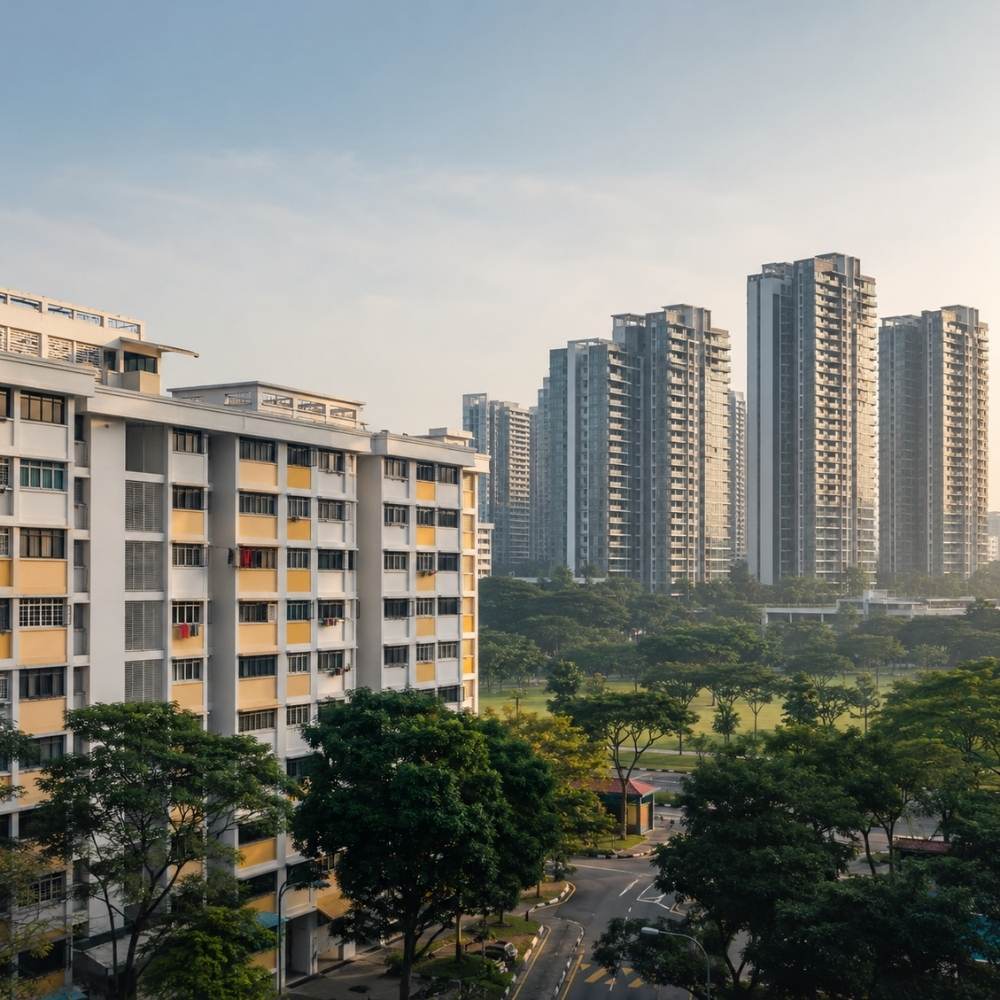
Singapore HDB block in the foreground with a condo skyline behind, illustrating an HDB to condo or EC upgrade decision.

If you own an HDB flat and you’ve started wondering whether you can afford to upgrade to a condo or EC, you’re asking the right question at the right time.

The honest answer is rarely a flat yes or no.

It depends on your numbers, your timeline, and how much breathing room you want after the move.

This guide helps you map your numbers before you fall in love with a showflat.

No fear, no hard sell — just the figures that decide whether an upgrade is a steady move or a stretch.

The Real Question Is Not Just "Can I Buy?"

A bank approving your loan and your household feeling comfortable are two different things.

You might qualify on paper and still feel the squeeze after the CPF refund lands back in your CPF — not your pocket.

Renovation, a thinner cash buffer, school-going children, ageing parents, or a tighter monthly instalment can all turn a “yes, you can buy” into “but should we?”

So the better question for any HDB upgrader looking at a condo isn’t can I buy — it’s can I buy and still sleep well.

That’s the question this guide is built around.

Table of Contents

Start With Your Sale Proceeds First

Before you look at any new home, look at what your current flat actually frees up. A simple way to estimate your HDB sale proceeds:

Selling price − outstanding housing loan − (CPF used + CPF accrued interest) − selling costs = estimated cash proceeds

Here’s the part many people miss.

The CPF refund when selling your HDB goes back into your CPF Ordinary Account, not your bank account. The principal you originally used, plus CPF accrued interest at 2.5% per year, must be returned to your OA.

That refunded CPF isn’t gone — it can generally be reused for your next home, subject to CPF rules. But it changes one thing that matters a lot: how much cash you walk away with versus how much sits inside CPF.

Simplified example (illustration only). Sell at $750,000. Outstanding loan $180,000. CPF used plus accrued interest $250,000. Selling costs roughly $15,000.

Estimated cash proceeds ≈ $305,000 — while $250,000 returns to your CPF OA. Two very different numbers, and you need both before deciding.
The Four Numbers Every Upgrader Should Know

Map these four before anything else. They decide almost everything that follows.

Your expected sale price

Use recent transacted prices for similar flats in your block or town — not asking prices or social-media headlines.

The Q1 2026 market has cooled slightly even as a record number of flats crossed the million-dollar mark, so be realistic, not optimistic.

Your outstanding housing loan

The amount still owed on your current flat. This is cleared first from your sale proceeds, before any CPF refund or cash.

Your CPF used plus accrued interest

Log in to the CPF portal for the exact figure. The longer you’ve held the flat, the larger the accrued interest, because 2.5% compounds over time. This is the number that quietly shrinks your usable cash.

Your actual cash buffer after selling

What’s left in cash after loan, CPF refund and selling costs. This is your real starting point for the next purchase — and your safety net.

Upgrade Affordability Snapshot

Condo or EC Upgrade Affordability Snapshot

Estimate your sale proceeds, CPF refund, usable CPF + cash, and rough monthly loan comfort before deciding whether a condo, new EC, or resale EC upgrade feels steady.

1. Your current home

Planning buffer only. Adjust to 0 if you prefer to exclude selling costs.

2. CPF and cash position

CPF refund is shown separately because it returns to your CPF OA, not your bank account. It may generally be reused for the next home, subject to CPF rules.

3. Income and loan comfort

Car loan, credit cards, personal loans, study loans, etc.

4. Target property

5. Your snapshot result

Add your numbers to begin

This snapshot gives a rough planning view — not a bank approval. It helps you see whether the move looks comfortable, possible, or tight before you commit.

Estimated cash proceeds S$0 After loan, CPF refund and a selling-cost buffer.
CPF refund returns to OA S$0 This is not cash in your bank account.
Estimated usable CPF + cash S$0 Includes cash proceeds, CPF refund and your cash savings.
Rough monthly comfort range S$0 – S$0 Based on TDSR 55%. New EC also applies MSR 30%.
Estimated instalment at 4% S$0 Uses a rough LTV and tenure estimate.
Estimated upfront need S$0 Downpayment + estimated BSD. ABSD, renovation and legal fees are not included.
Let’s map your sale proceeds, CPF and loan comfort before you commit.
See If My Upgrade Is Comfortable

How Much Can You Borrow?

Two rules from MAS shape your loan, and both are stress-tested at a 4% interest floor (even if today’s rates are lower).

  • TDSR (Total Debt Servicing Ratio): your total monthly debt — new home loan, car loan, credit cards, everything — can’t exceed 55% of gross monthly income. This applies to condos.

  • MSR (Mortgage Servicing Ratio): caps the home-loan portion at 30% of gross income. This applies to HDB and EC loans, not private condos. Where both apply, the lower one binds.

So a private condo can sometimes allow a larger loan than an EC at the same income, because MSR doesn’t cap it.

That cuts both ways — more borrowing room can also mean more risk.

Three more levers: age and loan tenure (longer tenure or a loan running past 65 can drop your LTV from 75% to 55%, raising your cash downpayment), existing debts (a car loan eats directly into your limit), and the gap between maximum loan and comfortable loan.

The bank’s ceiling is not your comfort line.

Borrow to the number you can service calmly if income dips or rates rise — not the largest number offered.

Can You Afford an EC Instead of a Condo?

An EC (Executive Condominium) can be a strong middle path for the right buyer.

It often offers private-condo-style living at a lower entry quantum than a comparable new private launch.

A new EC bought from a developer may suit you if you:

  • Meet EC eligibility and the $16,000 monthlyhousehold income ceiling

  • Are comfortable with the Minimum Occupation Period (MOP)

  • Can wait through construction

  • Want condo facilities without the full private-condo price tag

The trade-offs are real, and timelines now depend on when the project was launched.

Older and already-launched 2026 ECs carry a 5-year MOP with full privatisation at year 11.

But new EC sites from 8 May 2026 carry a 10-year MOP and privatise only from year 16 — a longer hold before you can sell to anyone or treat it as fully private.

Resale is limited to Singapore Citizens and PRs until privatisation. Always confirm which timeline your specific EC falls under, because it directly shapes your exit options and EC affordability.

Condo vs New EC, at a Glance

A quick comparison between buying a private condo and a new Executive Condominium from the developer.

Factor Private Condo New EC from Developer
Entry price Higher, based on market rate. Usually lower than a comparable new private launch.
Loan cap TDSR 55% only. MSR 30% and TDSR 55%. The tighter one binds.
Income ceiling None. $16,000/month household income ceiling.

Eligibility rules Open, subject to ABSD rules. HDB-style eligibility applies. First-timer priority may apply.
MOP None. 5 years for older or 2026-launched ECs. 10 years for new EC sites from 8 May 2026.
Full privatisation Already private. Year 11 for older ECs, or Year 16 for new sites.
Sell to foreigners Anytime. Only after full privatisation.
ABSD when upgrading May apply if you own two homes. Avoided via scheme, but you must sell your flat within 6 months of EC possession.
Note: Figures and timelines are as of June 2026. Please confirm against HDB, your bank, and the specific EC project before making a decision.

What About a Resale or Privatised EC?

There’s a third option many upgraders miss: a resale EC — one the original owner is selling after their MOP.

Here’s the part that simplifies things.

Because you already own an HDB flat, you’re a Singapore Citizen or PR, which means you already meet the citizenship requirement to buy a resale EC.

Eligibility is rarely the obstacle — financing and stamp duty are.

For affordability, a resale or privatised EC behaves much like a private condo, not like a new EC:

  • No income ceiling. The $16,000 cap applies only to new ECs from a developer. So if your household earns above $16,000 — which rules out a new EC — a resale or privatised EC stays open to you.

  • Financed like private property. TDSR (55%) applies; MSR generally does not, since you’re not buying from a developer. That usually means more borrowing room than a new EC at the same income (confirm with your banker for your specific case).

  • Stamp duty works like a condo upgrade. Normal ABSD and remission timing apply if you briefly own two homes, rather than the new-EC developer scheme.

  • You skip the construction wait and move into a completed unit, though you also forgo CPF housing grants and the lower new-launch entry price.

So in this guide, when we talk about condo affordability, a resale or privatised EC sits in the same lane as a condo — same financing logic, same stamp-duty mechanics.

The “special rules” lane (income ceiling, MSR, sell-within-6-months) applies only to a new EC from a developer.

The Hidden Pressure: Sell First or Buy First?

This is where most upgraders feel the stress — and it’s a genuine fork.

Sell first:

  • Cleaner budget. You know your exact cash and CPF position.

  • Avoids the second-property ABSD squeeze and restores your 75% loan ceiling.

  • But you may need temporary housing between homes.

Buy first:

  • Secures the home you want before selling.

  • More timing pressure, and possible ABSD exposure if you briefly own two properties — refundable only if you sell within the qualifying window and meet the conditions.

  • Depends on whether you can bridge the gap financially.

There’s no universally correct choice.

It depends on your cash buffer, your risk appetite, and how settled your family needs to be during the move.

Selling first tends to feel steadier for most upgraders; buying first suits those with a strong buffer and a specific home they can’t risk losing.

When Upgrading May Make Sense

An upgrade tends to fit when:

  • Your sale proceeds are healthy

  • The monthly instalment sits comfortably within your income

  • There’s a clear family need driving the move

  • Your timeline isn’t forcing a rushed decision

  • The next home genuinely improves your living situation or long-term position

  • You still have a real buffer after the purchase, not just enough to scrape in

When It May Be Better to Wait

It may be wiser to pause when:

  • Cash proceeds are thin after the CPF refund

  • The CPF refund is larger than you expected

  • The monthly instalment already feels like a stretch

  • You’d need to sell urgently just to fund the purchase

  • There’s no emergency buffer left over

  • The move is driven by FOMO rather than need

  • The next property doesn’t clearly improve your lifestyle or position

Waiting isn’t losing. Sometimes it’s the move that protects everything else you’ve built.

Final Thoughts: Upgrade Only When the Numbers and Life Fit Together

Upgrading isn’t about chasing the biggest home you can technically qualify for. It’s about a move that fits your numbers, your timeline, your family, and your next stage of life.

Sometimes the right answer is upgrade. Sometimes it’s wait.

Sometimes it’s adjust the budget and revisit in a year.

All three can be the smart call, depending on where you stand.

The steady next step is the same for everyone: map your numbers first.

Once your sale proceeds, CPF refund, loan range and monthly comfort are on the table together, the right decision usually becomes a lot easier to see.

Disclaimer: All figures in this article are simplified illustrations to show how the numbers connect — not financial advice, valuations, or guarantees of any outcome. Actual sale proceeds, CPF refunds, loan eligibility and stamp duties depend on your specific profile and current rules from HDB, CPF Board, IRAS, MAS and your bank. Verify your own numbers before acting. This article makes no promise about future property prices.

FAQ

FAQ: Upgrading from HDB to Condo or EC

Common questions owners ask before moving from an HDB flat to a private condo or Executive Condominium.

Can I afford to upgrade from HDB to a condo?

It depends on your sale proceeds, CPF refund, loan range and monthly comfort — not just loan approval. Map all four before deciding; a bank "yes" doesn't always mean a comfortable move.

Will the CPF refund reduce my usable cash when selling my HDB?

Yes. Your CPF principal plus 2.5% accrued interest returns to your CPF OA, not your bank account. It can generally be reused for the next home, but it lowers the cash you walk away with.

Should I sell my HDB first or buy first?

Selling first gives cleaner budget certainty, avoids second-property ABSD pressure and restores your 75% loan ceiling, but may need interim housing. Buying first secures your next home but adds timing pressure and possible ABSD exposure.

Is an EC cheaper than a condo?

A new EC often has a lower entry quantum than a comparable new private condo, but comes with eligibility rules, a $16,000 income ceiling, an MOP, and resale restrictions until privatisation. Newer EC sites from 8 May 2026 carry a longer 10-year MOP.

How much cash do I need after selling my flat?

After clearing the loan, CPF refund and selling costs, you'll need cash for the downpayment portion, BSD, any ABSD, legal fees, renovation and a buffer. Budget all of these, not just the downpayment.

Does ABSD apply when I upgrade from HDB to a condo?

If you briefly own two properties by buying first, ABSD may apply upfront and be refundable only if you sell your flat within the qualifying window and meet the conditions. Selling first usually avoids this. Verify current ABSD rules and timelines with IRAS.

What's the difference between TDSR and MSR for upgraders?

TDSR caps total monthly debt at 55% of income and applies to condos. MSR caps the home-loan portion at 30% and applies to HDB and new EC loans. For a new EC, the tighter of the two usually binds.

My household earns more than $16,000 — can I still buy an EC?

Not a new EC from a developer, since the $16,000 income ceiling rules that out. But you can buy a resale or privatised EC, which has no income ceiling. As an existing HDB owner you're already a Singapore Citizen or PR, so you meet the citizenship requirement; it's financed like a condo. TDSR applies, MSR generally doesn't, and ABSD works like a normal condo upgrade.

Note: Property rules, CPF usage, ABSD treatment and loan assessment can change. Always confirm the latest position with CPF, HDB, IRAS and your bank before committing.

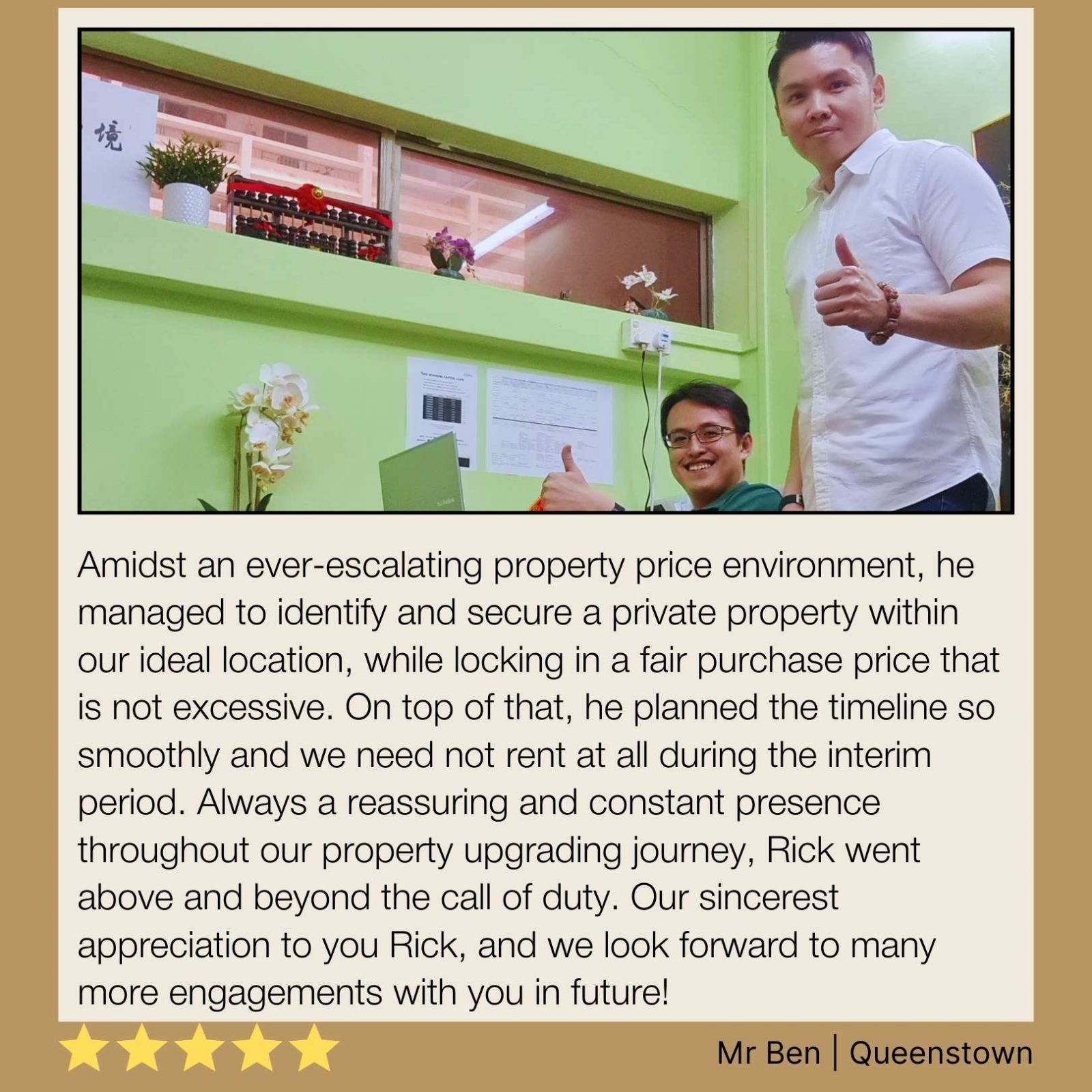
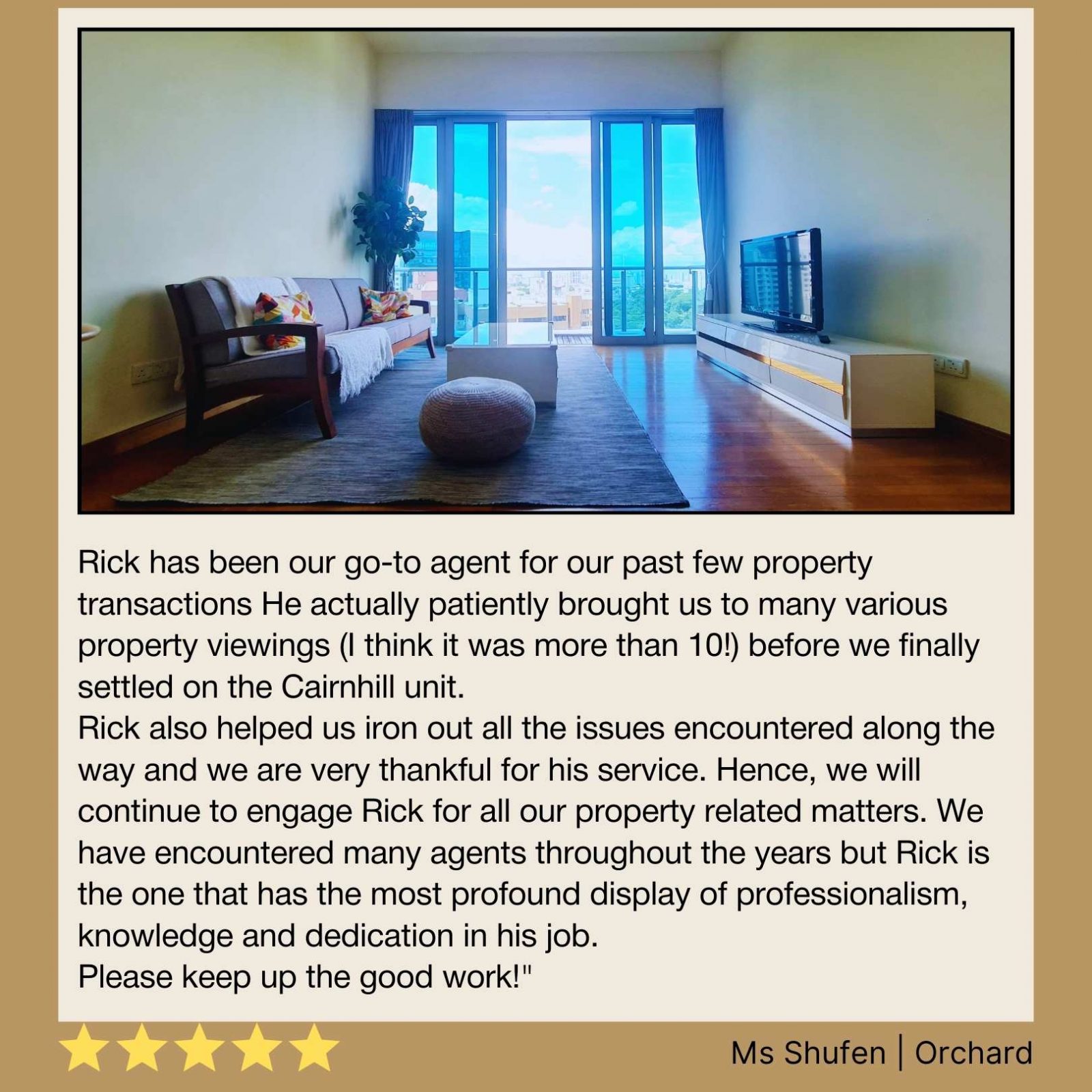
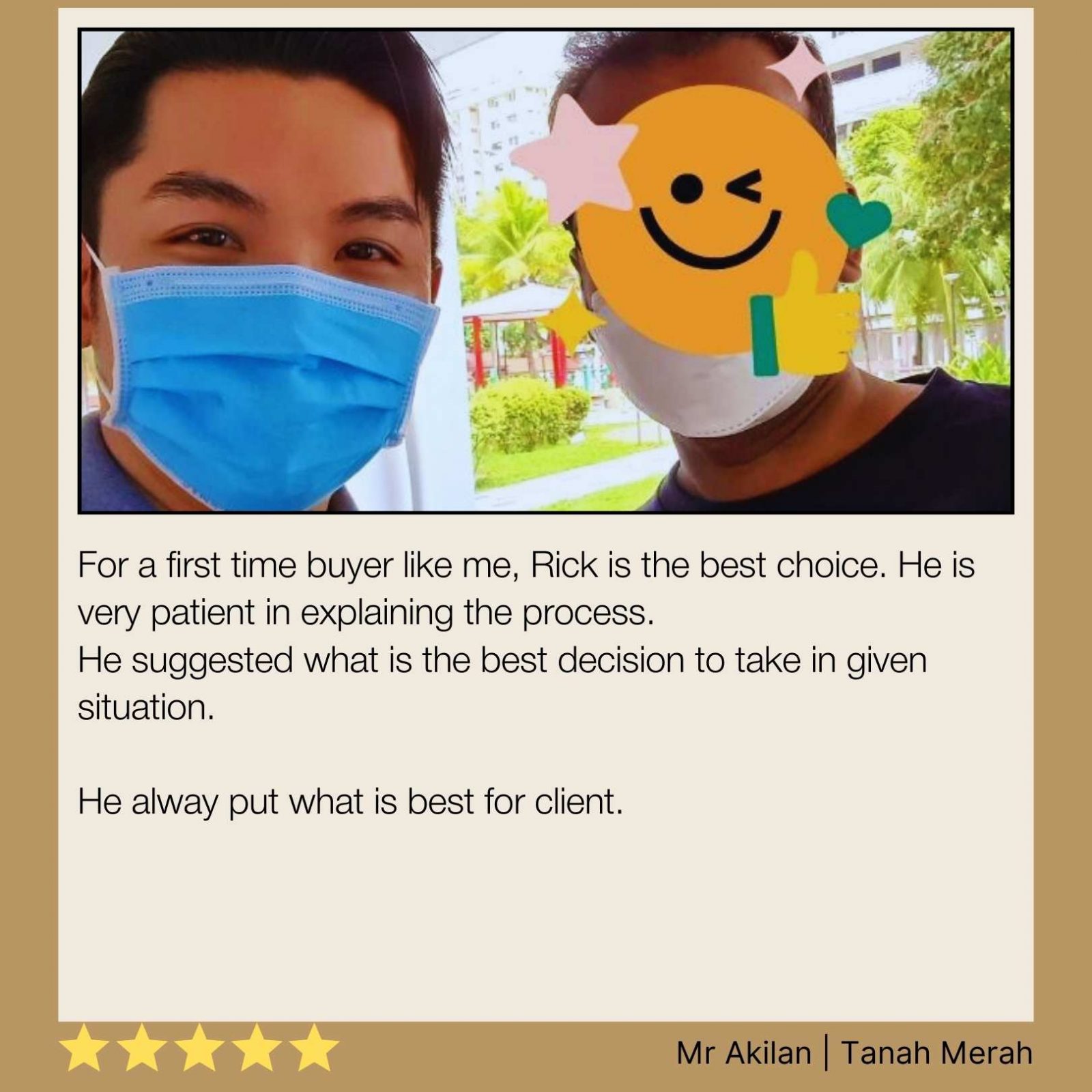
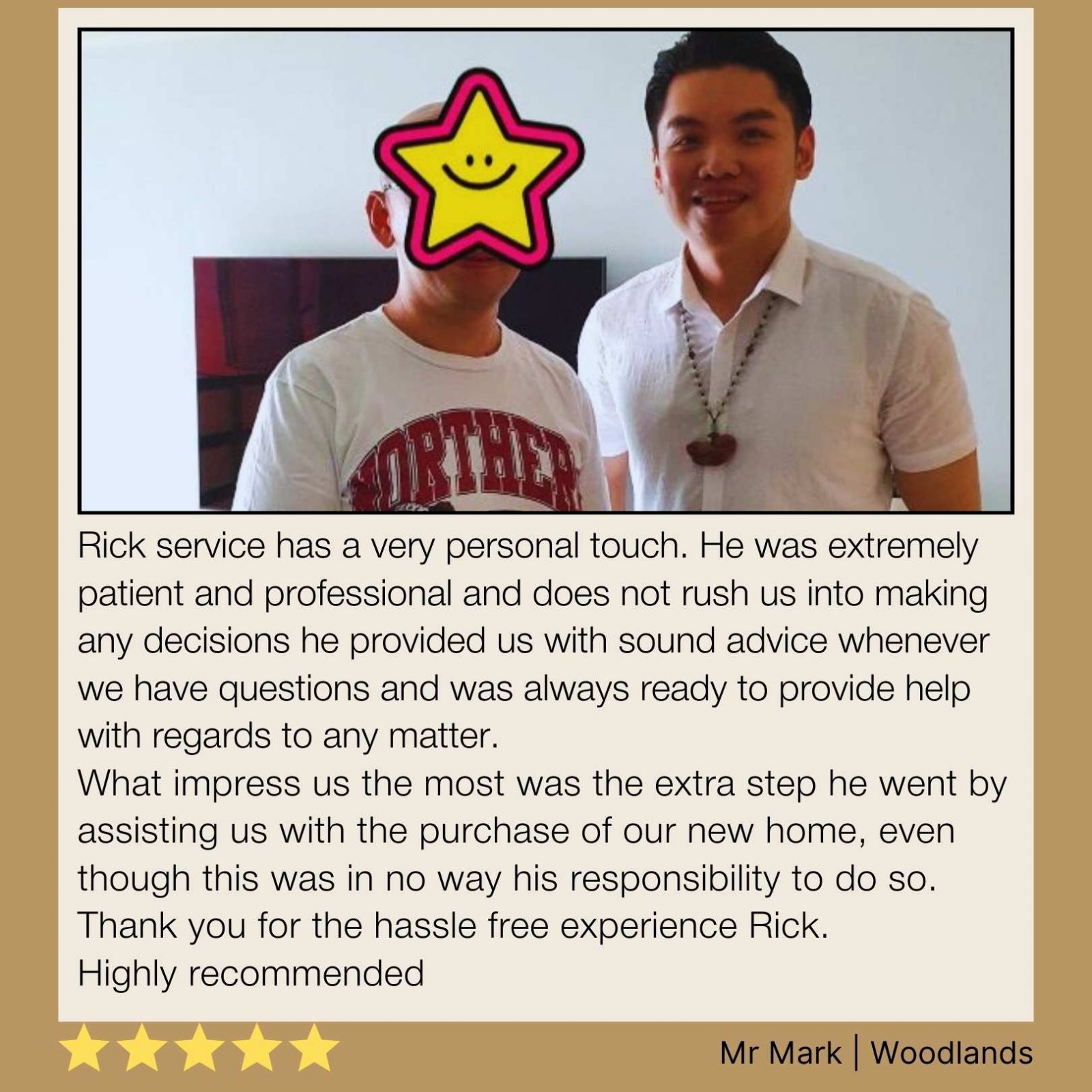
What My Clients Say | Genuine Experiences

Real stories, real experiences—because your journey deserves nothing less than the best.

Awards and Accolades

Self Introduction

blog-pic

Hi, I’m Rick Long

With decades of experience in Singapore’s real estate market, I’ve had the privilege of being mentioned in media outlets such as Channel NewsAsia, The Straits Times, and 99.co.

Over the years, I’ve written extensively on the local property landscape — tackling the real questions buyers and sellers face, and helping them navigate each step with greater clarity and confidence.

Many of my clients have become long-time friends — their trust and kind reviews continue to inspire me to raise the bar in everything I do. 

I believe real estate should be strategic, seamless, and deeply aligned with your life’s journey.

Leave a Reply