Upgrade HDB to Condo With Zero Cash? Check the Numbers
A “zero cash” HDB-to-condo upgrade means your sale proceeds and CPF refund — not fresh savings — fund the next home.
For many households, it genuinely works.
This guide traces exactly where that money comes from, which costs still need cash along the way, and how to check whether your own numbers support it — before you commit to anything.
| Upgrade cost | Planning amount | CPF or cash? |
|---|---|---|
| First part of downpayment | At least 5% of the condo price under a standard 75% LTV structure. A lower LTV can raise the cash minimum. | Cash |
| Remaining downpayment | 20% of the condo price under the same 75% LTV structure. | CPF OA or cash, subject to CPF housing rules and available OA. |
| Buyer’s Stamp Duty | Calculated in tiers on the higher of purchase price or market value; the current top marginal residential rate is 6%. | CPF may be used subject to process and timing. Resale buyers should prepare for cash timing. |
| ABSD for a buy-first route | 20% for a Singapore Citizen buying a second residential property. Eligible married couples may apply for remission after meeting every IRAS condition. | Plan for upfront cash or approved funding. |
| Interim housing and moving | Rental, storage, movers and a practical buffer vary by sequence. | Cash |
Official references: MAS LTV limits, IRAS BSD and IRAS married-couple ABSD remission. Rules can change — the pages above always show the current position.
Table of Contents
What does a "zero cash upgrade" actually mean?
When an ad says you can upgrade from an HDB flat to a condo with “$0”, it almost always means zero fresh savings — the money comes from your flat instead.
Your sale proceeds pay off the HDB loan, refund your CPF, and the remainder funds the condo downpayment.
That mechanism is real and legitimate.
Many households genuinely complete an upgrade without drawing down their bank savings.
But “zero savings” is not “zero cash”. Under a standard 75% LTV bank loan, at least 5% of a private property’s price must be paid in cash — CPF cannot cover it, and where a lower LTV applies, the minimum cash component rises.
The cash may come from your sale proceeds, but it must exist, at the right time, in the right form.
The rest of this article shows you exactly where each dollar comes from and when.
Where does the money go when you sell your HDB flat?
Your HDB’s selling price is not the money you receive. At completion, the proceeds are distributed in a fixed order before any cash reaches you:
- Outstanding housing loan — your HDB loan or bank loan is fully redeemed first.
- CPF refund — every CPF dollar you used (downpayment, monthly instalments, stamp duty paid from CPF) returns to your CPF Ordinary Account, together with the interest it would have earned had it stayed there.
If you are 55 or older, the refund first tops up your Retirement Account to your Full Retirement Sum, per CPF Board rules on refunds when selling property. - Transaction costs — agent commission and legal fees.
- Cash proceeds — whatever remains is paid to you.
One reframe matters here.
The CPF refund is not money lost and not a penalty — it is your own retirement savings being restored, and it becomes available again for the condo purchase shortly after completion.
For upgraders, the refund is fuel, not friction.
How much cash do you need to upgrade from an HDB to a condo?
Here is a worked example. The figures are illustrative and rounded — your own numbers will differ.
The sale — where the S$1,000,000 goes
The Tans sell their HDB flat for roughly S$1,000,000.
| Sale side | Amount (illustrative) |
|---|---|
| Selling price | S$1,000,000 |
| Less outstanding HDB loan | − S$250,000 |
| Less CPF housing refund | − S$300,000 |
| CPF refund breakdown | Principal ~S$250,000 Accrued interest ~S$50,000 |
| Less agent commission and legal fees | − S$23,000 |
| Cash proceeds | ≈ S$427,000 |
| CPF OA restored | ≈ S$360,000 |
| CPF OA restored breakdown | ~S$300,000 refund + ~S$60,000 already in OA |
Note: These figures are illustrative and opinion-based, produced with calculation tools — not a valuation or financial advice. Human error is possible; verify against official sources before relying on them. CPF accrued interest is retirement money restored to the CPF account, not a penalty.
The couple behind the numbers
The Tans are both Singapore Citizens, married, both under 45, jointly owning their HDB and intending to buy the condo jointly.
They earn S$16,000 a month combined.
Because CPF contributions apply to monthly wages up to the S$8,000 ceiling, and the Ordinary Account receives 21–23% of wages for their age band, their combined OA inflow is roughly S$3,000–S$3,400 every month — before they buy anything.
That monthly stream matters as much as the lump sums, because it is what services the loan later.
They target a S$1,800,000 condo with a first housing loan at the standard 75% loan-to-value limit, per the MAS rules on loan tenure and LTV limits: a S$1,350,000 loan, 30-year tenure, and an assumed package rate of 2% p.a. for illustration (current floating packages have been trading below this, so 2% is a deliberately conservative assumption).
First, the approval gate.
Banks assess the Total Debt Servicing Ratio at a stress-test rate above the actual package rate — not at 2%.
At the stress rate, the instalment tests at roughly S$6,400 a month, against a TDSR ceiling of S$8,800 (55% of S$16,000 gross income under MAS’s debt servicing framework.
Assuming no major other debts, the Tans pass with visible headroom — the loan quantum is not a stretch on paper before it is not a stretch in life.
| Purchase item | Amount (illustrative) | Paid with |
|---|---|---|
| Bank loan at 75% LTV | S$1,350,000 | Loan |
| 5% downpayment | S$90,000 | Cash — from proceeds |
| 20% downpayment | S$360,000 | CPF OA — the restored refund covers it |
| Buyer’s Stamp Duty (current tiers) | ≈ S$59,600 | Cash — their OA is committed to the 20% |
| Cash committed at purchase (minimum-cash structure) | ≈ S$149,600 | From S$427,000 proceeds |
| Cash remaining after purchase (before each path’s structuring) | ≈ S$277,400 | Their runway |
Note: These figures are illustrative and opinion-based, produced with calculation tools — not a valuation or financial advice. Human error is possible; verify against official sources before relying on them.
Notice what just happened: the CPF refund of S$300,000, plus S$60,000 already sitting in their OA, covers the entire S$360,000 CPF-payable downpayment — the flat funded the condo.
The remaining S$149,600 had to be cash, and the Tans have it because their sale proceeds were strong.
A household with thinner proceeds would need fresh savings to close that gap — which is exactly the check to run before committing.
Path A — resale condo at S$1,800,000
The loan disburses in full at completion, so the full instalment starts immediately — but so does the address.
No rental, no waiting. Within Path A, the Tans have one structural decision to make: where should the money sit?
CPF-versus-cash for the downpayment is the buyer’s choice, and the two choices below use the same S$427,000 — they just place it differently.
Instead of paying the whole 20% from CPF, they pay S$150,000 of it in cash from their proceeds and only S$210,000 from CPF — leaving S$150,000 ring-fenced inside their OA on day one. This split changes the monthly experience completely:
| Monthly, from month one | Amount |
|---|---|
| Instalment (S$1.35M, 30 years, 2% p.a.) | ≈ S$4,990 |
| Paid from monthly CPF OA inflow | ≈ S$3,000 |
| Paid from the ring-fenced OA balance | ≈ S$1,990 |
| Cash top-up per month | S$0 |
Note: These figures are illustrative and opinion-based, produced with calculation tools — not a valuation or financial advice. Human error is possible; verify against official sources before relying on them.
During the illustrated period, the instalment is fully serviced from CPF — the monthly S$3,000 OA inflow plus the S$150,000 reserve carries it for over six years, longer still since the reserve keeps earning OA interest while it waits.
Take-home pay of roughly S$12,800 remains available for household needs throughout.
The trade is visible and fair: cash in hand after purchase is about S$127,400 instead of S$277,400 — the other S$150,000 didn’t vanish, it moved into the OA reserve.
Here the Tans commit the CPF fully and protect the cash instead. The restored S$360,000 OA pays the entire 20% downpayment, so only the mandatory S$90,000 (5%) and ~S$59,600 BSD leave the bank account — keeping roughly S$277,400 in cash, free for renovation, investments, family buffers, or simply the comfort of a full war chest. Personal choices, funded.
| Monthly, from month one | Amount |
|---|---|
| Instalment (S$1.35M, 30 years, 2% p.a.) | ≈ S$4,990 |
| Paid from monthly CPF OA inflow | ≈ S$3,000 |
| Cash top-up per month | ≈ S$1,990 |
Note: These figures are illustrative and opinion-based, produced with calculation tools — not a valuation or financial advice. Human error is possible; verify against official sources before relying on them.
The top-up is about 15% of their ~S$12,800 take-home — a deliberate, affordable subscription rather than a strain.
Even after, say, S$50,000 of renovation, the remaining cash could fund that top-up for over nine years without touching new savings.
The honest comparison between the two choices: as a stress reference only, if both incomes stopped, the cash and OA reserves under either choice could cover roughly 55 months of instalments — identical total protection, relocated.
Choice 1 keeps the monthly instalment fully within CPF for the illustrated period.
Choice 2 keeps liquidity and options.
Under these assumptions, both structures appear workable; the difference is whether the couple prefers to retain more cash in hand or preserve more CPF OA for monthly instalments.
Household spending, children, insurance, job stability, and future interest rates sit outside this illustration — and they matter just as much.
Path B — new launch at S$1,800,000
The same buyer funds apply — S$450,000 of downpayment plus ~S$59,600 BSD — but they are paid in stages rather than at once, and the bank loan disburses progressively as construction milestones complete.
The full breakdown of how each stage works belongs to its own guide: see our progressive payment scheme article.
What matters for the zero-cash question is the shape of the monthly commitment: the instalment begins small after the early construction stages and steps up over the typical 3–4 years, reaching the full ≈ S$4,990 only around completion.
During construction, the Tans’ S$3,000+ monthly OA inflow accumulates largely unspent, rebuilding the CPF that the downpayment used.
The honest counterweight: having sold first, the Tans need somewhere to live for those years.
At an assumed S$3,500 a month, three years of rental is about S$126,000 — the single largest hidden cash line in a sell-first new-launch plan.
Their post-purchase cash absorbs it with room to spare, but a household with thinner proceeds should see this line before falling for a showflat.
The monthly picture, side by side
| What changes | Path A: Resale | Path B: New launch |
|---|---|---|
| Move in | Immediately | After TOP (typically 3–4 years) |
| Monthly outlay, years 1–3 | ≈ S$4,990 instalment | Smaller instalment stepping up during construction + ~S$3,500 rent |
| Monthly cash top-up | Choice 1: none during the illustrated period · Choice 2: ≈ S$1,990 | ≈ S$1,990 at steady state after TOP |
| Cash runway after purchase | Choice 1: ≈ S$127,400 + S$150,000 in OA · Choice 2: ≈ S$277,400 | ≈ S$277,400, less ~S$126,000 rental over construction |
| OA position over time | Choice 1: reserve drawn ~S$1,990/month, earning interest meanwhile · Choice 2: fully deployed at purchase, monthly inflow drawn from day one | Accumulates during construction, then drawn |
Note: These figures are illustrative and opinion-based, produced with calculation tools — not a valuation or financial advice. Human error is possible; verify against official sources before relying on them.
Under these assumptions, both paths appear workable for this couple.
The deciding factors are lifestyle (move once vs move twice), the rental line, and the value factors of the specific project — questions to work through with your advisor rather than conclude from a table.
Note: These figures are illustrative and opinion-based, produced with calculation tools — not a valuation or financial advice. Human error is possible; verify against official sources before relying on them.
Who can genuinely upgrade with near-zero savings?
The honest answer: households where the ledger produces enough cash proceeds — not just paper value.
The pattern that works usually has most of these factors:
- The flat’s value comfortably exceeds the outstanding loan plus the CPF refund, leaving six figures in cash proceeds.
- The couple sells first, keeping ABSD out of the equation and the LTV at the standard tier.
- There is a workable interim housing plan — family, a negotiated extension of stay, or budgeted rental.
- Income clears TDSR at the stress-test rate with room to spare, so the loan is approved at the quantum planned.
- A buffer of several months’ instalments survives the whole exercise untouched.
Whether the specific condo is the right buy is a separate question — one of value factors: recent land-bid comparables, transacted psf around it, layout efficiency, tenure and stack, and how funded and near any future upside really is.
Run those factors with your advisor; no headline, including this one, should make that call for you.
Is it true that…? Common "$0 upgrade" misconceptions
“Zero dollar means I pay nothing.” False. A minimum 5% of the condo price must be cash by regulation, and stamp duty, timing costs, and buffers are cash too.
“Zero dollar” at best means “zero fresh savings” — and only when your proceeds are strong enough.
“The CPF refund is a penalty that eats my profit.” False. The refund — principal plus accrued interest — is your retirement savings being restored to your own account, and it is immediately reusable for the condo’s 20% downpayment.
It reduces cash in hand, not your wealth.
“The ABSD refund window is 15 months.” False. Under the IRAS remission rules for married couples, the first property must be sold within 6 months, the replacement home must be bought jointly under both spouses’ names with at least one Singapore Citizen, and IRAS applies the timeline with no extensions.
The 15-month figure confuses a different rule — the wait-out period before private-property sellers can buy a resale HDB flat.
“My selling price is my budget.” False. Your budget is what survives the waterfall: loan redemption, CPF refund, and fees come out first.
Two flats sold at the same price can leave very different cash proceeds depending on loan balance and years of CPF usage.
FAQ
What is a “zero cash” HDB upgrade?
It is marketing shorthand for funding a condo purchase from HDB sale proceeds and the CPF housing refund instead of fresh savings. The label is imprecise because a standard 75% bank-loan structure still requires at least 5% of the condo price in cash.
How do I estimate my cash proceeds from selling my HDB?
Start with the expected selling price, then subtract the outstanding housing loan, the required CPF housing refund and selling costs. The remainder is your estimated cash proceeds. Use the HDB sale proceeds calculator and confirm the exact CPF figure in your Home ownership dashboard.
Is it better to sell the HDB first or buy the condo first?
Selling first usually reduces upfront tax and financing pressure, but you may need an interim housing plan. Buying first can reduce moving disruption, but you may need to fund ABSD and carry the sale-timeline risk. The better fit depends on your cash buffer, family timing, loan position and how saleable the HDB is. The full comparison is in our sell-first or buy-first guide.
What happens when the selling price cannot cover the loan and full CPF housing refund?
The outstanding housing loan is paid first. When the property is sold at market value and the remaining sale amount cannot cover the full required CPF housing refund, CPF Board states that you generally do not need to top up the refund shortfall in cash. Your cash proceeds may still be zero, so the next purchase should be reviewed before any commitment.
How long does a CPF refund from a property sale take?
CPF Board states that, upon receiving the funds, it processes property-sale refunds within 15 working days, including cheque-clearing time where relevant. Build this processing window into the condo payment schedule with your conveyancing lawyer.
Can IRAS extend the six-month ABSD remission sale timeline?
For the standard married-couple remission route, IRAS states that the first property must be sold within the applicable six-month period and that extensions are not granted outside the specific temporary-relief cases described on its page. Check every eligibility condition before choosing a buy-first sequence.
Note: Rules and processing times can change. Verify the live position with CPF Board, IRAS, your banker and your conveyancing lawyer before acting.
Estimate what remains after your HDB loan and CPF housing refund, then compare it with the cash and CPF needed for the condo. The result is a planning estimate, not a loan approval or transaction statement.
Buy-first assumption: the calculator applies 20.0% ABSD for a Singapore Citizen buying a second residential property. Joint purchases can attract the highest buyer profile. Check your exact position with IRAS and your conveyancing lawyer.
Use the CPF Home ownership dashboard for the exact refund figure before committing to a purchase.
The comparison uses sale proceeds as the cash pool and the estimated CPF refund plus existing OA as the CPF pool.
- 5% cash downpayment
- Buyer’s Stamp Duty
- ABSD in buy-first route
- Interim housing
- Estimated CPF OA gap for 20%
- Your HDB sale price first pays the outstanding housing loan.
- CPF savings used for the home, together with accrued interest, are restored for retirement. The calculator uses a simplified 2.5% annual estimate; the CPF Home ownership dashboard is the source for your exact refund.
- The condo cash estimate includes a 5% cash downpayment under a standard 75% LTV structure. A lower LTV can raise the cash minimum.
- BSD is calculated on the entered condo price using the current residential tiers. IRAS applies duty to the higher of purchase price or market value.
- The buy-first route adds 20% ABSD under the stated Singapore Citizen second-property assumption. Married-couple remission is subject to IRAS conditions and the six-month sale timeline.
Excluded from this model: renovation, movers, storage, loan interest changes, legal fees on the purchase, emergency reserves, bridging finance costs and any CPF usage limits applying to the next property.
Official references: CPF housing refund, CPF interest rates, MAS LTV limits, IRAS BSD, IRAS ABSD.
Note: These figures are illustrative and opinion-based, produced with calculation tools — not a valuation or financial advice. Human error is possible; verify against official sources before relying on them.
Review my numbers with RickAbout the author
Rick Long is an Associate Senior Division Director at Huttons Asia.
Through YouHome.sg — Right Property Matters — he shares the frameworks, tools and field experience behind his advisory work, helping Singapore buyers and sellers across HDB, EC and private residential decisions with structured, calm, next-step guidance.
CEA Reg. R026818Z · Huttons Asia · YouHome.sg
For more Singapore property planning tips, follow me on Instagram.
@agent_rick_longReady to check your own numbers?
Every household’s waterfall — loan balance, CPF used, years of accrued interest — lands differently.
If you would like a second pair of eyes on your numbers before you commit to a sequence, I’m happy to walk through them with you, no scripts and no countdown timers.
What's left is the part no article can do — your actual waterfall: loan balance, CPF refund, accrued interest, cash out. One session with Rick closes that gap.
✓ Article read — you've done the groundwork.
Rick will confirm the session with you directly on WhatsApp.
If WhatsApp didn't open, tap here
This sends a session request via your own WhatsApp — Rick confirms the timing and meeting place with you personally. Nothing is stored on this page.
Disclaimer: The case studies and information are for educational use only and i make no representation or guarantees with respect to the accuracy, applicability, or completeness of its contents. There shall be no liability for any loss or expense whatsoever, relating to investment decisions made by the reader.
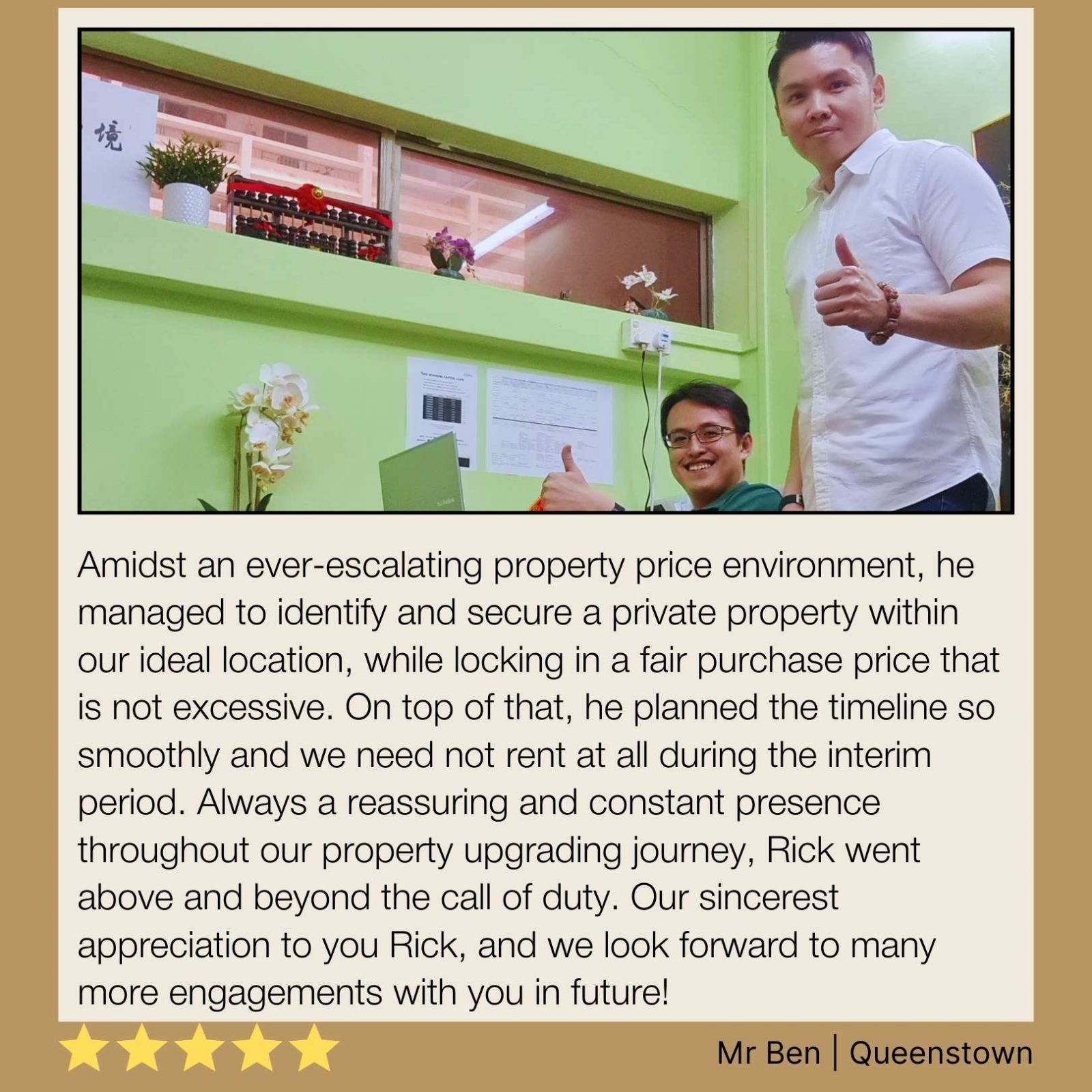
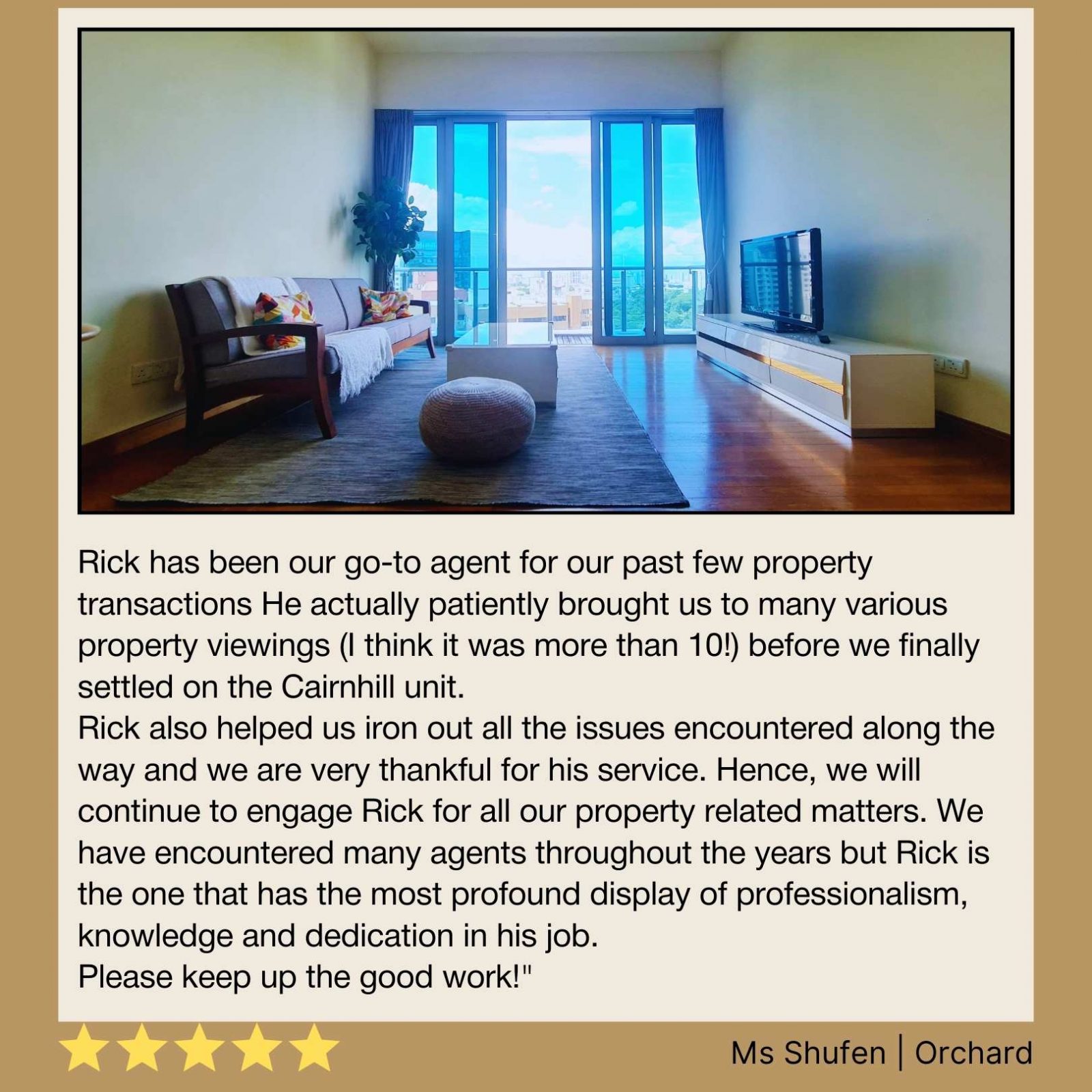
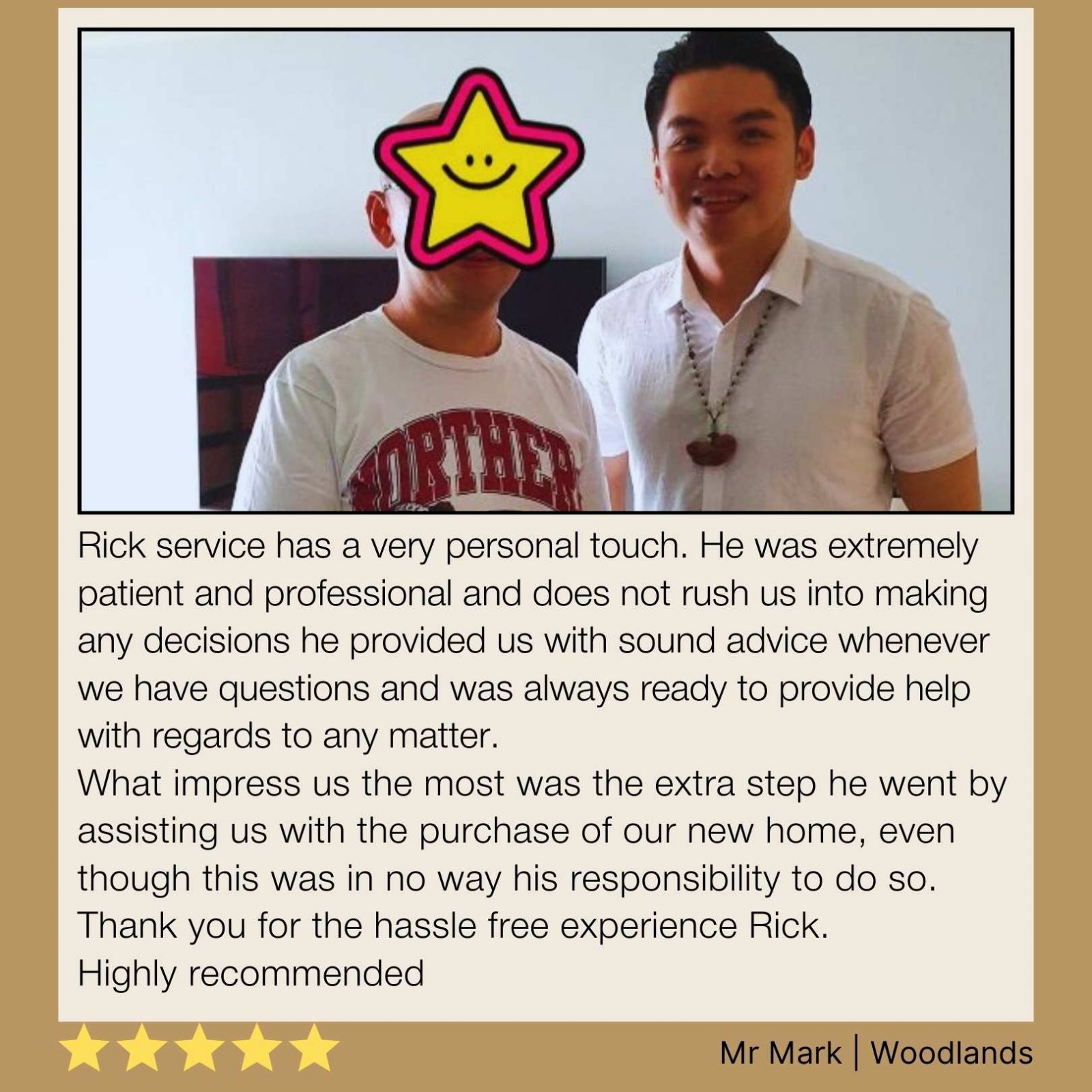
What My Clients Say | Genuine Experiences
Real stories, real experiences—because your journey deserves nothing less than the best.












Awards and Accolades