HDB Lease Decay in Singapore: What a Shrinking Lease Does to Your Flat's Value, CPF and Loan
HDB lease decay is the gradual erosion of a flat’s value as its 99-year lease runs down. When you buy an HDB flat, you buy the right to occupy it for the years left on that lease — not the land.
As the lease shortens, CPF use, loan size, and the pool of buyers who can afford your flat all tighten, which is what pulls value down over time.
Let’s walk through it — what the lease actually does to your money, what happens at the very end, and the moves you still have.
Table of Contents
The rules that shape every older-flat decision
A quick-reference before the detail.
Verify each against its official source before you rely on it — policy moves with each Budget.
An older HDB flat's remaining lease sets three limits at once: how much CPF a buyer may use, how long a loan can run, and how large that loan can be. Full CPF use needs the lease to cover the youngest buyer to age 95. Below 20 years remaining, CPF cannot be used at all.
| What it governs | Current working position | Official source |
|---|---|---|
| Lease expiry | At the end of the 99-year lease the flat reverts to HDB, and HDB in turn surrenders the land to the State. There is no automatic renewal, and the flat's value at that point is, in principle, S$0. | MND, Parliament reply, 20 January 2014 |
| Full CPF use | If the remaining lease covers the youngest buyer using CPF to age 95, CPF Ordinary Account savings may be used up to the Valuation Limit — the lower of the purchase price or the valuation at the time of purchase. | CPF Board |
| Pro-rated CPF use | If the lease does not reach the youngest buyer to age 95, CPF use is pro-rated according to how far the lease falls short. | CPF Housing Usage Calculator |
| No CPF use | CPF Ordinary Account savings cannot be used once the remaining lease falls below 20 years. | CPF Housing Usage Calculator |
| HDB-loan tenure | The maximum tenure is the shortest of 25 years, 65 minus the average age of the applicants, or the remaining lease minus 20 years. | HDB housing-loan rules |
| HDB-loan LTV | The HDB housing-loan limit is up to 75% of the purchase price or valuation, whichever is lower, for loans from 20 August 2024. A lease that does not cover the youngest buyer to age 95 pro-rates that limit. | HDB housing-loan rules |
| Bank-loan LTV test | On a first housing loan the limit is 75%, with at least 5% in cash. It falls to 55%, with at least 10% in cash, if the tenure exceeds 25 years on an HDB flat or the loan period runs past age 65. | Monetary Authority of Singapore |
| SERS | SERS is selective and should never be assumed. About 4% of flats have been identified since it began in 1995, and official estimates have put the share ever likely to be suitable at around 5%. In August 2025 MND indicated there are no plans for further SERS sites. | Ministry of National Development; MND statements, August 2025 |
| VERS | VERS applies to selected precincts around the 70-year mark, subject to a resident vote, with terms expected to be less generous than SERS. MND has indicated it will be scaled up progressively through the 2030s. Implementation details are still being finalised. | Ministry of National Development; MND statements, August 2025 |
The CPF and HDB-loan age-95 test has applied since 10 May 2019. Policy and lender rules change with each Budget and each round of measures — each row above links to the portal that governs it.
Has the HDB market always gone up?
Over the long run HDB resale prices have risen, but not in a straight line and not at a steady pace.
The index has moved through three broad cycles since 1990, and each cycle has delivered a smaller gain over a longer stretch. That is useful context for a lease decision — it is history, not a forecast.
The three broad cycles show long-run growth in the index, with each later cycle delivering a smaller approximate gain. This is historical context, not a forecast for the next cycle or for any individual flat.
| Cycle | Period | Approximate gain | Time span |
|---|---|---|---|
| First | 1990 to the 1996 peak | Around +307% | 6 years |
| Second | 2005 trough to the 2013 peak | Around +104% | 8 years |
| Third | 2019 trough to the Q3 2025 peak | Around +55% | 6 years |
Derived from the official HDB Resale Price Index dataset (base 1Q 2009 = 100), Q1 1990 to Q2 2026. Each percentage is calculated from the index levels at that cycle's trough and peak. The index reached an all-time high of 203.7 in Q3 2025, and has risen roughly 737% since it began in 1990. Islandwide index movements do not describe any single flat.
Note: These figures are illustrative and opinion-based, produced with calculation tools — not a valuation or financial advice. Human error is possible; verify against official sources before relying on them.
How the market actually prices remaining lease (YouHome data read)
To ground the discussion in real numbers, here is our own read of what buyers have actually paid at each remaining-lease level. It is an independent analysis of official HDB transaction data, not an HDB statistic — and it describes the market’s behaviour, not a promise for any single flat.
This first-party analysis indexes a flat with about 90 to 94 years remaining at 100, then compares observed market pricing at shorter lease bands after controlling for several property and transaction factors.
| Remaining lease | Index versus a flat with about 90 years left | Practical reading |
|---|---|---|
| 90 years | 100 | Near-new benchmark |
| 80 years | About 86 | Near-new premium is fading |
| 70 years | About 82 | Demand remains broad for many buyer profiles |
| 60 years | About 76 | Financing tests begin to affect some buyers |
| 55 years | About 72 | More lease-sensitive buyer pool |
| 50 years | About 66 | A larger cash component may be needed for some buyers |
| 45 years | About 58 | Thin, and mostly outside the model's supported range |
Source: YouHome analysis of official HDB resale transactions on data.gov.sg, January 2017 to July 2026 (235,808 records), analysed 21 July 2026. Method: five-year lease bands in a log-price model controlling for month, town, street, flat type, model, floor area and storey.
Note: These figures are illustrative and opinion-based, produced with calculation tools — not a valuation or financial advice. Human error is possible; verify against official sources before relying on them.
What is HDB lease decay?
HDB lease decay is the fall in a flat’s value as its 99-year lease approaches expiry.
You own the right to occupy the flat for the remaining years, not the land beneath it.
Fewer years left means fewer buyers who can finance it — and a lower price.
Every HDB flat sits on a 99-year lease from the date the block is completed.
The land belongs to the State, leased to HDB, which sells you occupation rights for what remains of those 99 years.
In the early decades this barely registers — the runway is long and buyers can finance comfortably.
The erosion is not linear. It stays gentle while the lease is long, then steepens as the remaining years cross the thresholds where CPF and loan rules tighten.
That acceleration in the later years is the part owners feel — and the part worth planning around before it arrives.
When does an HDB flat start to lose value from lease decay?
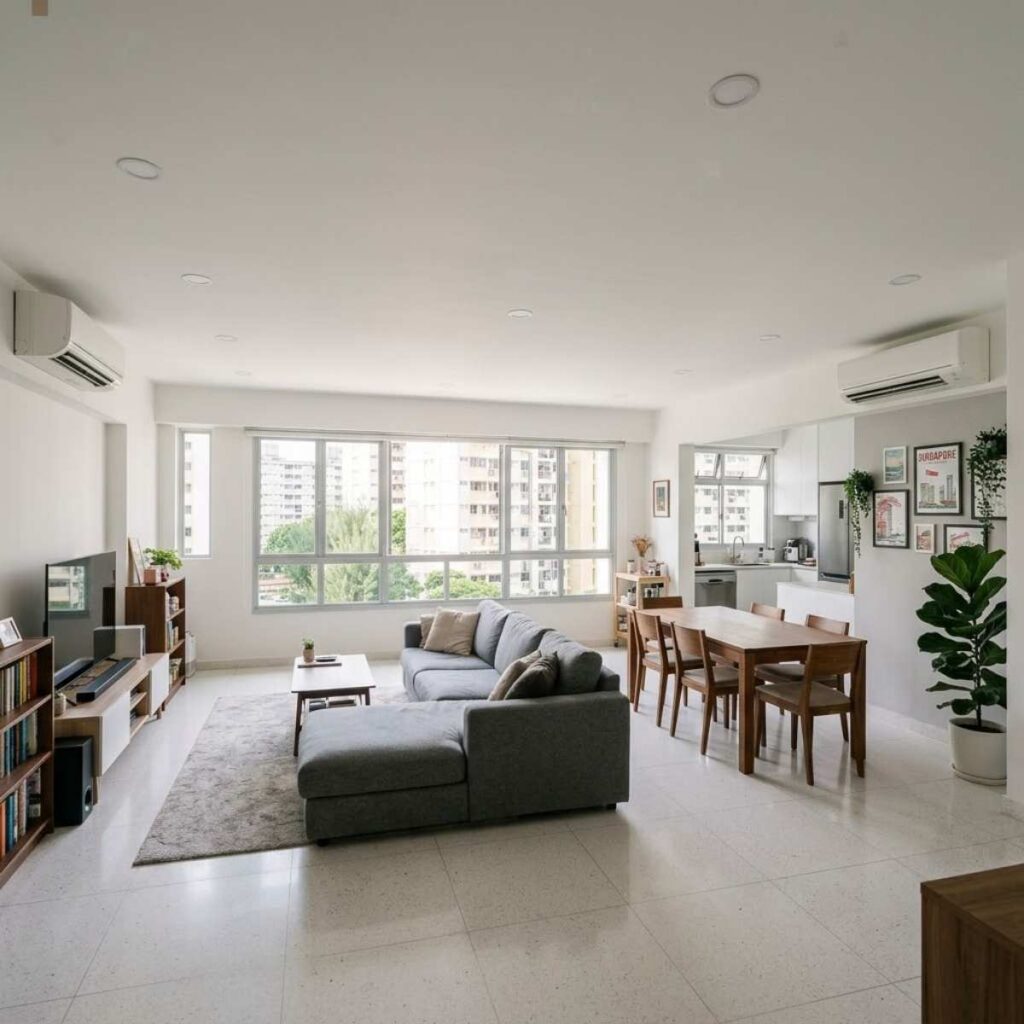
There is no single age at which every flat starts to fall.
Lease decay becomes material as the remaining lease crosses financing thresholds — the age-95 CPF test, the 20-year CPF floor, and the point where loan tenure starts to compress.
Location, size and layout can soften or delay the effect. It is a factor, not a fixed cliff.
The honest answer is that “40 years old” or “60 years remaining” are rules of thumb, not switches.
What actually matters is when the financing math starts to narrow your future buyer pool.
The evidence is genuinely mixed. Analysis by EdgeProp found that while demand for older flats has cooled, many still command firm prices — driven by location near MRT and amenities, or by larger floor areas that newer flats no longer offer.
A well-located older flat can hold up; a plain one in a weaker location, with the same lease, may not.
The lease sets the backdrop; the specifics decide the outcome.
For wider market context: the HDB Resale Price Index slipped 0.3% in Q2 2026, after −0.1% in Q1 2026 — the first back-to-back quarterly dip in nearly seven years.
That is the market moving to a more measured pace, not a signal about any one flat.
How does lease decay affect CPF usage?
CPF use for an HDB flat depends on one test: can the remaining lease cover the youngest owner using CPF to age 95?
If yes, you can use CPF up to the Valuation Limit.
If no, but at least 20 years remain, CPF use is pro-rated. Below 20 years, no CPF can be used.
This single rule, in force since 10 May 2019, quietly decides a lot.
A younger buyer looking at an older flat is the profile it bites hardest — because their runway to 95 is longer, the same lease is more likely to fall short.
Here is the mechanism in plain terms:
- Lease covers the youngest owner to age 95 → full CPF use, up to the Valuation Limit.
- At least 20 years remain but the lease doesn’t reach age 95 → CPF is pro-rated by how far it does cover them.
- Lease is below 20 years → CPF cannot be used.
CPF used on a flat is not lost — on sale, it returns to your CPF as retirement money, so you keep it, just not as cash in hand. The restriction on older flats is about protecting that retirement runway, not penalising you. To see your own figure, use the CPF housing usage calculator, which factors in the owners’ ages and the flat’s remaining lease.
Ask yourself:
(1) How old is the youngest person going on the title?
(2) Does the lease reach their age 95 — and if not, how much cash covers the gap?
How does a short lease affect my home loan?
A shorter lease shortens the loan. An HDB loan runs for the shortest of 25 years, 65 minus the average applicant age, or the remaining lease minus 20 years — so the lease itself can cap the tenure.
On a bank loan, the full 75% loan-to-value holds only if the tenure is 25 years or less and does not run past age 65; otherwise it drops to 55%.
The knock-on is what matters.
A shorter maximum tenure forces a higher monthly instalment for the same price — and that higher instalment shrinks the group of buyers who can service the loan under the debt-servicing rules.
Fewer eligible buyers is thinner demand, which is the quiet engine of lease decay.
If you take an HDB loan. You can borrow up to 75% of the purchase price or the valuation, whichever is lower — lowered from 80% on 20 August 2024.
The repayment period is the shortest of three figures: 25 years, 65 minus the average age of the applicants, or the remaining lease minus 20 years HDB.
That third figure is where the lease bites directly.
A flat with 55 years left caps the tenure at 35 years before the other two tests even apply; at 40 years left, it caps at 20. And if the lease doesn’t cover the youngest buyer to age 95, the 75% limit is pro-rated downward on top of that.
If you take a bank loan. Plan around 25 years.
MAS caps the tenure on an HDB flat at 30 years, but the full 75% loan-to-value applies only when the tenure is 25 years or less and the loan doesn’t extend past age 65.
Cross either line and the limit falls to 55% — and the minimum cash portion of your downpayment doubles from 5% to 10%.
For joint borrowers, the age used is the income-weighted average of the applicants, not the older one’s.
MAS sets no minimum remaining lease for bank loans; each bank applies its own credit policy, so a short lease can still shrink what a bank will offer even when the MAS limits are met.
Ask yourself:
(3) What monthly repayment does the shortened tenure imply?
(4) Who is the realistic next buyer who can finance this flat when I sell?
What happens when the 99-year lease runs out?
When an HDB lease expires, the flat is returned to HDB and the land returns to the State.
In principle the flat’s value at that point is zero, with no automatic compensation or rehousing — unless a government scheme such as SERS or VERS applies to your precinct first.
This is the part owners most want reassurance on, so it is worth stating plainly rather than softening.
In Parliament on 20 January 2014, then Minister for National Development Khaw Boon Wan was asked directly what an HDB flat would be worth once its lease expired.
His answer: like any leasehold property, the flat reverts to HDB as landowner on expiry, and HDB in turn surrenders the land to the State.
He confirmed the flat’s value at that point is zero Singapore Parliament Hansard, sitting of 20 January 2014).
There is a real-world precedent, though not an HDB one.
The 191 privately-owned terrace houses at Geylang Lorong 3, on 60-year leases, were returned to the State on 31 December 2020 with no compensation — the first residential leases in Singapore to expire this way Singapore Land Authority.
Those were private homes, not HDB flats, but they show the State’s settled position: a lease is a fixed term, and holding longer does not renew it.
No HDB flat has yet reached this point. The nearest flats are still decades away.
But the direction is clear enough that it belongs in any honest plan for an older flat — not as alarm, as information.
What are SERS and VERS — and will my flat qualify?
SERS and VERS are the two government schemes that can end a flat’s lease early through redevelopment.
SERS is discretionary and rare — around 4–5% of flats since 1995 — so it should never be assumed.
VERS is voluntary, offered around the 70-year mark by resident vote, with terms designed to be less generous than SERS, and its details are still being finalised.
Neither scheme should be treated as a guaranteed exit. SERS is selective and compulsory when announced. VERS is intended to be voluntary, subject to a resident vote, with details still being developed.
| Factor | SERS | VERS |
|---|---|---|
| Nature | Government-selected and compulsory for the affected precinct | Intended to be voluntary, with residents voting on the offer |
| When it may arise | Case by case; there is no owner-controlled timing | Announced for selected precincts around the 70-year mark, which is roughly 30 years of lease left |
| How common | About 4% of flats have been identified since it began in 1995, and official estimates have put the share ever likely to be suitable at around 5% | Intended for a much wider pool of ageing flats, though selection rules are not final |
| Compensation and terms | Market value for the flat plus rehousing benefits; the specifics depend on the project | Expected to be less generous than SERS. Compensation and voting terms are not yet gazetted |
| Where it stands now | In August 2025 MND indicated there are no plans for further SERS sites | Pilots are not expected before the early 2030s, with the scheme scaled up progressively through that decade |
| How to use it in planning | Do not assume your block will be selected | Treat any circulating SERS windfall or VERS payout figure as a story until HDB tables the actual terms |
Official context: MND National Day Rally 2018 extract, updated by MND statements in August 2025. For the fuller picture, see how VERS is taking shape.
What can I do if my flat's lease is running down?
You have more moves than “wait and hope.” Depending on your age, runway and plans, the honest options are: keep enjoying the home and stop watching the index; right-size or sell while the financing pool is still wide; use the Lease Buyback Scheme if you’re an older owner staying put; or keep the flat well-maintained through upgrading programmes.
The right move fits your numbers, not a rule.
Keep the home. If this is where you want to live and the sums work, a decaying lease is a background fact, not an emergency.
A flat you use fully for 20 more years is doing its job.
Right-size or sell earlier rather than later.
The wider your future buyer pool, the cleaner your exit — and that pool is widest while the lease still clears the age-95 test for most buyers.
Selling into strength is a timing decision to make with your own numbers, not a reaction to fear.
Lease Buyback Scheme (for older owners staying put).
If you are 65 or older and intend to stay, the Lease Buyback Scheme (LBS) lets you sell the tail-end of your lease back to HDB, keep enough years to live out your days in the flat, and turn the proceeds into retirement income.
HDB’s conditions:
- All flat owners must be aged 65 or above — not just one of you. This is the condition most often reported incorrectly.
- At least one owner must be a Singapore Citizen
- Gross monthly household income not exceeding S$14,000
- You have met the minimum occupation period
- You do not own private residential property, or more than one non-residential property
- After retaining enough lease to last the youngest owner to age 95, there must be at least 20 years of lease left to sell to HDB
- All flat types qualify except short-lease flats, HUDC flats and executive condominiums
The proceeds go first to topping up your CPF Retirement Account — to the age-adjusted Full Retirement Sum if there is one owner, or the Basic Retirement Sum for each owner if there are two or more.
After that, your household can keep up to S$100,000 in cash.
On top of the proceeds, HDB pays a cash bonus of up to S$30,000 for a 3-room or smaller flat, S$15,000 for a 4-room, or S$7,500 for a 5-room or bigger, scaled to how much you top up.
Two timing points that matter. The full bonus requires a total Retirement Account top-up of S$60,000 or more.
And you cannot join CPF LIFE from age 80 — so leaving this very late closes a door that does not reopen.
Maintain and upgrade. Programmes like the Home Improvement Programme keep older flats liveable and competitive; they don’t extend the lease, but they support day-to-day value.
Ask yourself:
(5) How many more years do I actually want to live here?
(6) Is my exit stronger if I move while the buyer pool is wide?
(7) What does my plan look like if neither SERS nor VERS ever reaches my block?
A worked example (illustrative)
Here is the lease effect on real-ish numbers.
A flat worth S$500,000 today with 75 years left, held for 20 more years, would have 55 years remaining at sale.
Applying the lease-only adjustment — before any market movement — the two models frame the range like this.
- Today: S$500,000 · 75 years remaining
- In 20 years: 55 years remaining
- YouHome empirical adjustment (lease only): roughly −14% to −15% → about S$425,000–S$430,000 in today’s-value terms
- URA/SLA tenure benchmark (lease only): a smaller adjustment → about S$435,000–S$440,000
The gap between the two is informative, not an error: the empirical index reflects what buyers actually pay at each lease level (which bundles building age), while the tenure benchmark reflects what the lease alone is worth on the official table.
Real market movement, inflation, policy and estate-level factors then sit on top of this — in either direction.
These figures are illustrative and opinion-based, produced with calculation tools — not a valuation or financial advice. Human error is possible; verify against official sources before relying on them.
See how the remaining lease may shape your flat's future value — under two models, side by side.
Note: These figures are illustrative and opinion-based, produced with calculation tools — not a valuation or financial advice. Human error is possible; verify against official sources before relying on them. The HDB empirical index is an independent YouHome analysis of official transaction data — not an official HDB statistic, and not endorsed by HDB, URA or SLA. No SERS or VERS outcome is assumed.
| Remaining lease | YouHome empirical index | URA leasehold table, rebased |
|---|---|---|
| 45 years | 58.4 | 75.9 |
| 50 years | 65.9 | 79.0 |
| 55 years | 71.6 | 81.7 |
| 60 years | 76.1 | 84.6 |
| 65 years | 78.8 | 87.7 |
| 70 years | 82.1 | 90.9 |
| 75 years | 83.9 | 93.6 |
| 80 years | 86.3 | 96.2 |
| 85 years | 94.2 | 98.2 |
| 90 years | 100.0 | 100.0 |
| 95 years | 102.7 | 101.1 |
| 99 years (new lease) | 102.7 | 101.5 |
Both columns are rebased to 90 years = 100 so they can be read side by side; only the ratio between two lease levels is meaningful, never a single figure on its own. The URA column is derived from the official table, where value is expressed as a percentage of freehold and a 99-year lease reads 96.0%. The gap between the two models is informative, not an error.
Ask Rick about your flat's lease position
Sources, derivation and full disclaimer
| Component | Source and date | How it is derived |
|---|---|---|
| HDB empirical index | HDB resale transactions, Jan 2017 to Jul 2026; 235,808 records; retrieved 21 Jul 2026 | Remaining lease grouped into five-year bands; log resale price model controls for transaction month, town, street, flat type, model, floor area and storey. Band coefficients are converted into a relative index, with 90 to 94 years set to 100, then interpolated between anchors. Band anchors were re-tested in Jul 2026 for cohort (excluding DBSS and premium models), flat-type and time-period stability, and held across all checks. |
| URA tenure benchmark | URA Leasehold Table, circular DC22-08 Appendix 2; dated 5 Jul 2022, effective 1 Aug 2022; all 99 values checked against the source 24 Jul 2026 | Future value uses the official factor for the future remaining lease divided by the official factor for today's remaining lease. |
| CPF lease indicator | CPF Board; checked 24 Jul 2026 | Checks whether the remaining lease is at least 20 years and whether it covers the youngest buyer using CPF to age 95. It does not calculate an individual CPF limit — use the CPF Housing Usage Calculator for that. |
Common misconceptions about HDB lease decay
The lease matters, but simple slogans usually miss the financing mechanics and the differences between individual flats.
- Myth"SERS will eventually save my flat."
- Correction: SERS is discretionary and rare — around 4–5% of flats since 1995, with locations undisclosed until announced. It is not something to plan around (HDB).
- Myth"The government must compensate me when the lease ends."
- Correction: There is no automatic compensation or rehousing at lease expiry. The flat returns to HDB and the land to the State (Parliament, 2014; Geylang Lorong 3 precedent, 2020).
- Myth"A leasehold flat becomes like freehold if I just hold it long enough."
- Correction: A 99-year lease expires and returns to the State. Holding longer runs the lease down, not into renewal.
- Myth"All old flats crash in value."
- Correction: The evidence is mixed. Strong location, larger floor area and layout can offset lease age — some older flats hold value well (EdgeProp analysis). The lease is one factor among several.
The Geylang Lorong 3 leases were on private terrace houses, not HDB flats — no HDB lease has yet reached expiry. Policy and lender rules change; each correction links to the source that governs it.
About the author
Rick Long is an Associate Senior Division Director at Huttons Asia.
Through YouHome.sg — Right Property Matters — he shares the frameworks, tools and field experience behind his advisory work, helping Singapore buyers and sellers across HDB, EC and private residential decisions with structured, calm, next-step guidance.
CEA Reg. R026818Z · Huttons Asia · YouHome.sg

For more Singapore property planning tips, follow me on Instagram.
Your support means a lot.
Frequently asked questions
What is HDB lease decay in simple terms?
It is the gradual loss of value as a flat's 99-year lease runs down. You own the right to occupy the flat for the years remaining, not the land. As the lease shortens, CPF use, loan tenure and the number of buyers who can finance the flat may narrow.
How do I check how much CPF I can use for an older flat?
Use the official CPF Housing Usage Calculator. It takes the owners' ages and the flat's remaining lease and applies the age-95 test to show your usable CPF. Confirm the result before committing to a purchase.
Is it better to buy a bigger older flat or a smaller newer one?
It depends on your age, lease horizon, holding period and renovation budget — space today versus lease runway tomorrow. Compare both on the same budget and the same exit assumptions. We work through the trade-offs in Bigger Older HDB or Smaller Newer.
What happens to my HDB flat if I still own it when the lease expires?
The flat is returned to HDB and the land to the State, with no automatic compensation or lease renewal — unless a scheme like SERS or VERS reaches your precinct first. In practice the nearest flats are still decades from this point.
At what remaining lease do financing restrictions start to bite?
There's no single number. The pressure points are the age-95 CPF test (which varies by the youngest buyer's age), the 20-year CPF floor, and the point where loan tenure compresses — often felt from around the 60-year mark for many buyer profiles.
Is it true that the government always compensates HDB owners at lease end?
No. There is no automatic compensation. The 2020 Geylang Lorong 3 lease expiry — 191 private terrace houses returned to the State with no payout — shows the settled position, though those were private homes, not HDB flats.
Should I sell my older HDB flat now or hold it?
That's a decision to make with your own numbers — your age, how long you want to stay, what remains after the loan and the CPF refund, and how wide your future buyer pool still is. There's no one-size answer; mapping your figures first is the honest starting point.
Next steps
If you’re weighing an older flat — buying or selling — the useful move is to map your own lease, CPF and loan position before you decide.
We can map it together.
What's left is the part no article can do — how this applies to your flat, your lease, your timing. One session with Rick closes that gap.
✓ Article read — you've done the groundwork.
Rick will confirm the session with you directly on WhatsApp.
If WhatsApp didn't open, tap here to message Rick
This sends a session request via your own WhatsApp — Rick confirms the timing and meeting place with you personally. Nothing is stored on this page.
Disclaimer: The case studies and information are for educational use only and i make no representation or guarantees with respect to the accuracy, applicability, or completeness of its contents. There shall be no liability for any loss or expense whatsoever, relating to investment decisions made by the reader.
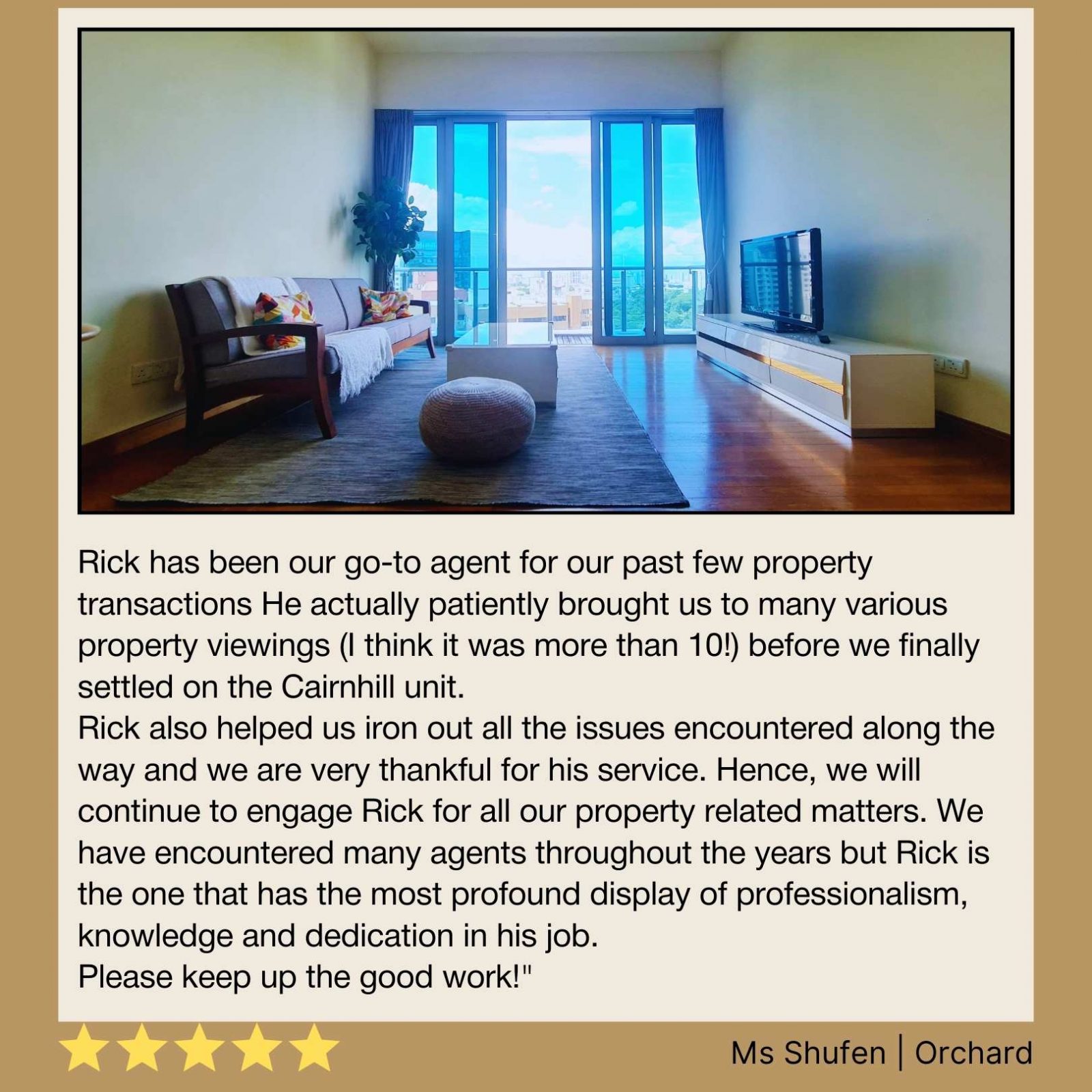
What My Clients Say | Genuine Experiences
Real stories, real experiences—because your journey deserves nothing less than the best.














Awards and Accolades