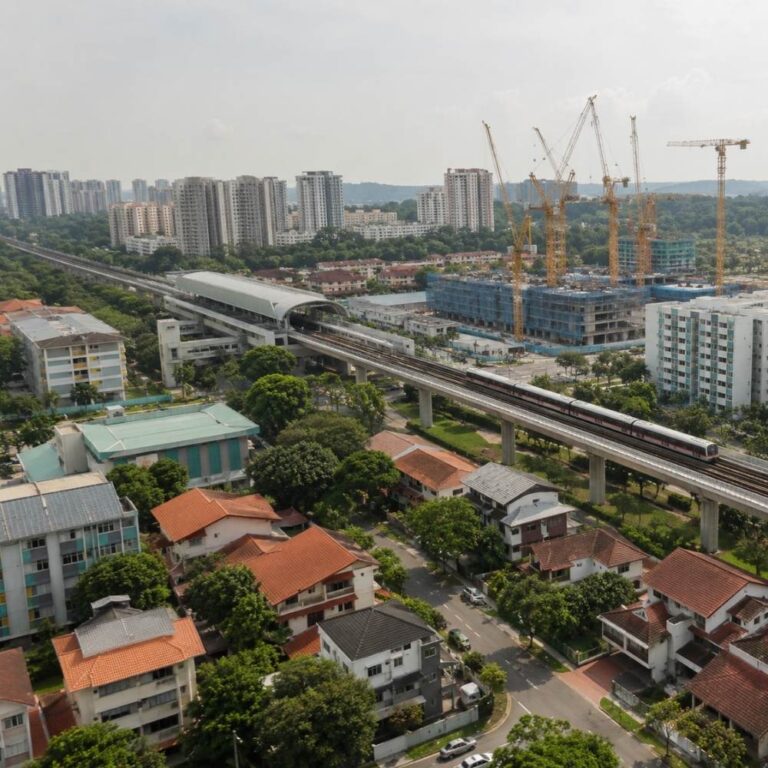
HDB Extension of Stay: Rules, Compensation and the Private Agreement
Quick answer: The HDB Temporary Extension of Stay lets flat sellers remain in their sold flat for up to 3 months after resale completion, if the buyers agree and HDB approves.
It ends automatically, cannot be extended further, and is declared in the resale application. Compensation, if any, is a private arrangement — best recorded in writing.
HDB Temporary Extension of Stay — the rules, as written. Checked as at 10 August 2026.
| Rule | What HDB's terms say | Clause |
|---|---|---|
| Maximum period | Up to 3 months from resale completion — no further extension | 3.4 |
| How it ends | Automatically at 3 months, or earlier by agreement | 3.4, 7.2 |
| Who must agree | The buyers — and HDB must approve | 3.6 |
| When it's requested | Together with the resale application | 2.1 |
| Seller's condition | Committed to a completed, ready-for-occupation property in Singapore | 1.1, 4.1 |
| Admin fee | S$20 (incl. GST), non-refundable, paid by the buyers | 6.1 |
| Disputes | Private arrangement — HDB will not mediate | 8.1 |
Source: HDB, Terms and Conditions for Temporary Extension of Stay by Flat Sellers after Resale Completion (updated 19 February 2026). Clause numbers refer to that document. Verify against HDB before relying on it.
Table of Contents
What is the HDB Temporary Extension of Stay?
The Temporary Extension of Stay is an HDB-approved private arrangement that lets you, as the seller of a resale flat, stay in the flat for up to 3 months after legal completion while you move to your next home.
HDB’s Temporary Extension of Stay page states the extension terminates automatically at the end of 3 months, and there is no further extension beyond that.
Two things make it different from anything else in the resale process. First, it is a separate transaction from the resale itself — the resale completes on schedule whether or not the extension goes ahead (clauses 3.1 and 3.2).
Second, from completion day the buyers are the legal owners, even while you are still living there.
That single fact drives everything below: who pays what, who carries what risk, and why the paperwork matters.
Under the arrangement, the usual requirement to hand over vacant possession at completion is formally varied — you deliver vacant possession only when the extension ends or is terminated (clause 3.5).
That is the legal mechanism that makes staying on legitimate rather than an overstay.
Who qualifies for an extension of stay?
Only sellers who have committed to a completed property in Singapore qualify — a home that is ready for occupation, not one still under construction (clauses 1.1 and 4.1).
You prove it with an exercised Option to Purchase or a signed Sale and Purchase Agreement, plus supporting evidence such as confirmation of taking possession (clause 2.2).
A BTO flat still under construction does not meet the condition — the committed home must already be completed and ready for occupation, which for a BTO in practice means key collection is done.
Two further conditions apply to the flat itself.
You must not be subletting the whole flat at the time of the resale application (clause 4.2).
And during the extension, only you and the authorised occupiers already listed in HDB’s records may live there — the approval does not cover anyone else, including tenants who were renting rooms (clause 4.3).
Breach this and HDB revokes the approval, and the buyers must move in immediately (clause 7.3).
Selling and buying under the Enhanced Contra Facility adds one more restriction, covered in its own section below.
Note: These figures are illustrative and opinion-based — not a valuation or financial advice. Human error is possible; verify against official sources before relying on them.
How do you apply for the extension of stay?
The request is submitted together with the resale application — both you and the buyers state the arrangement in your respective portions (clause 2.1, and per HDB’s page.
There is no separate application later: if it isn’t declared at resale application, it isn’t part of the transaction.
The buyers pay a non-refundable administrative fee of S$20, inclusive of GST, for HDB to process and approve the request (clause 6.1).
Beyond that, each side bears its own costs of entering the arrangement.
Because the request travels with the resale application, the practical window to negotiate it is before the Option to Purchase, not after.
That timing point matters enough that it gets its own section below.
Who pays what during the extension of stay?
From the resale completion date, the buyers — as the new legal owners — pay all outgoings on the flat, even though they are not living in it. HDB’s terms name the housing loan servicing, Service & Conservancy Charges without rebates, and property tax (clause 5.2).
What the seller contributes is a separate, private matter — covered in the next section.
Where HDB's rules end and market practice begins. Checked as at 10 August 2026.
| Item | Who pays | Basis | Source |
|---|---|---|---|
| Housing loan instalments | Buyers, from completion day | RuleOwners pay all outgoings | HDB T&Cs, clause 5.2 |
| Property tax | Buyers, at non-owner-occupier residential rates | RuleOwner-occupier rates apply only if the owner lives in the flat | HDB T&Cs 5.2, 5.4; IRAS — property tax for HDB flat owners |
| Service & conservancy charges (S&CC) | Buyers, with no S&CC rebates during the extension | Rule | HDB T&Cs 5.2, 5.5 |
| S$20 admin fee | Buyers | RuleNon-refundable, inclusive of GST | HDB T&Cs 6.1 |
| Utilities consumed | Not fixed by HDB — commonly the sellers, as the occupants | PracticeSet in the private agreement | Market practice — not addressed in HDB's terms |
| Compensation to the buyers | Sellers, if agreed | PracticePermitted by the T&Cs as a private term — HDB's own page describes it as compensation “to be paid by you [the sellers] to the buyers” | HDB T&Cs 3.7; HDB's extension-of-stay page |
Note: Compiled by YouHome.sg from HDB's Terms and Conditions for Temporary Extension of Stay by Flat Sellers after Resale Completion (updated 19 February 2026) and IRAS guidance, as at 10 August 2026. Rows marked Practice are common market practice and our reading of it — not HDB rules, and not an official position. Verify against the official sources before relying on this table.
On property tax specifically: IRAS applies the owner-occupier concession only when the owner is residing in the flat.
During the extension the buyers are not, so the higher non-owner-occupier residential rates apply for that period — IRAS confirms no exception is made, and owner-occupier rates apply automatically once the extension ends.
IRAS sends the buyers a notification within 14 working days after the resale completion date (clause 5.4), which is why some buyers are surprised by a tax bill weeks after keys were meant to change hands.
How is compensation for the extension worked out?
There is no official rate for extension-of-stay compensation — HDB’s terms permit monetary compensation as a private term between seller and buyer, and leave the amount entirely to the two parties (clause 3.7).
Anything you read about “market rates” is practice and opinion, not a rule.
In practice, arrangements vary widely. Some transactions run with no compensation at all, agreed as part of the overall deal.
Others have the seller covering the buyer’s additional holding costs for the period — commonly the property-tax difference between owner-occupier and non-owner-occupier rates, the S&CC, and sometimes a share of the mortgage interest the buyer is servicing on a flat they can’t yet occupy.
Treat those as reference points to negotiate from, not entitlements — this is our reading of common practice, not an official position.
One rule does bind the negotiation, and it is the most overlooked line in the T&Cs: the resale price of the flat cannot incorporate any intended or prospective compensation for the extension (clause 3.7).
You cannot quietly fold “three months of staying on” into a higher sale price. The compensation, if any, sits in the private agreement — separate from the price HDB sees in the resale application.
What should the extension of stay agreement cover?
The written agreement should record the period, the money, what happens if plans change, and the handover standard — because HDB will not step in if things go wrong. HDB’s terms say the parties may sign a private agreement on the extension (clause 3.7), HDB’s own guidance states plainly that the agreement need not be shown to HDB, and HDB will not mediate any dispute (clause 8.1, and per HDB’s Temporary Extension of Stay page).
The agreement is the only protection either side has.
To be clear: HDB does not prescribe the contents or format of the private agreement — there is no official HDB template.
HDB provides the request form through the resale application, but the private agreement itself is whatever the two parties draft and sign.
The closest thing to official guidance sits inside the T&Cs — HDB advises providing for cancellation before completion (clause 3.8) and recommends a written termination-notice clause (clause 3.9). That is where the list below comes from.
At minimum, put these in writing:
- The exact period — a specific end date (and a handover time), not just “3 months”. If you need six weeks, agree six weeks.
- The compensation — the amount, what it covers, and when and how it is paid.
- Cancellation before completion — either side may cancel the arrangement any time before the resale completes (clause 3.8), and HDB itself advises the agreement provide for that event, including compensation consequences.
- A termination-notice clause — HDB’s terms recommend a clause allowing either party to terminate on written notice (clause 3.9).
- Handover condition — the state the flat is returned in, key return, and utilities meter readings on the final day.
HDB approves the arrangement but will not mediate a dispute over it, so the written agreement between seller and buyer is the only protection either side has. There is no HDB template. Work through the four groups below before anyone signs, and tick as you settle each point.
The period
The money
If plans change
The handover
Sign-off
Note: This checklist is general information based on HDB's Terms and Conditions for Temporary Extension of Stay by Flat Sellers after Resale Completion (updated 19 February 2026), as at 10 August 2026. It is not legal advice and it is not an HDB form. Ticking every box does not create a binding agreement — the document you sign does. Verify against HDB before relying on any point here.
What happens if the extension of stay goes wrong?
If a dispute arises, you resolve it between yourselves — HDB approves the arrangement but will not mediate, and both sides indemnify HDB against claims arising from it (clauses 8.1 and 8.2).
The three traps below account for most of the pain we see, and each has a specific answer in the T&Cs.
The buyer cancels before completion.
Either party can cancel the private arrangement any time before the resale completes (clause 3.8). A seller who was counting on the extension then has to move out by completion day.
The protection is contractual: HDB itself advises the parties to provide in the agreement for what happens on cancellation, including compensation issues (clause 3.8) — so the agreement should state what happens to any money or costs if either side pulls out.
The seller overstays.
If the sellers do not vacate when the extension ends, the buyers must take their own action, as owners and at their own cost, to evict them (clause 7.6).
HDB does not remove anyone.
Buyers should understand this before agreeing; sellers should understand that overstaying puts them on the wrong end of legal action with no HDB shelter.
The arrangement is verbal only.
With nothing in writing, it becomes much harder to prove what was agreed on the period, the money, or the handover standard.
Given that HDB explicitly will not mediate, proof is everything — a verbal-only extension is the single most avoidable risk in the whole arrangement.
Two smaller ones worth knowing. If the sellers abort the purchase of their next property, HDB’s approval for the extension is automatically revoked (clause 7.1).
And if the sellers move out earlier than agreed, the buyers must inform the HDB Branch managing the flat within 7 days of the termination, via the link HDB provides in its terms (go.gov.sg/extension-stay, clause 7.2) — that notification is also what triggers IRAS to adjust the buyer’s property tax for the shortened period.
Why do buyers hesitate to agree?
Buyers hesitate because the extension delays their occupation, adds holding costs, and sets back their Minimum Occupation Period.
Under HDB’s terms, the start point for computing the buyer’s MOP — for open-market resale, subletting, and purchase of private residential property — is set back by the period of the extension (clause 5.1).
A 3-month extension means those clocks start 3 months later.
The buyers also carry responsibility during the extension: they must ensure the sellers comply with the lease and the Housing and Development Act, and they answer for infringements committed while the sellers are in the flat (clause 5.3).
Add the non-owner-occupier property tax and rebate-free S&CC, and a buyer’s reluctance is rational, not difficult.
Which is why the extension is agreed before the Option to Purchase, not raised after.
Raised early, it becomes one of the terms both sides price into the deal — the buyer knows what they are accepting, and the seller knows what it costs.
Raised after the OTP, it is a favour the buyer has every right to refuse, from a position where the seller has little left to offer.
If you are still sequencing the wider sale, our guide to the HDB resale process covers the timeline the extension sits inside.
Extension of stay under the Enhanced Contra Facility
For a purchase under the Enhanced Contra Facility, only the contra party may request the Temporary Extension of Stay (clause 4.1).
If you are selling one flat and buying another in a contra arrangement, the extension request belongs to you as the contra party — the other parties in the chain cannot make it.
The contra mechanics themselves — how the sale proceeds and CPF refund route into the next purchase, and the sequencing that makes same-day completion work — are covered in our HDB Contra guide.
And if the money side of your second flat is the open question, the <second HDB loan guide covers the cash-proceeds rules that apply before any extension is on the table.
Sellers whose committed next home is a private property rather than a flat are making a different move — the sell HDB, buy condo guide maps that path.
Common misconceptions about the extension of stay
“The extension is automatic if I need it.”
It is not. It requires the buyers’ agreement and HDB’s approval, and must be declared in both parties’ portions of the resale application (clauses 3.6 and 2.1).
A seller who assumes it will be available is negotiating with something they don’t yet have.
“We can extend beyond 3 months if both sides agree.”
No — the period cannot exceed 3 months from completion, and HDB’s terms state there shall be no further extension beyond it (clause 3.4).
Goodwill between the parties does not change the cap.
“HDB will step in if the other side plays tricks.”
HDB will not mediate disputes (clause 8.1). If the seller overstays, the buyers evict at their own cost (clause 7.6).
The written agreement, not HDB, is the safety net.
“Compensation has an official rate.”
No official rate exists anywhere in HDB’s terms.
Compensation is a private term the parties set themselves (clause 3.7).
“We can just build the compensation into the resale price.”
Expressly not allowed — the resale price cannot incorporate any intended or prospective compensation for the extension (clause 3.7).
Keep the price and the compensation separate.
HDB extension of stay FAQ
The seven questions sellers and buyers ask most often about the HDB Temporary Extension of Stay, answered against HDB's published terms.
How long can the extension of stay last?
Up to 3 months from the resale completion date. It terminates automatically at the end of the period and cannot be extended further (clause 3.4). It can end earlier if the seller moves out sooner or the parties terminate it by agreement.
Does the seller pay rent to the buyer during the extension?
There is no rent and no official rate. HDB's terms permit monetary compensation as a private arrangement (clause 3.7). In practice some extensions run without payment and others have the seller covering the buyer's added holding costs — it is negotiated, not prescribed.
How do we end the extension early?
The seller moves out, and the buyers inform the HDB Branch managing the flat within 7 days of the termination via the link in HDB's terms (go.gov.sg/extension-stay, clause 7.2). IRAS applies owner-occupier tax rates only while the owner is living in the flat, so a shorter extension means a shorter period at the higher non-owner-occupier rates.
What if the seller doesn't move out after 3 months?
The buyers must initiate their own action, at their own cost, to evict the sellers (clause 7.6). HDB does not carry out evictions. This is the strongest argument for a written agreement with consequences for delay.
Is it true that HDB will mediate if there's a dispute?
No. HDB states plainly that it will not mediate disputes between buyers and sellers over the extension (clause 8.1), and both parties indemnify HDB for approving the arrangement (clause 8.2).
Can we arrange the extension privately without declaring it to HDB?
The extension must be requested with the resale application (clause 2.1) — an undeclared arrangement sits outside HDB's approval entirely. That leaves the occupation unprotected by the vacant-possession variation (clause 3.5), misstates the flat's occupancy position to HDB and IRAS, and exposes both sides to action under the lease terms. Declare it.
What happens if the seller's new home purchase falls through?
HDB's approval for the extension is automatically revoked if the sellers abort the purchase of their committed property (clause 7.1), and the buyers are required to move into the flat.
Note: Answers are based on HDB's Terms and Conditions for Temporary Extension of Stay by Flat Sellers after Resale Completion (updated 19 February 2026) and IRAS guidance for HDB flat owners, as at 10 August 2026. General information, not legal or financial advice — verify against HDB and IRAS before relying on any point here.
Disclaimer: The case studies and information are for educational use only and I make no representation or guarantees with respect to the accuracy, applicability, or completeness of its contents.
There shall be no liability for any loss or expense whatsoever, relating to investment decisions made by the reader.
About the author
Rick Long is an Associate Senior Division Director at Huttons Asia.
Through YouHome.sg — Right Property Matters — he shares the frameworks, tools and field experience behind his advisory work, helping Singapore buyers and sellers across HDB, EC and private residential decisions with structured, calm, next-step guidance.
CEA Reg. R026818Z · Huttons Asia · YouHome.sg

For more Singapore property planning tips, follow me on Instagram.
@agent_rick_longPlanning the move between two homes
The extension of stay is a bridge, not a plan. It works when the next home is secured, the period is honest, the money is agreed, and everything is in writing before the Option to Purchase changes hands.
If any of those pieces is still open in your own move — the sequencing, the negotiation, or the wording — that is a conversation worth having before you commit to a date.
What's left is the part no article can do — your dates, your compensation, and what your agreement needs to say. One session with Rick closes that gap.
✓ Article read — you've done the groundwork.
Rick will confirm the session with you directly on WhatsApp.
If WhatsApp didn't open, tap here
This sends a session request via your own WhatsApp — Rick confirms the timing and meeting place with you personally. Nothing is stored on this page.
What My Clients Say | Genuine Experiences
Real stories, real experiences—because your journey deserves nothing less than the best.













Awards and Accolades