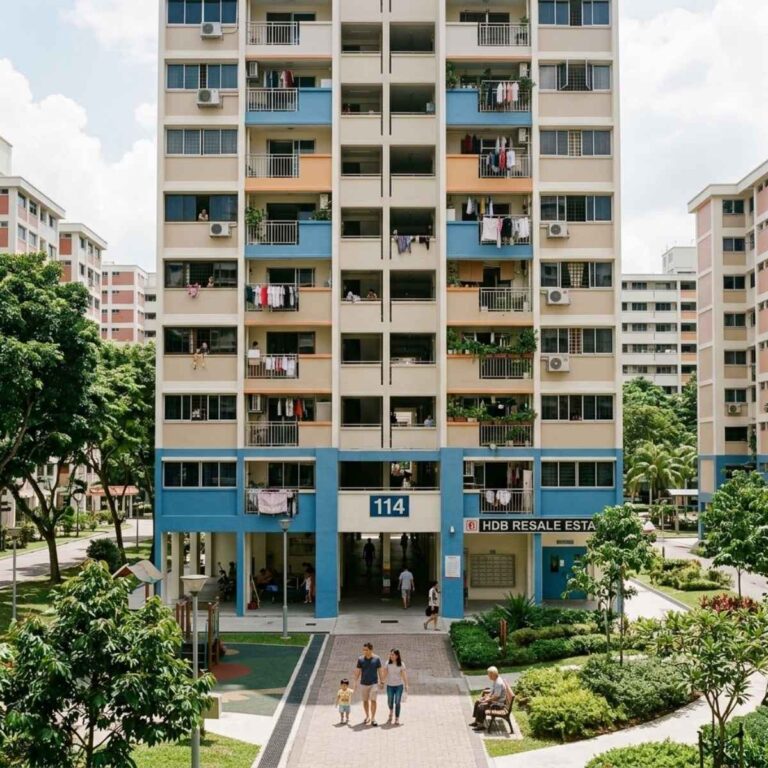
HDB Resale Process in Singapore: Step-by-Step Guide for Sellers
Quick answer: Selling an HDB flat runs in three stages: preparation, marketing, and the HDB resale application.
Register your Intent to Sell, wait out the 7-day period, grant the Option to Purchase, then both parties submit the application within 7 calendar days of exercise.
HDB confirms acceptance within 28 working days, and completion follows about 8 weeks after.

Selling an HDB flat is not really about finding a buyer.
It is a sequence of decisions — your proceeds, your CPF refund, your Intent to Sell date, your buyer’s readiness, the handover — where a gap in one place tends to surface later as pressure somewhere else.
Treat it as a planned transition rather than a checklist, especially if you are buying again after selling. Still deciding whether to sell at all?
The decision guide covers whether selling now or waiting fits your situation.
Table of Contents
What Are the Three Stages of Selling an HDB Flat?
At a high level, selling an HDB flat in Singapore usually involves three broad stages.
Stage 1 — Preparation
Before listing the flat, you should work out your real sale proceeds, check your CPF refund amount, understand your outstanding loan, and register your Intent to Sell on the HDB Flat Portal.
Stage 2 — Marketing and buyer commitment
You prepare your pricing and marketing, host viewings, negotiate with buyers, and grant the Option to Purchase once the buyer is ready and the terms are acceptable.
Stage 3 — HDB resale application and completion
After the buyer exercises the OTP, both parties submit the resale application through the HDB Flat Portal. HDB then processes the application, arranges the necessary checks, requires both parties to endorse the resale documents, and eventually completes the transaction.
For many sellers, the full process can take several months from preparation to completion. The exact timeline depends on your pricing, buyer response, documentation, HDB processing, buyer financing, and whether you are also buying another home.
The deadlines and processing times that shape your sale
Two kinds of timing run through an HDB resale. Fixed rules never move. Stated processing times are HDB's published standard — actual timing varies with document readiness, valuation and how quickly both parties act.
| Stage | Timing | Type |
|---|---|---|
| Intent to Sell validity | 12 months — must still be valid when the resale application is submitted | Fixed rule |
| Wait before granting OTP | 7 days after registering your Intent to Sell | Fixed rule |
| Option period | 21 calendar days, including weekends and public holidays | Fixed rule |
| Option and exercise fees | Option fee up to $1,000; option and exercise fees combined must not exceed $5,000 | Fixed rule |
| Second party's application window | 7 calendar days after the first party submits — missed means the application is cancelled, with no refund of fees paid | Fixed rule |
| Endorsing resale documents | 6 calendar days from HDB's SMS notification | Fixed rule |
| HDB acceptance notice | Both parties notified within 28 working days of submission | Stated processing time |
| Completion | About 8 weeks after HDB accepts the application. HDB states the appointment date given is the earliest possible date — a later one can be arranged by mutual agreement | Stated processing time |
| CPF refund after completion | Allow up to 15 working days for the refund to reach your CPF account | Stated processing time |
| Year | Flats reaching MOP |
|---|---|
| 2025 | about 8,000 |
| 2026 | about 13,500 |
| 2027 | about 15,000 |
| 2028 | about 19,500 |
A flat reaching MOP becomes eligible to be sold — these figures show the size of the pool, not the number of listings. Town-by-town demand, rental and cash-over-valuation movements are tracked on the HDB Downgrader Watch.
How to read this as a seller. The fixed rules are where sales get cancelled — the 7-day application window and the 6-day endorsement window are the two clocks most often missed, and both carry real consequences.
The stated processing times are where sales get delayed. Build your moving plans around the completion date being the earliest possible date, not a guaranteed one — and if you are buying after selling, allow for the CPF refund window before counting on those funds.
Sources: Housing & Development Board — selling a flat, resale application and completion pages (timings as published); Central Provident Fund Board — property sale refund processing; Ministry of National Development and HDB joint statement, 28 July 2026 (MOP estimates, rounded). Figures as at 3 August 2026. Verify the latest at hdb.gov.sg before relying on this table.
The 12-Step HDB Resale Process
Once you understand your numbers and have registered your Intent to Sell, the actual resale process becomes easier to follow.
The steps below show what usually happens from preparation to completion.
1 to 2 days Your selling price is not the amount you receive in cash.
What you actually walk away with depends on your outstanding housing loan, the CPF you used, the accrued interest on it, and your selling costs.
A simple way to think about it: Estimated Cash Proceeds = Sale Price − Outstanding Loan − CPF Refund − Selling Costs Your CPF refund is the principal you withdrew for the flat plus the accrued interest on it.
That money is not lost.
It goes back into your CPF account, where it continues working towards your retirement — but it does change how much cash you have on hand for the next move.
This is often where a consultation turns.
A seller usually starts with “how much can I sell for?”
After checking the CPF refund, loan balance and next-home budget, the more useful question becomes “after I sell, does the next move still make sense?”
Which is why the working belongs here, before you set an asking price — not after an offer arrives.
Where to check your numbers: verify your CPF refund directly with CPF, confirm your outstanding loan with HDB or your bank, and include your estimated selling costs.
HDB arranges the refund to your CPF account within 7 to 14 working days of the resale completion appointment.
You can run the full working with the free HDB sales proceeds calculator before you list.
Step 2 — Decide Whether to DIY or Engage Help
Estimated timeline: Before marketing starts
Some sellers prefer to handle the sale themselves. Others prefer to engage an agent to manage pricing, marketing, viewings, negotiation, paperwork and timeline planning.
There is no single right answer.
DIY may work if your case is straightforward, your timeline is flexible, and you are comfortable managing the process directly.
Professional help becomes more useful when there are more moving parts, such as:
Selling and buying around the same period
CPF and cash-flow planning
Buyer financing concerns
Valuation risk
Multiple owners involved
Tight completion timeline
The key is to choose the route that matches the complexity of your sale, not just the route that looks cheaper at the start.
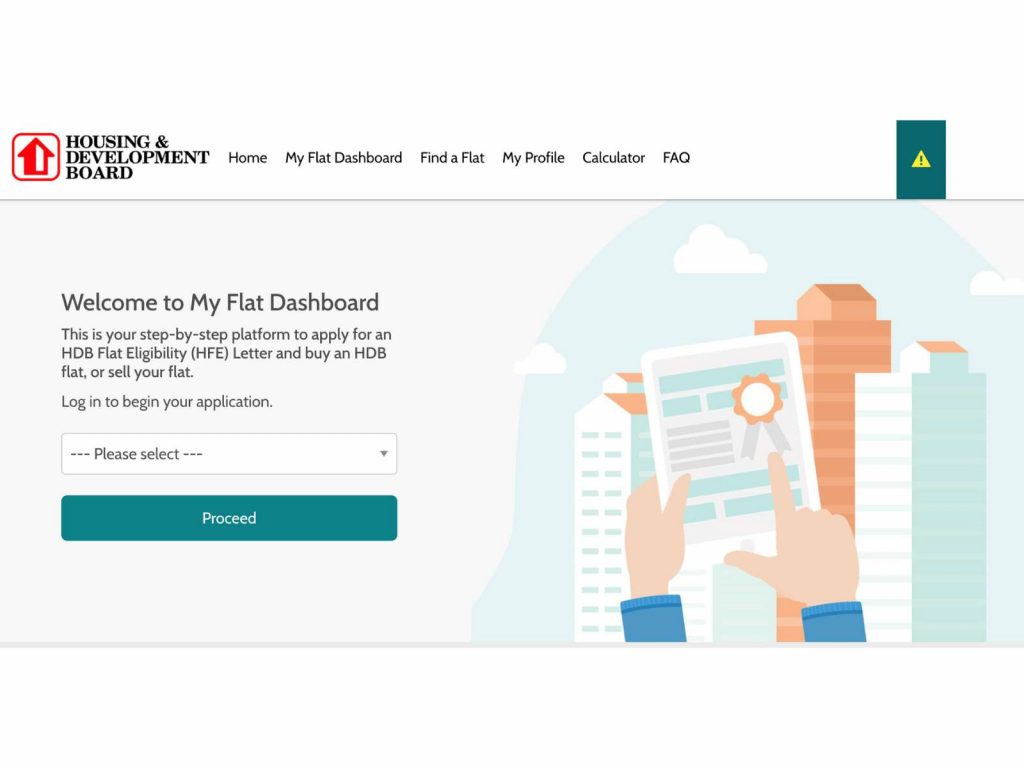
Step 3 — Register Your Intent to Sell and Wait Out the 7 Days
Estimated timeline: about 15 minutes online, then a mandatory 7-day wait You must register your Intent to Sell on the HDB Flat Portal before you can grant an Option to Purchase.
Registration is valid for 12 months, and it must still be valid both when you grant the OTP and when you submit the resale application.
After registering, HDB requires 7 days to pass before you may grant an OTP to a buyer.
This is not a flexible window. Register early, once you are seriously considering a sale.
The 7 days then run in the background while you prepare pricing, marketing, documents and viewing slots.
Leave it until a serious buyer appears, and you have built a week of delay into the moment you can least afford it.
Registering also confirms your eligibility to sell — including whether you have met the Minimum Occupation Period, and whether any selling conditions apply to your flat.
Step 4 — Prepare Your Pricing and Marketing
Estimated timeline: 1 to 2 weeks
This is where many sellers either create strong buyer interest or weaken their own position.
Good marketing is not just about making the flat look nice.
It is about helping buyers understand the value of the home quickly and confidently.
A proper marketing setup should include:
Clean and well-lit photos
Accurate floor plan
Recent transaction references
Clear explanation of flat condition
Key selling points such as floor level, layout, amenities, transport and remaining lease
Realistic pricing based on current market evidence
Avoid pricing only from the highest nearby transaction.
That transaction may have a different floor level, condition, view, layout, remaining lease, ethnic quota situation, buyer urgency or negotiation context.
A strong asking price should still be defendable.
Step 5 — Conduct Viewings Professionally
Estimated timeline: Ongoing during marketing period
Viewings are where buyers test whether the listing matches reality.
Before each viewing, make sure the flat is clean, bright, ventilated and easy to walk through.
During the viewing, buyers usually want to assess:
Space and layout
Natural light
Noise level
Condition of the flat
Privacy
Storage
Neighbourhood convenience
Renovation or repair concerns
Whether the home feels suitable for their family
A calm viewing works better than a hard sell.
Give buyers enough information, then give them space to discuss. Serious buyers often need a second viewing before making a firm offer, so follow-up speed matters.
Step 6 — Check Buyer Readiness, Then Grant the Option to Purchase
Estimated timeline: at the point of offer Once you grant the OTP, your flat is tied to that buyer for the option period.
You cannot issue another OTP to someone else during that time.
So the decision is not only about the number on the table.
Before granting, check three things: Your own position — is your Intent to Sell registered, and have the 7 days passed?
The buyer’s readiness — HDB requires resale buyers to hold a valid HFE letter before they obtain an OTP from a seller.
The HFE letter sets out their eligibility, their housing grants and their HDB loan amount. Beyond that, check that their financing is prepared, that all co-buyers are aligned, and that their timeline matches yours.
Price and timeline — does the offer, and the completion date it implies, work for whatever you are doing next?
Since 20 August 2024, the Loan-to-Value limit on HDB housing loans has been 75%, down from 80%.
That does not mean buyers will struggle.
It does mean some buyers sit closer to their financing limit than they used to, which can make them more sensitive to a price that carries cash over valuation.
Working in the other direction: since 28 July 2026, private property owners and former owners can buy a non-subsidised resale flat immediately, without the previous 15-month wait.
That widens the pool of buyers your flat can sell into, particularly for larger flats.
A high offer from an unprepared buyer can cost you more time than a slightly lower offer from someone who is ready, financed and aligned on dates.
Step 7 — Buyer Requests HDB Valuation
Estimated timeline: Usually after OTP is granted
After the OTP is granted, the buyer may request an official HDB valuation if they are using CPF savings or a housing loan.
This valuation affects how much CPF and loan the buyer can use.
If the valuation is lower than the agreed sale price, the difference is known as Cash Over Valuation, or COV.
For the buyer, COV must be paid in cash.
For the seller, this is where valuation risk appears.
If the COV is higher than the buyer expected, the buyer may become hesitant, request a discussion, or allow the OTP to lapse if they are not comfortable proceeding.
This is why pricing should be ambitious but still grounded in recent evidence.
Step 8 — Buyer Exercises the OTP
Estimated timeline: Within 21 calendar days from OTP grant
If the buyer decides to proceed, they will exercise the OTP within the option period.
At this point, the buyer pays the exercise fee.
The option fee and exercise fee combined cannot exceed $5,000.
Once the OTP is exercised, both seller and buyer are committed to the transaction.
This is the point where sellers should begin preparing more seriously for:
Resale application submission
Required documents
Moving timeline
Next accommodation or next purchase planning
Completion arrangements
Before reaching this point, make sure you are comfortable with the agreed price, timeline and buyer profile.
Step 9 — Submit the Resale Application
Estimated timeline: After OTP is exercised
After the OTP is exercised, both seller and buyer submit their respective portions of the resale application through the HDB Flat Portal.
This is an important administrative stage — and it runs on a fixed clock.
Once the first party submits, the second party must submit their portion within 7 calendar days.
HDB states that if this window is missed, the application is cancelled and the fees already paid are not refunded. Both parties would have to start the application again.
Later in the process, HDB will also notify both parties by SMS to endorse the resale documents, with 6 calendar days to do so.
Sellers should prepare the necessary documents early, especially if there are special circumstances such as:
- Marriage or divorce matters
- Deceased co-owner
- Power of Attorney
- Multiple owners
- Contra or sell-buy planning
- Any documentation that may require more time to retrieve
The smoother your documents, the smoother this stage tends to be — and the less those two deadlines matter, because you’ll clear them without noticing.
Step 10 — Prepare for HDB Inspection
Estimated timeline: During HDB processing period
HDB will inspect the flat as part of the resale process.
The inspection is not about whether your home looks newly renovated.
It is mainly to check that the flat does not have unauthorised works or issues that may affect safety or compliance.
Common areas of concern include:
Walls removed or altered without approval
Unauthorised structural changes
Unapproved window or grille works
Plumbing or electrical changes
Leaks, water damage or visible defects
Renovation works without proper records
If you suspect there may be an issue, address it early.
The worst time to discover a renovation compliance problem is after the buyer has exercised the OTP and everyone is waiting for completion.
Step 11 — Endorse the Resale Documents
Estimated timeline: After HDB prepares the resale documents
When the resale documents are ready, HDB will notify both parties to endorse them through the HDB Flat Portal.
This stage should be taken seriously.
The documents may include payment details, declarations, undertakings and completion arrangements.
Before endorsing, sellers should check:
Sale price
Completion date
Names of all parties
Payment breakdown
CPF refund information
Any undertakings or special conditions
Do not rush through this stage just because it feels administrative.
Once documents are endorsed, changes may be difficult or may delay the transaction.
Step 12 — Completion and Key Handover
Estimated timeline: Usually after HDB completes the required processing and approval steps
At completion, the legal transfer of the flat is finalised.
Sellers should prepare:
All keys
Letterbox keys
Manuals or remote controls, where applicable
Utility and town council arrangements
Final move-out
CPF refunds are handled after completion.
Allow up to 15 working days after completion for the CPF refund to reach your account.
This is important if you are relying on the returned CPF funds or cash proceeds for your next move.
Build in enough buffer, especially if you are selling and buying within a tight timeline.
How to Plan Your Selling Timeline Properly
Knowing the HDB resale steps is one thing.
Planning the timeline around your actual life is another.
For most sellers, the real question is not only “How long does the resale process take?”
The more useful question is: “When do I need to move, when do I need the funds, and what must happen before I commit to the next step?”
This matters especially if you are selling your current HDB flat and planning to buy another home after that.
Not sure whether to sell first or buy first?
Answer 5 quick questions to see which sequence may need closer planning before you commit. This is a guide, not a financial recommendation.
This tool is meant to help you think through the sequence. It does not replace a proper review of your CPF refund, loan eligibility, sale proceeds and next-home financing.
Common Mistakes Sellers Should Avoid
Most HDB resale problems do not happen because the process is impossible.
They happen because one step was assumed too early.
Here are the common mistakes sellers should avoid.
Common HDB Selling Mistakes Sellers Should Avoid
Most HDB resale problems do not happen because the process is impossible. They happen because one step was assumed too early. Here are the three worth checking before you list.
Some sellers start marketing based on an estimated selling price, then only check their CPF refund and loan balance later.
That can be risky because your sale price is not your take-home cash. CPF refund, accrued interest, outstanding loan and selling costs can change the final amount significantly.
If you are planning to buy after selling, this number affects your next budget.
Not always. A high offer is attractive, but price is only one part of the decision.
Before granting OTP, you should also check whether the buyer is financially and administratively ready. This includes their HFE letter, financing preparation, co-buyer alignment, timeline, and possible valuation or COV concerns.
HDB inspection can surface unauthorised renovation works, altered walls, leaks, or other compliance concerns.
If these appear late in the process, they can delay completion or create stress with the buyer.
One more, sitting underneath all three: the sale is only one side of the move. Plan when you move out, whether you need somewhere in between, whether you are selling first or buying first, and how the CPF refund lands against your next purchase — HDB arranges that refund within 7 to 14 working days of the resale completion appointment. That planning belongs before you commit to a sale timeline, not after.
Before you list, make sure the sale is planned in the right order.
A good offer can still become stressful if the numbers, procedure and timeline are not properly mapped first.
Should You Sell Your HDB Yourself or Engage an Agent?
There is no single right answer, and the honest version of the question is not “can I save the commission?”
It is “how straightforward is my sale?”
Selling on your own can work when the flat has no compliance concerns, your timeline is flexible, your co-owners are aligned, and you are not selling and buying at the same time.
It gets harder when there are more moving parts — buyer financing, valuation risk, multiple owners, a tight completion date, or a next purchase depending on these proceeds.
The comparison that matters is the whole outcome, not the visible cost. Saving on commission and achieving a weaker price is not a saving.
HDB Resale Process FAQ
Common Questions About the HDB Resale Process
Use this FAQ for the questions sellers ask most often before listing: how long the process takes, what happens on valuation, when your proceeds and CPF refund land, and whether to sell or buy first.
For many sellers, the full process can take a few months from preparation to completion.
The timeline depends on how long marketing takes, how quickly a suitable buyer is found, whether the buyer exercises the OTP, how smoothly both parties submit the resale application, and when HDB accepts and completes the transaction.
If the agreed sale price is higher than HDB’s valuation, the difference is known as Cash Over Valuation, or COV.
The buyer must pay this difference in cash.
For sellers, this is why it is important to price the flat based on recent comparable transactions, not only the highest number in the area.
Your sale proceeds are settled around completion, after deducting items such as the outstanding loan, CPF refund and selling-related costs.
For the CPF portion, HDB arranges the refund to your CPF account within 7 to 14 working days of the resale completion appointment.
If you used CPF savings for the flat, you generally need to refund the CPF principal used plus accrued interest back to your CPF account when the property is sold.
This is not money lost. It goes back into your CPF.
Yes, many sellers choose to sell first because it lets them see their actual proceeds, settled rather than estimated, before committing to the next purchase.
The trade-off is that you may need temporary accommodation or a transition plan before moving into your next home.
It may be possible, depending on your finances and the type of property you are buying.
But buying first can create more financial pressure if you need the sale proceeds from your current flat, or if your sale takes longer than expected.
Still unsure how your sale should be planned?
Before you list, it is worth getting a professional view on your likely sale proceeds, timeline and next-step options.
About the author
Rick Long is an Associate Senior Division Director at Huttons Asia.
Through YouHome.sg — Right Property Matters — he shares the frameworks, tools and field experience behind his advisory work, helping Singapore buyers and sellers across HDB, EC and private residential decisions with structured, calm, next-step guidance.
CEA Reg. R026818Z · Huttons Asia · YouHome.sg

For more Singapore property planning tips, follow me on Instagram.
@agent_rick_longBefore You List Your HDB Flat

Selling your HDB flat is a process that rewards preparation.
The sellers who find it smooth are rarely the ones who tried their luck with a high asking price.
They are the ones who knew their numbers early, registered their Intent to Sell on time, checked buyer readiness before granting the OTP, and planned the timeline around what comes after the sale.
A good offer can still become stressful if the sale is not planned in the right order.
You know the steps now. What an article can't do is run your own numbers, check your dates against the deadlines that cancel applications, and tell you whether your sale is planned in the right order. One session with Rick covers that.
✓ Article read — you've done the groundwork.
Rick will confirm the session with you directly on WhatsApp.
If WhatsApp didn't open, tap here
This sends a session request via your own WhatsApp — Rick confirms the timing and meeting place with you personally. Nothing is stored on this page.
Disclaimer: The case studies and information are for educational use only, and I make no representations or guarantees with respect to the accuracy, applicability, or completeness of the contents.
There shall be no liability for any loss or expense whatsoever relating to property or investment decisions made by the reader.
What My Clients Say | Genuine Experiences
Real stories, real experiences—because your journey deserves nothing less than the best.












Awards and Accolades