15-Month Wait-Out Period Removed: What It Means for You
On 28 July 2026, the Government removed the 15-month wait-out period for private property owners buying a non-subsidised HDB resale flat.
The change took immediate effect, applies to owners of all ages buying flats of any size, and has one key condition: the purchase must be made without an HDB housing loan.
That is the headline.
This guide covers what the rule was, exactly what changed, who it affects, and how a sell-and-buy sequence looks now — with the numbers, sourced from MND’s announcement and <u>HDB’s published data.
Table of Contents
The rule and the market, at a glance
The table below tracks the measure against HDB’s own Resale Price Index, from introduction to removal. This is the context the decision was made in.
The wait-out measure was introduced during rapid HDB resale price growth in September 2022 and removed on 28 July 2026 after annual growth moderated and the Resale Price Index recorded two consecutive quarterly declines. The removal is one targeted policy adjustment, not a reversal of the wider housing framework.
| Period | HDB resale market movement | Policy context |
|---|---|---|
| 30 September 2022 | 2022 full-year increase: 10.4% | The 15-month wait-out period was introduced as a temporary demand measure. |
| 2023 | Full-year increase: 4.9% | The measure remained in force, with the earlier senior exemption. |
| 2024 | Full-year increase: 9.7% | The wait-out period remained part of the resale-market framework. |
| 2025 | Full-year increase: 2.9% | Annual price growth slowed substantially from 2024. |
| 1Q 2026 | RPI 203.4, down 0.1% quarter on quarter | First quarterly decline in the 2026 sequence. |
| 2Q 2026 | Final RPI 202.8, down 0.3% quarter on quarter | Second consecutive quarterly decline. |
| 28 July 2026 | Not applicable | The wait-out period was removed for qualifying non-subsidised HDB resale purchases without an HDB housing loan. |
Sources: HDB Resale Statistics and MND's wait-out removal announcement.
What was the 15-month wait-out period?
The 15-month wait-out period was a cooling measure introduced on 30 September 2022.
It required private residential property owners — and former owners — to wait 15 months after selling their private home before they could buy a non-subsidised HDB resale flat.
One group was exempt: Singapore Citizens aged 55 and above buying a 4-room or smaller resale flat, to support seniors right-sizing for retirement.
The context matters.
Pandemic-era construction delays had squeezed new flat supply while demand stayed strong.
In September 2022 alone, resale prices rose 1.2% month-on-month and a then-record 45 flats crossed the S$1,000,000 mark, per 99.co-SRX market data.
The Government also noted in Parliament that the number of private property owners buying resale flats in 2021 and the first nine months of 2022 had roughly doubled compared with 2019–2020 — and that these buyers, with more cash on hand, tended to pay higher Cash Over Valuation.
The measure was designed to take that pressure out of the market while supply caught up.
It was never positioned as permanent.
HDB processed around 5,500 waiver appeals up to 31 March 2025, approving roughly a quarter — a signal of how much genuine right-sizing demand was queuing behind the rule.
What exactly changed on 28 July 2026?
National Development Minister Chee Hong Tat announced the removal at the 11th Singapore Economic Review Conference, with a joint MND-HDB statement issued the same day. In plain terms:
Private property owners, and former private property owners, can now buy a non-subsidised HDB resale flat immediately.
No wait-out period applies. The change covers owners of all ages and resale flats of all sizes, and took effect on 28 July 2026.
The stated reason: the measure had met its purpose.
Resale price growth has moderated from 10.4% in 2022 to 2.9% in 2025, and the index has now edged down for two consecutive quarters — the first back-to-back decline in nearly seven years.
The boundaries — read these before you plan
Three conditions define where the removal stops. They are easy to miss in the headlines.
1. The purchase must be made without an HDB housing loan.
The removal applies to buyers financing with cash or a bank loan.
HDB concessionary loan eligibility is a separate framework with its own conditions on private property ownership and recent disposal — those conditions were not changed by this announcement.
If you intend to take an HDB loan, check your HFE letter outcome on the HDB Flat Portal before building a plan around it.
2. Subsidised flats are a different track.
Buying a BTO flat, a Sale of Balance flat, or other subsidised housing remains governed by its own long-standing rules — including the requirement not to own, or to have disposed of, private property within the preceding 30 months.
The 28 July 2026 change touches none of that. It applies to non-subsidised resale purchases only.
3. Owning and buying at the same time carries its own obligations.
Historically, a buyer who still held a private property at the point of a resale flat purchase was required to dispose of all private residential interests within 6 months of the purchase, and stamp duty treatment differs when you hold two properties at the point of purchase.
If you are considering buying the flat before your private sale completes, confirm the current disposal wording on HDB’s resale eligibility page and the stamp duty position with IRAS or your conveyancing lawyer before committing.
The cleanest sequence for most households remains sell first, then buy — which the removal has just made dramatically more practical.
Who does this actually change things for?
Not every buyer or seller feels this equally. The change lands on specific groups.
Under-55 right-sizers.
This is the biggest shift. Before 28 July, a 48-year-old couple selling a condo to move to a resale flat faced a 15-month gap — typically meaning a rental bridge, two moves, and rental costs that could run into five figures. That gap is gone.
EC owners past MOP.
An Executive Condominium is private property for this purpose once sold on the open market.
Owners weighing the sell-EC-buy-HDB path — covered in detail in our guide at selling-your-ec — no longer need to plan around a wait-out.
The sequencing question becomes financing route and timing, not bridging.
Seniors, 55 and above.
Previously exempt only for 4-room or smaller flats.
The size cap is now irrelevant — a right-sizing senior household can buy a 5-room or executive flat immediately if that fits their family better.
Sellers of larger flats in mature estates.
The buyer pool for 5-room, executive and jumbo flats — the flat types downgraders typically buy — has just widened to include a cash-richer segment that was locked out for almost four years.
If you are preparing to sell, our step-by-step guide at hdb-resale-process covers the sequence.
Who it does not help:
Households needing an HDB concessionary loan for the purchase, and anyone buying subsidised housing.
Those frameworks are untouched.
Will HDB resale prices rise because of this?
Honest answer: the factors point in both directions, and anyone giving you a one-word answer is guessing.
Here is what the evidence supports.
Factors that support firmer demand
The reopened channel is real.
Private-owner purchases of resale flats had roughly doubled in 2021–2022 before the measure, per MND’s parliamentary statements, and about 5,500 households appealed the rule in its first two and a half years.
These buyers historically arrive with more cash and have paid higher Cash Over Valuation, concentrated in larger flat types and mature estates — the segment where million-dollar transactions already cluster.
ERA’s market data counted 902 million-dollar resale deals in the first half of 2026, up from 763 in the same period last year, though still only around 7.9% of quarterly transactions.
Factors that temper the effect
Run the arithmetic on the appeal queue: 5,500 appeals over roughly 30 months is about 180 households a month, against a resale market transacting around 2,000 flats a month.
Even if the true pent-up pool is several times the appeal count, this channel is a single-digit share of monthly volume — meaningful at the margin, not a flood.
Supply is also moving the other way.
The MOP pipeline rises steeply through 2028, and the measure was removed into a softening market — two consecutive quarterly declines, with 2Q 2026 volume of around 6,268 transactions running 10.2% below a year earlier per HDB’s flash data.
Singapore Realtors Inc’s head of research Mohan Sandrasegeran reads the move as a targeted adjustment rather than a broad unwinding of cooling measures — a view consistent with the Government leaving every other measure in place.
One more piece of context: HDB’s own index history shows prices are not a one-way street. Between 2013 and 2018, the RPI recorded six consecutive years of annual declines.
What to watch instead of guessing
Three markers over the next two quarters will tell the real story: the 3Q 2026 RPI reading, Cash Over Valuation patterns specifically in 5-room and executive flats in mature estates, and the million-dollar transaction share. Movement there — not headlines — is the signal.
A worked example: what the removal saves a right-sizing family
Note: These figures are illustrative and opinion-based, produced with calculation tools — not a valuation or financial advice.
Human error is possible; verify against official sources before relying on them.
Take a couple in their late 40s selling a condominium at around S$1,850,000.
Their outstanding loan is roughly S$680,000, their combined CPF refund including accrued interest is around S$460,000, and selling costs come to about S$40,000.
| Sale item | Illustrative amount |
|---|---|
| Sale price | S$1,850,000 |
| Less outstanding housing loan | S$680,000 |
| Less CPF principal and accrued interest restored to CPF accounts | S$460,000 |
| Less selling and legal costs | S$40,000 |
| Estimated cash proceeds | S$670,000 |
The CPF refund is not a penalty or money disappearing from the household. It restores the CPF principal used and accrued interest to the members' CPF accounts, subject to CPF Board's actual refund computation.
| Purchase item | Illustrative amount | Assumption |
|---|---|---|
| Purchase price | S$780,000 | Actual stamp duty and financing use the higher of relevant price or valuation where applicable. |
| Illustrative bank loan | S$585,000 | 75% LTV, assuming the borrowers qualify for that limit and have no condition that reduces it. |
| Total downpayment | S$195,000 | 25% of the illustrative purchase price. |
| Minimum cash component | S$39,000 | 5% cash under the stated first-housing-loan bank-financing assumption. |
| Remaining downpayment | S$156,000 | May be paid from eligible CPF Ordinary Account savings and/or cash, subject to CPF and financing conditions. |
| Buyer's Stamp Duty | S$18,000 | Based on current IRAS residential BSD bands and a S$780,000 dutiable value. |
| Downpayment plus BSD | S$213,000 | Excludes valuation, legal, mortgage, renovation, moving and other transaction costs. |
At S$3,500 to S$4,500 monthly, 15 months of rent would equal approximately S$52,500 to S$67,500. This is a comparison with the former compulsory wait-out, not a promise that every household will avoid that amount. A household may still rent because of its actual sale, renovation or completion timing.
Before setting a next-home budget, review the HDB sale proceeds calculator and CPF accrued interest guide.
Note: Estimate only — verify exact figures with the CPF, HDB and IRAS portals. These figures are illustrative and opinion-based, produced with calculation tools — not a valuation or financial advice. Human error is possible; verify against official sources before relying on them.
The CPF refund is not money lost — it is their own retirement savings restored to their Ordinary Accounts, available again for the next purchase.
They buy a 5-room resale flat at around S$780,000 with a bank loan — the financing route the removal covers.
At a 75% loan-to-value limit, the downpayment is about S$195,000, of which a minimum of around 5% is cash and the remainder can come from CPF; Buyer’s Stamp Duty adds roughly S$18,000.
Their proceeds cover this comfortably, with a substantial cash buffer left over.
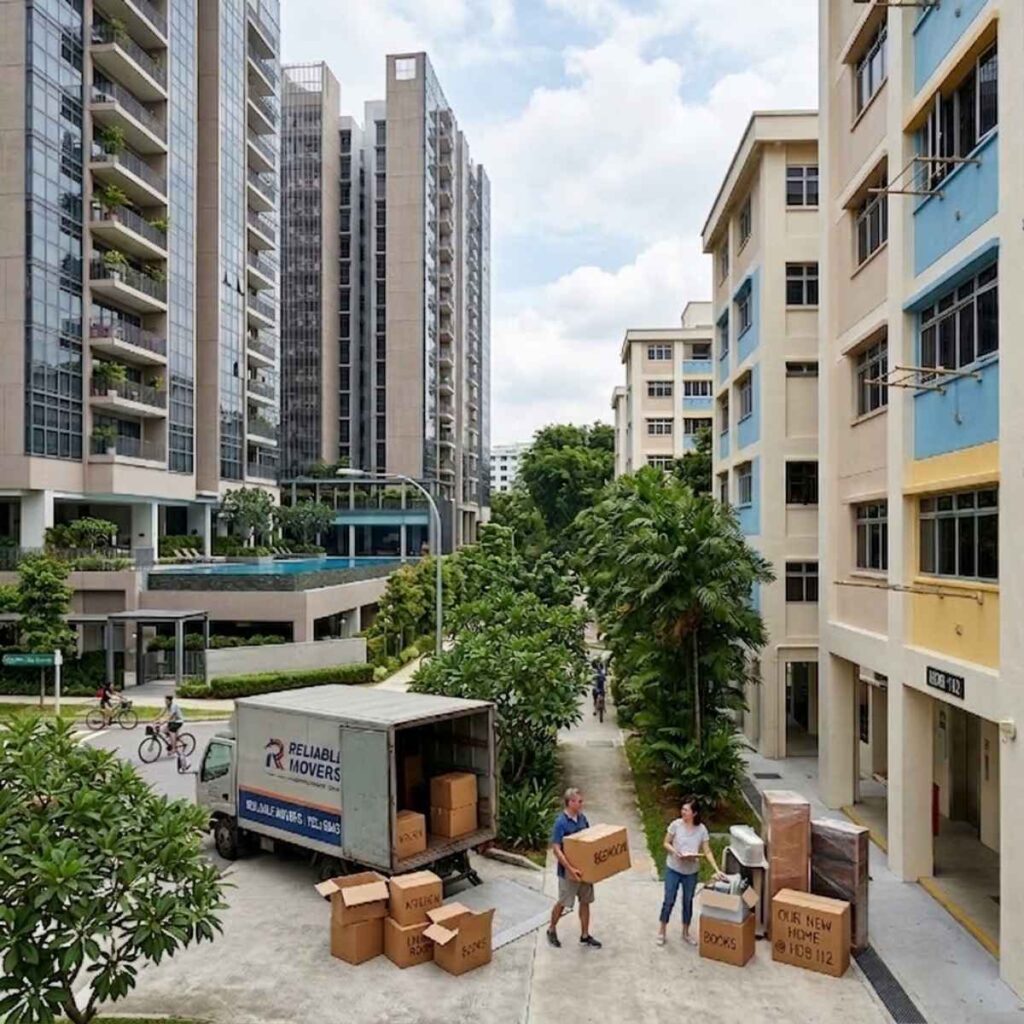
Here is what changed. Under the old rule, this couple — under 55 — would have waited 15 months between completing their condo sale and becoming eligible to buy.
For a family, that typically meant renting: at around S$3,500 to S$4,500 a month, a 15-month bridge cost somewhere between S$52,000 and S$68,000, plus two moves and the risk of resale prices shifting mid-wait.
From 28 July 2026, that entire line item disappears.
The sale completion and the resale purchase can now be planned as one continuous sequence — the same way our guide at hdb-contra-useful-scheme-for-hdb-second-time-buyers, describes for HDB-to-HDB moves.
Before running your own version of these numbers, start with your true cash proceeds — our calculator at hdb-resale-calculator and the CPF accrued interest guide at the-silent-threat-of-cpf-accrued-interest-and-how-it-can-affect-your-property-cash-proceeds, cover the mechanics.
From 28 July 2026, the 15-month wait-out no longer applies when a private residential property owner or former owner buys a non-subsidised HDB resale flat without an HDB housing loan. HDB loan eligibility and other resale conditions remain separate checks.
Note: These figures are illustrative and opinion-based, produced with calculation tools — not a valuation or financial advice. Human error is possible; verify against official sources before relying on them. Review the MND announcement, HDB housing-loan conditions and your HFE letter before committing.
Does the removal change your next move? A 6-question check
Select one answer for each question. The result is a planning prompt, not an HDB eligibility assessment, loan decision or recommendation to transact.
The 15-month removal does not replace standard HDB resale eligibility, HFE, financing, stamp-duty or disposal checks.
Review my sequence with RickCommon misconceptions, corrected
“The wait-out period was 30 months.”
No. The wait-out for non-subsidised resale flats was 15 months, and it has been removed.
The 30-month condition is a separate, long-standing rule for subsidised flats and related eligibility — it remains in force.
Several 2026 guides online conflate the two; HDB’s own pages are the reliable reference.
“Private owners can now buy any HDB flat.”
The removal covers non-subsidised resale flats only.
BTO and other subsidised purchases keep their existing rules, and standard resale eligibility — citizenship, family nucleus, Ethnic Integration Policy quotas — still applies to everyone.
“This reverses the cooling measures.”
One measure was removed. The August 2024 LTV tightening, stamp duty framework, and every other measure remain exactly as the
About the author
Rick Long is an Associate Senior Division Director at Huttons Asia.
Through YouHome.sg — Right Property Matters — he shares the frameworks, tools and field experience behind his advisory work, helping Singapore buyers and sellers across HDB, EC and private residential decisions with structured, calm, next-step guidance.
CEA Reg. R026818Z · Huttons Asia · YouHome.sg

For more Singapore property planning tips, follow me on Instagram.
Your support means a lot.
Frequently asked questions
What was the 15-month wait-out period?
It was a temporary demand measure introduced in September 2022. Private residential property owners and former owners generally had to wait 15 months after disposing of their private home before buying a non-subsidised HDB resale flat, subject to the former senior exemption.
Can I buy an HDB resale flat immediately after selling my condominium?
From 28 July 2026, the former 15-month wait-out no longer applies to a non-subsidised HDB resale purchase without an HDB housing loan. Standard HDB resale eligibility, HFE, financing and completion conditions still apply.
Does the removal apply to buyers of every age and resale flat size?
Yes. From 28 July 2026, the removal applies to private property owners of all ages buying a non-subsidised HDB resale flat of any size. The former exemption for citizens aged 55 and above buying 4-room or smaller flats is no longer the boundary. The purchase must still be made without an HDB housing loan.
Can I buy the HDB resale flat while I still own my private property?
The former wait-out no longer creates the same block for the qualifying route, but HDB’s disposal requirement and the stamp-duty position still need checking. HDB states that existing private residential interests generally have to be disposed of within six months of resale completion. Confirm the actual deadline for your application before committing.
Does the removal apply to BTO flats or other subsidised purchases?
No. Buying a new or otherwise subsidised flat remains subject to its own private-property ownership and disposal conditions. The announcement concerns qualifying non-subsidised HDB resale purchases.
Can a former private-property owner take an HDB housing loan immediately?
The announcement did not remove the separate HDB housing-loan eligibility conditions. HDB states that the applicable private residential property must have been disposed of at least 30 months before the HFE application for an HDB housing loan. Your HFE outcome should be checked before fixing the purchase timeline.
Does the removal mean HDB resale prices will rise?
It does not establish a price direction. The buyer channel has reopened, but resale outcomes also depend on supply, affordability, financing, valuation, location, flat type and broader demand. Review actual transactions and buyer response rather than relying on the policy headline alone.
Was the measure removed because HDB resale prices are crashing?
HDB’s final Resale Price Index declined by 0.1% in 1Q 2026 and 0.3% in 2Q 2026. Those movements show two quarters of moderation, not enough on their own to describe every town, flat type or individual transaction.
Review the MND announcement and your current HFE outcome before acting on any individual purchase plan.
The bottom line — and your next step
For almost four years, the 15-month wait-out shaped every private-to-HDB conversation: the bridge, the rental, the double move.
From 28 July 2026, that constraint is gone, and the planning question returns to where it belongs — your numbers, your financing route, and your sequence.
If this change touches your situation — you are holding a condo or EC and thinking about right-sizing, or selling a larger flat into this widened buyer pool — the next step is a run-through of your actual figures, not a rushed decision.
What's left is the part no article can do — how the removal applies to your ownership position, your financing route, your timing. One session with Rick closes that gap.
✓ Article read — you've done the groundwork.
Rick will confirm the session with you directly on WhatsApp.
If WhatsApp didn't open, tap here
This sends a session request via your own WhatsApp — Rick confirms the timing and meeting place with you personally. Nothing is stored on this page.
Disclaimer: The case studies and information are for educational use only and i make no representation or guarantees with respect to the accuracy, applicability, or completeness of its contents. There shall be no liability for any loss or expense whatsoever, relating to investment decisions made by the reader.
What My Clients Say | Genuine Experiences
Real stories, real experiences—because your journey deserves nothing less than the best.















Awards and Accolades