Should I Sell My EC After MOP? Here's How to Decide

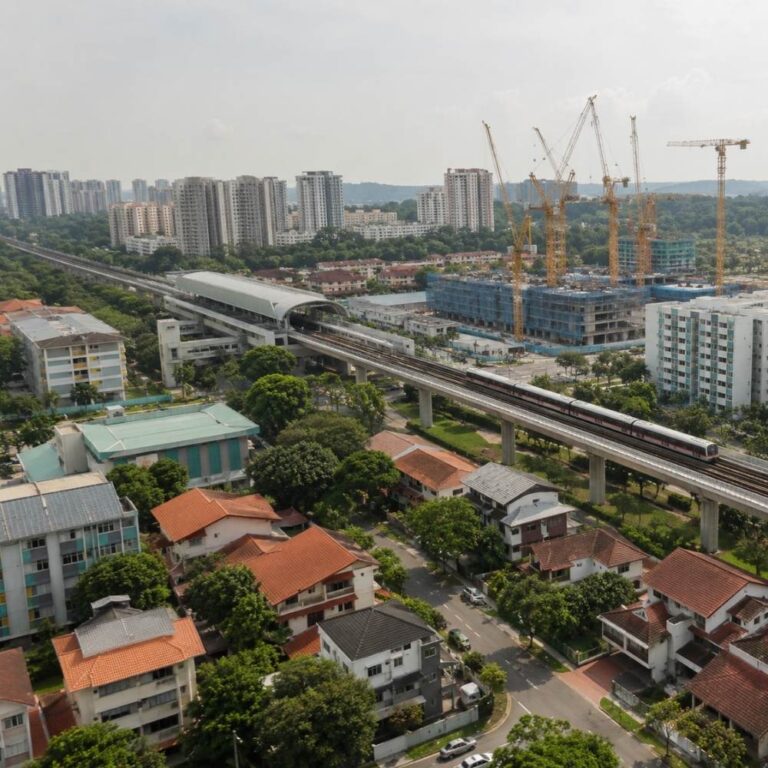
A Singaporean family standing by their condo window with moving boxes nearby, reflecting on their next home decision after their Executive Condominium reaches MOP.

Reaching MOP on your EC is a quiet kind of milestone.

For five years or more, you’ve simply lived in your home — and now a door opens: you can sell, rent it out, or plan a different next move.

If you’re feeling unsure which way to go, that’s normal — there are more options here than most owners realise.

This guide walks through each one, one honest step at a time, so you can decide what fits your family, your numbers and your timeline — not someone else’s.

Quick Answer: Should You Sell Your EC?

If your EC has reached its 5-year MOP, the honest answer is:
It depends on three things — your numbers, your family’s next stage, and your timeline.

You should consider selling if your EC has appreciated well, your next home is realistic after the loan and CPF refund are settled, and a move would make your family’s life steadier — not tighter.

You should consider holding if your monthly commitment is comfortable, you don’t need the cash now, and the location still has room to mature.

Selling isn’t the goal.

The goal is the right next move for your family.

Below, we map every option — sell, hold, rent, upgrade, buy HDB, restructure, or wait — and the numbers that decide between them.

Table of Contents

Where Are You in Your EC Timeline?

There’s no single answer because every EC owner is at a different point. Your stage decides which options are even on the table today.

EC Stage What You Can Generally Do Why It Matters
Year 0–5 Live in it. You generally can’t sell or rent out the whole unit. Your loan, CPF used and accrued interest are still moving in the background.
Year 5–10 You may sell to Singapore Citizens and PRs, and may rent out the whole unit. This is the most active decision window for most owners.
Year 10+ Fully privatised — buyer pool may widen to foreigners and entities. More marketability for some, but not an automatic price jump.

All subject to prevailing HDB/URA rules — verify your unit’s exact status before planning around it.

When Selling Your EC May Make Sense

  • Your EC has appreciated meaningfully and the gain can move your family forward.

  • After loan redemption, CPF refund (plus accrued interest) and selling costs, your next home is still comfortable.

  • You want to free up cash, lower your monthly commitment, or right-size.

  • The next chapter — schooling, location, retirement, a second property — needs this equity working.

Which Post-MOP Path Fits You?

Answer three quick questions. This gives you a simple starting direction before you map the full numbers, timeline and next-home options.

1) What do you want most from your next move?
2) How ready is your financing?
3) How much timeline complexity are you comfortable with?

When Holding Your EC May Make Sense

  • Your monthly repayment sits comfortably within your income.

  • You don’t need the sale proceeds right now.

  • You believe the location still has room to grow, or you want the wider buyer pool at Year 10.

  • You have somewhere else to stay and the rental numbers genuinely work.

Holding is a real strategy — but it’s a decision, not a default.

Keeping the EC means keeping your capital, loan and CPF usage inside one asset.

Why MOP Is the Real Turning Point

Year 0–5: Minimum Occupation Period

For the first five years from TOP, you live in the unit and generally cannot sell or rent it out whole.

Nothing is “happening” on the surface — but your loan balance, CPF usage and accrued interest are all moving.

MOP is simply the first day your options open.

Year 5–10: You Can Sell to SCs and PRs

Once MOP is met, you may sell to Singapore Citizens and Permanent Residents, and may rent out the whole unit.

Foreign buyers are not yet in your pool — that comes at full privatisation.

For most families, this five-year window is where the real planning happens.

Year 10: Full Privatisation

At Year 10 from TOP, your EC fully privatises and the buyer pool may widen to include foreigners and entities.

That can help marketability — but it doesn’t guarantee a price jump.

Whether waiting pays off depends on your location, quantum, the market, and what you give up by not moving earlier.

The 2026 EC Rule Changes — Do They Affect You?

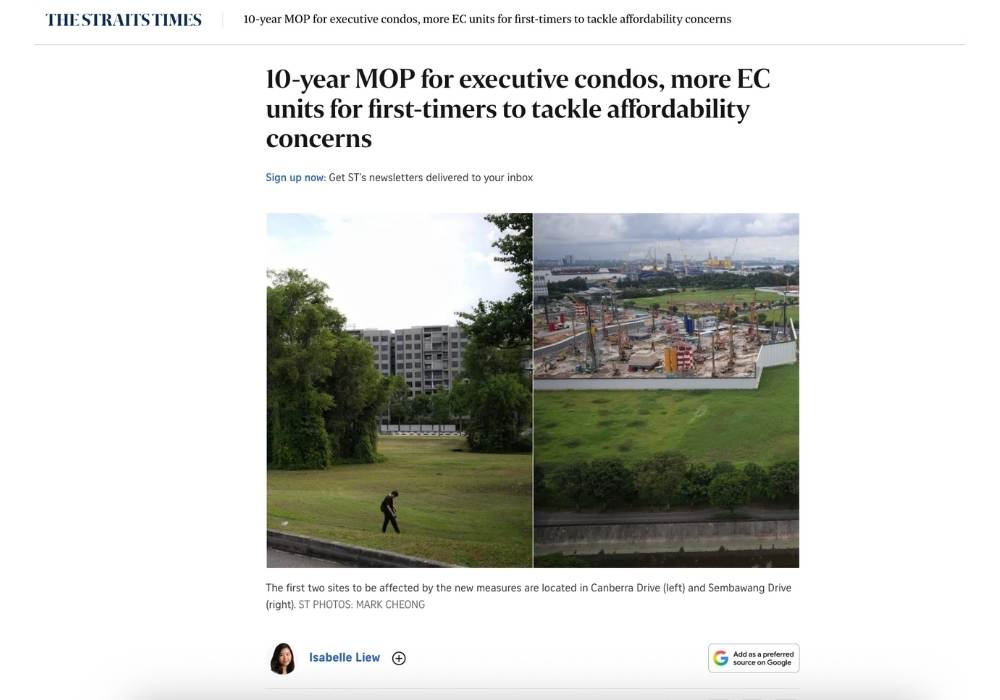
The Straits Times report "10-year MOP for executive condos, more EC units for first-timers to tackle affordability concerns," covering Singapore's May 2026 EC rule changes, with the first affected sites at Canberra Drive and Sembawang Drive.
Source: The Straits Times — "10-year MOP for executive condos, more EC units for first-timers to tackle affordability concerns" (Isabelle Liew). Photo: Mark Cheong / ST.

In May 2026, the Government announced a significant overhaul of the EC scheme.

Here’s what actually changed — and, just as importantly, who it applies to.

The new measures apply to new EC Government Land Sales sites with tender closing dates on or after 8 May 2026.

For those future projects:

Measure
Old Rule
New Rule
(8 May 2026 Sites)
Measure MOP
Old Rule 5 years
New Rule 10 years
Measure Full privatisation
Old Rule Year 10
New Rule Year 15
Measure First-timer quota
Old Rule 70% at launch
New Rule 90%, with a 2-year priority window
Measure Deferred Payment Scheme
Old Rule Available
New Rule Removed
Note: This table is a simplified overview. Always check the latest official rules for the specific EC project before making a decision.

The key point for you: if you already own an EC, or your EC came from a project whose tender closed before 8 May 2026, your existing 5-year MOP and 10-year privatisation timeline still apply.

Your flexibility hasn’t changed.

What has changed is the context. Because future ECs will lock buyers in for a decade, owners of existing 5-year-MOP ECs hold something newer projects won’t offer for years: an earlier, more flexible resale window.

That doesn’t automatically make every older EC more valuable — price still depends on location, age, layout, nearby supply and demand.

But it does make reviewing your position worthwhile.

Always confirm the rules that apply to your specific unit with HDB before deciding.

Your Sale Proceeds and CPF Refund, Explained Simply

A strong selling price is only the headline.

What matters is what remains after the maths:

Sale price − outstanding loan − CPF used plus accrued interest − selling costs = your cash proceeds.

Two reminders often catch owners off guard.

First, your CPF refund returns to your CPF, not your pocket.

The CPF you used, plus accrued interest, goes back into your CPF Ordinary Account on completion. It is available for your next home — but it is not the same as cash in hand.

If this part feels confusing, it helps to understand how CPF accrued interest can quietly reduce your usable sale proceeds.

Second, a big “gain” can shrink fast.

“My EC made $500K” is a starting figure, not your take-home amount.

The accrued interest alone can be substantial after several years.

Before you fall in love with the next home, it is worth taking one step back to get an indicative valuation and map your actual numbers first.

Your 6 Options After EC MOP (At a Glance)

This is a starting frame. The right path depends on your numbers, family needs and timeline.

Path
May Suit You If…
Main Trade-Off
Key Thing to Check
Path Sell & upgrade to condo
May Suit You If… You want a better home or longer private-property plan.
Main Trade-Off Higher price and monthly commitment.
Key Thing to Check Proceeds, CPF refund, new loan, BSD, ABSD and repayment.
Path Sell & buy HDB
May Suit You If… You want to cash out and lower pressure.
Main Trade-Off Wait-out rules and HDB eligibility may apply.
Key Thing to Check Eligibility, 15-month rule, timeline and cash retained.
Path Hold & rent out
May Suit You If… You have another home and want income.
Main Trade-Off Funds stay tied to the EC.
Key Thing to Check Net yield, mortgage, tax, vacancy and opportunity cost.

Path Sell one, buy two
May Suit You If… You and your spouse want separate ownership.
Main Trade-Off Higher complexity and risk.
Key Thing to Check Separate loans, CPF/cash split, ABSD and two mortgages.
Path Decouple / restructure
May Suit You If… You want to keep the EC and free one name.
Main Trade-Off Highly fact-specific.
Key Thing to Check Valuation, loan takeover, CPF refund and stamp duties.
Path Wait until Year 10
May Suit You If… You’re comfortable holding for the wider pool.
Main Trade-Off Next home may cost more later.
Key Thing to Check Upside versus CPF interest, age, loan tenure and prices.

1. Sell EC and Upgrade to a Condo

The most common post-MOP move: unlock your equity, refund CPF with accrued interest, and redeploy the rest into a private home — for a better location, a right-sized space, or a stronger long-term plan.

If you are comparing your next private home, this new launch vs resale condo guide may help you weigh the trade-offs before shortlisting.

Selling first usually gives a steadier base because you plan with real proceeds, not estimates.

It can also help manage ABSD exposure depending on your profile.

The question to ask: after everything settles, does the next home still feel comfortable?

2. Sell EC and Buy HDB

Not everyone wants to upgrade. Converting part of your gain into breathing room — lower expenses, more cash reserves, a simpler commitment — is a sensible move, not a “downgrade,” if it fits the life you want.

If you are planning to move back to HDB, understand the HDB resale process before setting your timeline.

But sequence it carefully. As a former private-property owner, you may face a 15-month wait-out before buying a non-subsidised resale HDB flat. Those aged 55 and above moving to a 4-room or smaller flat are generally exempt.

Check eligibility and timing first — then think about flat type and budget.

3. Hold and Rent Out the EC

After MOP you may rent out the whole unit, subject to prevailing rules and your own housing arrangement.

Holding can work — but base it on real numbers, not “prices may keep rising.” Weigh realistic rent against mortgage, maintenance, property tax, repairs, vacancy and interest-rate risk, plus the opportunity cost of capital staying locked in.

Holding works best when yield, loan comfort and a future exit plan all line up.

4. Sell One, Buy Two

Sell the EC, then use combined cash and CPF refunds to support two purchases under separate owners — one for stay, one for investment.

It can create real optionality, but it isn’t casual. Each buyer, each loan and each ABSD position must be assessed individually.

The honest test: if rental income stopped for six months, could the household still carry both calmly? If not, the plan is too tight.

5. Decouple / Restructure Ownership

One spouse buys over the other’s share, so one owner keeps the EC while the other is freed to buy separately.

The exiting owner’s CPF used (plus accrued interest) is refunded; stamp duties, legal fees, valuation and loan restructuring apply.

Note that ABSD is payable on the share being transferred in a decoupling — treat it as a fresh purchase.

This is highly fact-specific: check valuation, loan eligibility, CPF refund and legal feasibility with the right professionals before building a plan around it.

6. Wait Until Year 10 (Full Privatisation)

At Year 10 the buyer pool may widen and the development may behave more like a private condo.

Valid reasons to wait — but trade-offs too: your next home may cost more later, your loan tenure shortens as you age, CPF accrued interest keeps building, and new nearby supply may compete.

Waiting is smart only when the likely benefit of holding outweighs the cost of delay.

If it supports your family plan, it’s sensible.

If it only postpones a move you already need, it isn’t.

Real EC Case Snapshots (After MOP)

Many owners have seen strong gains after MOP, especially when they bought at an earlier launch and held through a rising market.

Development
Type / Size
Holding
Purchase → Sold
Est. Gain
Development Inz Residence
Choa Chu Kang
Type / Size 5BR / 1,711 sqft
Holding ~8 yrs
Purchase → Sold $1.26M → $2.36M
Est. Gain ≈ $1.10M (+87%)
Development Hundred Palms
Yio Chu Kang
Type / Size 3BR / 969 sqft
Holding ~8 yrs
Purchase → Sold $794K → $1.86M
Est. Gain ≈ $1.07M (+134%)
Development The Brownstone
Canberra
Type / Size 3BR / 1,055 sqft
Holding ~10 yrs
Purchase → Sold $744K → $1.45M
Est. Gain ≈ $706K (+95%)
Development Treasure Crest
Anchorvale
Type / Size 3BR / 1,249 sqft
Holding ~9 yrs
Purchase → Sold $973K → $2.02M
Est. Gain ≈ $1.04M (+107%)

Gains are meaningful — but they’re the first layer.

The real question is what that profit can safely help you do next.

The same gain that lets one family upgrade comfortably may not stretch for another whose next home is far pricier or whose CPF refund is high.

Don’t copy someone else’s move; run your own.

Note: These figures are indicative, opinion-based examples drawn from selected transaction comparisons and should be verified against the latest URA caveat data before you rely on them.

Estimated gains do not account for outstanding loan, CPF refund, accrued interest, selling costs, renovation or stamp duties. Treat all calculations here as a calm starting point, not financial advice — verify your own numbers with the relevant professionals.

Your EC Decision Checklist

Run through these before you commit to any path:

  • Map your numbers: sale price, outstanding loan, CPF used + accrued interest, net cash proceeds.

  • Confirm your next-home budget: loan eligibility (IPA), BSD, any ABSD exposure, monthly repayment.

  • Check the rules for your move: HDB 15-month wait-out (if buying resale HDB), ABSD remission timelines, decoupling feasibility.

  • Plan the timeline: sell→buy sequence, completion dates, CPF refund timing, temporary housing.

  • Align the family: spouse/co-owner agreement on timing, risk and priorities.

  • Pressure-test comfort: could the household stay calm if rates rose or rental income paused?

Numbers to Verify Before You Decide

Don’t plan around estimates.

Confirm: outstanding loan balance · CPF used plus accrued interest · estimated valuation · Buyer’s Stamp Duty · any ABSD exposure · monthly repayment under a stress-test rate · your timeline and sequencing · temporary-housing cost if sale and purchase overlap · and your next-home affordability after everything settles.

Visualise Your Numbers — Calculator

Estimate what may remain after your EC sale, and get a first look at your possible next-home budget. This tool gives an indicative picture only — speak with your banker for your confirmed loan amount.

Your Indicative Outcome

Net Cash Proceeds
Available CPF Post-Refund
Indicative Next Loan
Estimated Purchase Range

Assumptions: TDSR cap 55%. Monthly capacity ≈ 55% of income minus commitments. Interest rate = 4% p.a., tenure capped at years, maximum 30 years or until age 65. Figures are estimates only.

Numbers are a mirror — not a decision. Use this as a calm starting point; then we can map your timing, options, and comfort level together.

Let's Review Your EC Position Together

If your EC has reached MOP, this may be a good moment to pause and review where you stand — not because you must sell, but because your options have changed.

We can walk through your estimated sale price, outstanding loan, CPF refund, cash proceeds, next-home affordability and a realistic timeline — then compare what fits your family: sell, hold, rent, upgrade, buy HDB, restructure, or wait until Year 10.

Sometimes the steady answer is to move.

Sometimes it’s to wait.

Either way, the decision should rest on a clear view of your numbers and the life you’re planning next.

FAQ: Should I Sell My EC?

FAQ: Should I Sell My EC?

Should I sell my EC after MOP, or wait until Year 10?

Sell after MOP if the gain moves your family forward and your next home is comfortable after CPF and loan are settled. Wait only if holding gives your EC a stronger position and your household stays comfortable in the meantime. Waiting just to postpone a needed move rarely pays off.

Can I sell my EC before 5 years?

Generally no. ECs must meet the 5-year MOP from TOP before open-market sale. Rare exceptions, such as divorce, loss of citizenship or hardship, are subject to HDB approval.

Who can buy my EC after MOP?

Years 5–10: Singapore Citizens and PRs. From Year 10, when the EC is fully privatised, foreigners and entities may enter the buyer pool too. Right after MOP, your biggest buyer pool is usually local HDB upgraders — price and market for that segment.

Do the 2026 EC rule changes affect my existing EC?

No. The 10-year MOP and 15-year privatisation timeline apply to new GLS EC sites with tenders closing on or after 8 May 2026. Existing ECs keep their 5-year MOP and 10-year privatisation timeline.

How much CPF must I refund when I sell my EC?

All CPF used for the purchase, plus accrued interest, returns to your CPF Ordinary Account on completion. It is available for your next home — but it goes back to CPF, not to you as cash.

Do I pay ABSD when I sell my EC and buy my next home?

If you sell first and own no other property when you exercise the next OTP, ABSD generally does not apply, subject to IRAS rules. Buy before selling and ABSD is payable upfront, refundable only under specific conditions — for example, married couples with at least one Singapore Citizen, within the stipulated timeline.

Do I pay a resale levy when I sell my EC?

A resale levy generally applies only when you buy a second subsidised flat, such as BTO, DBSS or EC. Selling your EC to buy a private condo or a non-subsidised resale HDB flat does not, on its own, trigger a resale levy. Confirm your own history with HDB.

Can I buy a resale HDB after selling my EC?

Often yes — but as a former private-property owner, you may face a 15-month wait-out before buying a non-subsidised resale flat. Those aged 55 and above moving to a 4-room or smaller flat are generally exempt. Check your status with HDB before fixing a timeline.

Will I definitely make a profit after 5 years?

Many owners have, but outcomes vary by location, layout, holding period and market cycle. Run your net numbers after loan redemption, CPF refund with interest, and selling fees before deciding.

This article is general information, not financial or legal advice. All rules and figures should be verified against HDB, URA, CPF Board and IRAS for your specific situation.

What My Clients Say | Genuine Experiences

Real stories, real experiences—because your journey deserves nothing less than the best.

Media Mention

Sharing my vision on MoneyFM 89.3 — how technology and empathy can work together so buyers, sellers, and even agents stay in sync from first thought to final handover.

This isn’t just about the property you choose. It’s about how you move through the decision.

Listen to the conversation below if you want to see how I guide clients through big property moves with structure, calm, and accountability.

Awards and Accolades

Self Introduction

blog-pic

Hi, I’m Rick Long

With decades of experience in Singapore’s real estate market, I’ve had the privilege of being mentioned in media outlets such as Channel NewsAsia, The Straits Times, and 99.co.

Over the years, I’ve written extensively on the local property landscape — tackling the real questions buyers and sellers face, and helping them navigate each step with greater clarity and confidence.

Many of my clients have become long-time friends — their trust and kind reviews continue to inspire me to raise the bar in everything I do. 

I believe real estate should be strategic, seamless, and deeply aligned with your life’s journey.

This Post Has 4 Comments

  1. Chan

    With the current situation. Whats your take on moving forward. My unit is going MOP soon. Have not decided if i should sell

    1. Rick Huang

      Hi Mr Chan. thanks for reading our article. I would suggest assessing your current situation/life stage. Understand your priority in moving forward. We would work out the financial calculation with you and see the options available.

  2. Jenny Teo

    Thank you for the information. For option 2 – sell EC buy resale HDB – am I able to buy a resale hdb first then sell my EC? What is the time frame?

    1. Rick Huang

      Hi Jenny,

      Yes you can purchase a resale Hdb 1st. Time frame is 6month to sell after completion of the Hdb.

Leave a Reply