How Much Is Property Agent Commission in Singapore?

Quick answer: Singapore has no fixed property agent commission.

The Council for Estate Agencies does not set or publish rates, and the amount is negotiable and recorded in the agreement you sign before work begins. What sellers and buyers pay varies by segment and by who represents whom. GST applies only where the agency is GST-registered.

An estate agency agreement on a desk with a pen and calculator, representing the negotiable commission terms a Singapore seller agrees before appointing an agent

Table of Contents

Does CEA set a standard commission rate in Singapore?

No. CEA does not fix commission rates and does not publish guidelines on what they should be. Its consumer guidance states plainly that commissions are not fixed and that you are free to negotiate the amount or the rate.

The reason is deliberate: leaving rates open lets market forces price different levels of service.

So when you hear that “the standard rate is 2%”, what you are hearing is convention, not regulation. Conventions are useful — they tell you where most conversations start.

They are not entitlements, and nobody is obliged to meet them in either direction.

The number that governs your transaction is the one written into your agreement. Everything else on this page is context for that conversation.

Property agent commission rates: what sellers and buyers pay

No official body publishes commission rates, so the figures below are observed market practice drawn from industry guides published in 2026 — not a schedule, a minimum, or a benchmark you should expect to be offered.

Property agent commission in Singapore, by transaction type: who usually engages the agent, the range commonly quoted in the market, and where the binding figure is actually set. Observed practice, not a regulated schedule.
Transaction Who usually engages an agent Range commonly quoted Where the actual number is set
HDB resale — seller Seller 1%–2% of sale price Your estate agency agreement
HDB resale — buyer Buyer, optionally 0%–1% of purchase price Your estate agency agreement
Private resale — seller Seller 1%–2% of sale price Your estate agency agreement
Private resale — buyer Buyer, optionally 0%–1% of purchase price Your estate agency agreement
New launch — buyer Buyer, optionally Usually nil; the developer pays the marketing agent Developer's appointment terms

Source: ranges observed across Singapore industry commission guides published in 2026. No regulator publishes commission rates. As of August 2026. Add 9% GST where the agency is GST-registered.

Two things are worth noticing in that table.

The right-hand column is the same in almost every row — which is the whole point.

And the buyer rows say “optionally”, because whether a buyer engages and pays their own agent is now the most variable part of the picture.

What does agent commission actually cover?

Commission covers whatever the agreement says it covers — which is why the useful exercise is not asking what a fee should be, but checking what sits inside it.

Some of that is required of every agent regardless of what you pay.

The rest varies.

What property agent commission covers in Singapore, by layer: the duties CEA requires of every agent regardless of fee, what engagements commonly include, and the scope that varies from one engagement to the next.
Layer Examples Set by
Required of every agent Consent before advertising; accurate, verified information in advertisements; conveying all offers, counter-offers and expressions of interest; declaring conflicts and referral fees; guiding you through the required forms CEA rules — applies at any fee level
Commonly included Viewings, negotiation, drafting and checking the option, coordination with HDB or your bank, attendance at completion The engagement
Varies considerably Photography and video, floor plan, home preparation advice, portal placement and spend, structured progress reporting, a written pricing and sequencing plan The engagement

Reference table. The middle and lower rows describe what engagements commonly include, not a standard package — nothing obliges any agent to offer them, and nothing obliges you to pay for them.

Read the bottom row as a set of questions, not a specification.

Any of those items can be present in a low fee or absent from a high one.

What marketing does a property listing get?

Marketing scope is one of the widest variables in any engagement, and it is rarely written down unless someone asks.

The pieces worth naming specifically: photography and whether it is nicely shot, video or a walkthrough, a floor plan, which portals the listing appears on, and whether there is paid placement behind it.

Two accuracy points sit underneath all of this, and they are yours to protect, not only your agent’s.

Advertisements must not contain false or misleading material, and material information about the property — lease term, floor area and the like — must be accurate and verified.

Enhanced or staged imagery, and floor plans that do not match the built layout, are where that requirement gets tested.

If images are enhanced, that should be disclosed.

Useful questions before you sign: which of these are included, who pays for them if the property does not sell, and who owns the photography afterwards.

A 60-second demonstration film showing the listing-video format. The property and the distances shown are illustrative. Worth asking any agent to show you their own before you agree what’s included in the fee.

Who pays for the marketing, and what happens if you withdraw

Marketing a property costs real money, and most of it is spent before anyone has bought anything.

As a rough guide, professional video with enhanced photography commonly runs somewhere around S$500 to S$800 per property, and paid placement on social platforms is often budgeted at roughly S$15 to S$30 a day for as long as the listing is running.

Home preparation or staging, where it is used, sits on top of that.

In most engagements the agent carries that spend and recovers it from the commission at completion.

That matters for two reasons. If the property does not sell, who absorbs what has usually never been discussed.

And if you withdraw halfway through, the money has generally already gone.

So the questions are: which costs are carried by whom, are any charged to me separately, and what happens to them if I withdraw or the property does not transact.

This is also the plainest answer to what exclusivity is for.

An agency asked to commit spend up front has a reason to want a defined period in which to recover it.

Whether that trade is worth it to you is your call — but it is a trade, not a formality.

These figures are illustrative and opinion-based, drawn from current practice — not a valuation or financial advice.

Costs vary considerably case by case. Human error is possible; verify against your own quotes before relying on them.

How will your agent keep you updated?

Some of this is your entitlement, not a service level.

Your agent must seek your consent before advertising, and must inform you of all offers, counter-offers or expressions of interest from interested parties or their agents.

That last one is broader than most sellers assume — an expression of interest counts, not only a formal offer.

If you are only hearing from your agent when a number arrives, you are not receiving the baseline.

Above that baseline, two patterns are common, and they are genuinely different.

In the first, contact happens when something happens: an offer arrives, or a viewing is scheduled.

Between those moments, the seller has little visibility.

In the second, updates follow an agreed rhythm.

The seller knows how many viewings were held and what feedback came back, which stage of the process they are in, and — the part that matters most — when a pricing review is due and what would trigger it.

That third element is the one sellers most often wish they had.

Viewing response is the only real feedback available before an offer exists.

Without it, a seller cannot tell the difference between a number that is wrong and a number that is right in a slow week — and that distinction is time-sensitive.

Ask which pattern you are getting, how often, and in what form.

What should a selling or buying plan contain?

A plan is a document, not a reassurance.

Whatever the fee, it is fair to ask for the approach in writing before marketing begins, and to see the four things that make a plan usable.

The first is the pricing basis: which comparable transactions the asking price is drawn from, and why those.

The second is timing and sequencing — where this sale or purchase sits against your other commitments, particularly if you are selling and buying in the same window.

The third is the buyer profile the marketing is aimed at. The fourth is the contingency: what happens, and at what point, if the property does not move.

A plan does not guarantee an outcome, and no agent can promise one. What it does is make the reasoning visible, so you can question it while there is still time to change it.

Before you speak to any agent

Build your own brief

Answer a few questions about your place and what you are hoping for. You will get back a short list of the things worth confirming in writing — useful with whoever you end up appointing. Send it over if you would like a conversation, or just keep it.

1. What are you hoping to get out of it?

Pick whichever is closest. None of these commit you to anything.

2. What are you selling?

3. Which floor?

4. What condition is it in?

Your own read is fine — nobody is grading it.

5. How soon are you hoping to sell?

6. What is behind the move?

Optional. It changes the sequencing, not the advice.

7. What stands out about your place?

Pick any that apply.

Anything else worth mentioning?

0/300

Your brief

Nothing selected yet.

Worth confirming in writing

Answer a couple of questions above and this list will build itself.

    If WhatsApp did not open, tap here.

    This builds a discussion list, not a valuation, a quotation or financial advice. Nothing is stored on this page — your answers travel only in the message you choose to send, from your own WhatsApp. Verify any figure discussed against official sources before relying on it.

    What should your estate agency agreement specify?

    The agreement is where your commission stops being a conversation and becomes a term.

    CEA provides Prescribed Estate Agency Agreements and describes them as a binding contract between you and the agency, detailing the duties of the agency and agent, the agreed commission rate, and the requirement to declare any actual or potential conflict of interest.

    CEA calls this a recommended agreement and advises you to use one — including when the agent is someone you already know. It is strong practice, not a statutory precondition.

    That distinction matters, because a term you assumed was standard is a term nobody actually inserted for you.

    Exclusive and non-exclusive — the difference that catches sellers

    You can sign either.

    Under an exclusive agreement you appoint one agency for a validity period of up to three months, and during that period you are liable to pay commission to that agency even if you sell through another agency or complete the sale entirely on your own.

    There is also a tail.

    For three months after the validity period ends, you remain liable to pay commission to the appointed agency if the property transacts with a party that agency introduced during the validity period.

    Under a non-exclusive agreement you may appoint more than one agency, with no specified validity period, and you pay whichever agency completes the transaction.

    Neither is better.

    Exclusivity is something you are giving, and it is reasonable to ask what commitment you are getting in return for it — including whether the agency is carrying marketing costs up front, which is usually the substantive reason a defined period is asked for.

    What is not reasonable is discovering the tail clause after the fact.

    How to check a property agent before you sign

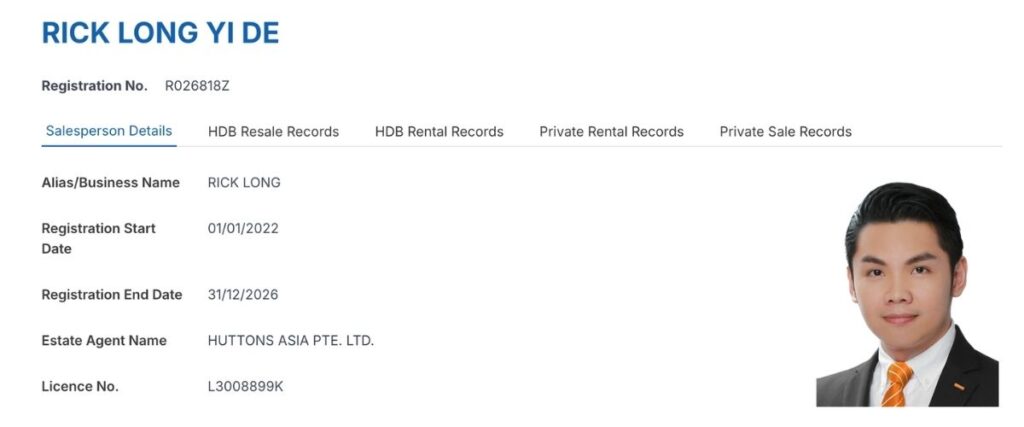
    CEA Public Register entry for salesperson Rick Long, showing registration number, validity dates, Huttons Asia as the estate agent and tabs for HDB and private transaction records
    A CEA Public Register entry. Searching by phone number returns the agent's registration status, validity dates, agency and transaction records.

    Every agent in Singapore must be registered with CEA through a licensed agency, and each has a unique registration number.

    It is an offence to carry out estate agency work without valid registration.

    The CEA Public Register lets you check one before you commit.

    Search it by the phone number the person is using or the number in the advertisement. CEA’s guidance is that if the number does not lead to an agent’s profile, it is likely a scam — even where the name and registration number themselves appear on the register.

    The register shows more than validity.

    You can see the residential transactions the agent facilitated in the last two years and which party they represented, their industry accolades, and any disciplinary records.

    About the author

    Rick Long is an Associate Senior Division Director at Huttons Asia.

    Through YouHome.sg — Right Property Matters — he shares the frameworks, tools and field experience behind his advisory work, helping Singapore buyers and sellers across HDB, EC and private residential decisions with structured, calm, next-step guidance.

    CEA Reg. R026818Z · Huttons Asia · YouHome.sg

    For more Singapore property planning tips, follow me on Instagram.

    @agent_rick_long

    Your support means a lot.

    Your next step

    Article read: 20% complete

    Every engagement is different — asset type, scope, who represents whom.

    Bring your numbers and we’ll work through what a fair fee looks like for yours.

    YOUR PROGRESS20%

    ✓ Article read — the groundwork is done.

    1. What should the session cover?

    2. How much time shall we set aside?

    3. Pick a day to meet Rick

    4. What time of day?

    Request sent — 100% ✓
    Rick will confirm the session with you directly on WhatsApp.

    If WhatsApp didn’t open, tap here.

    This sends a session request via your own WhatsApp — Rick confirms the timing and meeting place with you personally. Nothing is stored on this page.

    Frequently asked questions about agent commission

    Is there a legal commission rate for property agents in Singapore?

    No. CEA does not set or publish commission rates, and states that commissions are not fixed and are open to negotiation. Any percentage you have heard is market convention. The binding figure is the one in your estate agency agreement.

    Do I still owe commission if I find the buyer myself?

    Under an exclusive agreement, yes. During the validity period you are liable to pay the appointed agency even if you complete the sale on your own, and the liability extends three months past the period for a buyer that agency introduced. Under a non-exclusive agreement, you pay the agency that completes the transaction.

    Is GST always added to agent commission?

    Only where the agency is GST-registered. The rate is 9%. Ask whether the figure you have been quoted includes or excludes it before you agree to it.

    Who do I pay — the agent or the agency?

    The agency. CEA's guidance is to pay the property agency and not the individual agent, and only once the transaction is completed.

    Can the same agent represent me and the other party?

    No. Acting for and collecting commission from both parties in the same transaction is an offence. An agent may assist the other party with paperwork if you consent and they state they are not acting for that party or collecting from them.

    How long does an exclusive agreement last?

    Up to three months as a validity period, with a further three months during which you remain liable for commission if the property transacts with a party the agency introduced during that period.

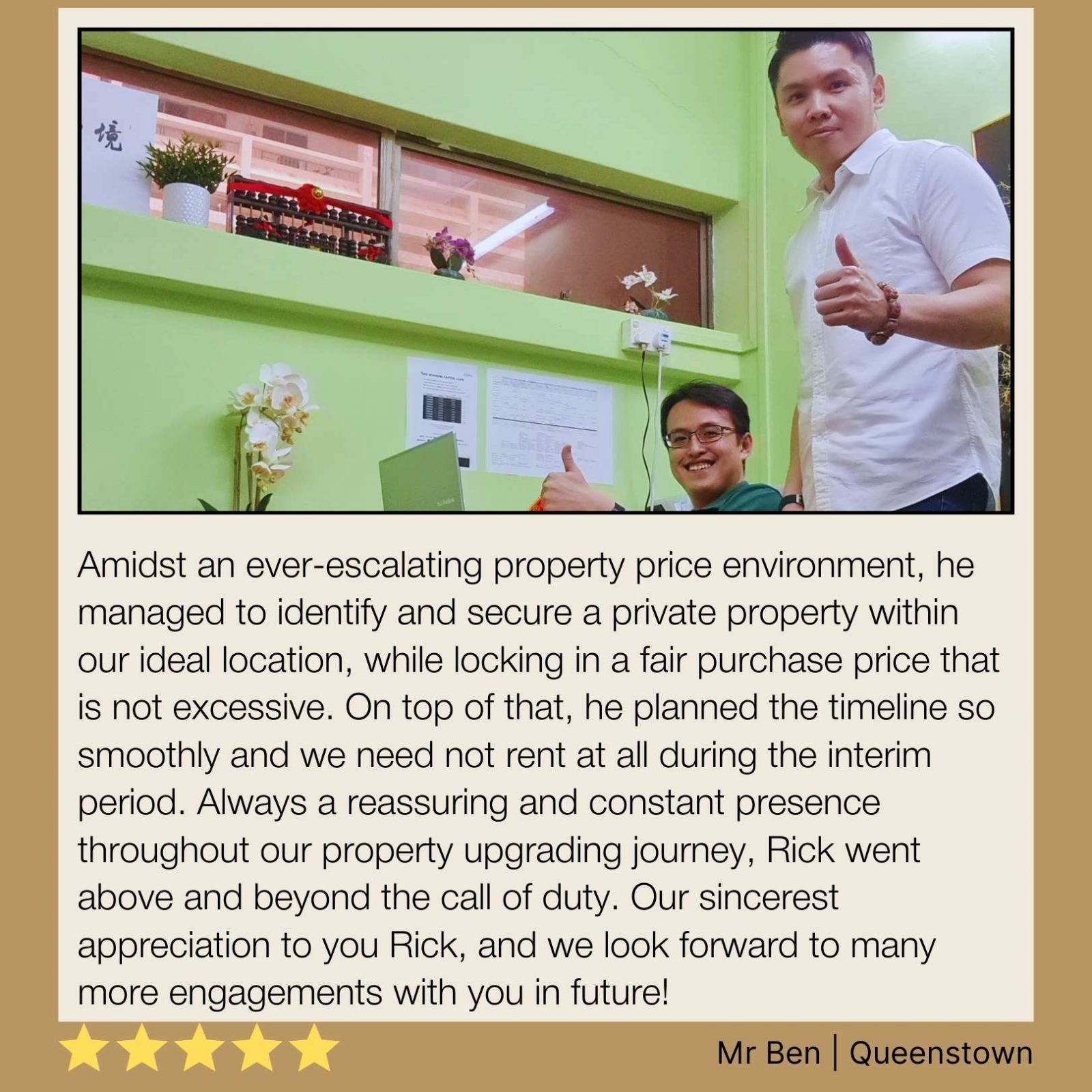
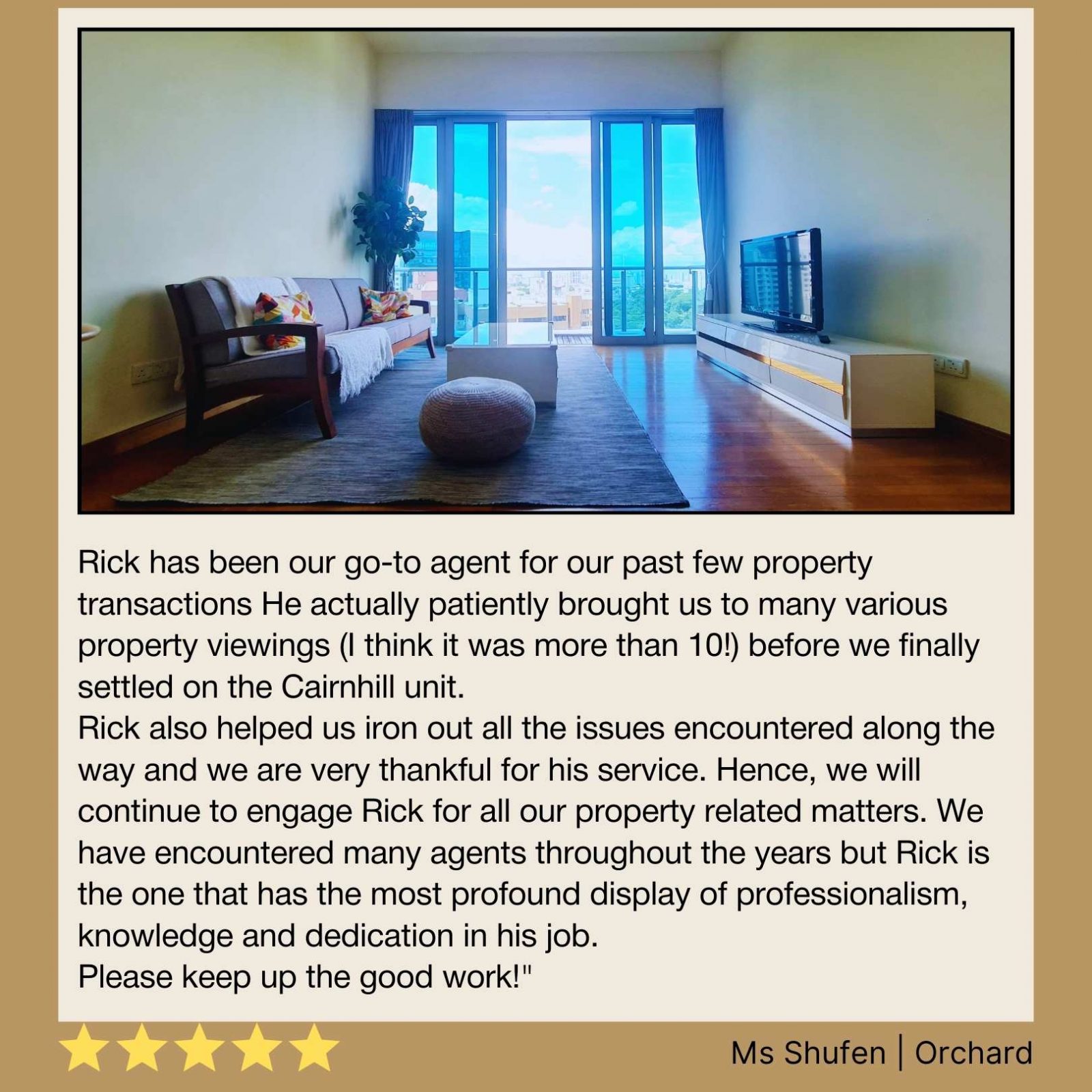
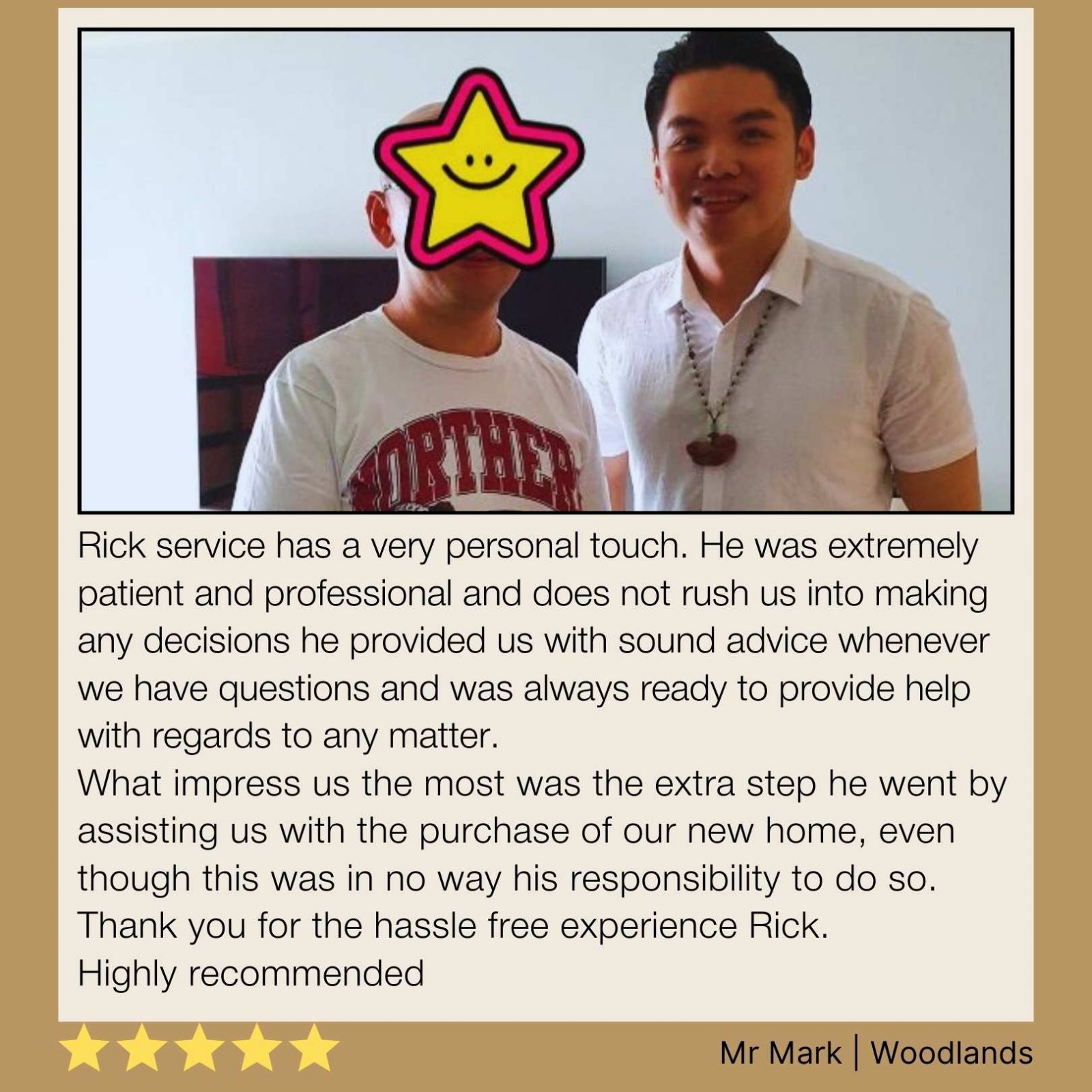
    What My Clients Say | Genuine Experiences

    Real stories, real experiences—because your journey deserves nothing less than the best.

    Awards and Accolades

    Rick Long · Associate Senior Division Director, Huttons Asia · CEA R026818Z

    Rick Long is an Associate Senior Division Director at Huttons Asia (CEA Reg. R026818Z). Through YouHome.sg — Right Property Matters — he shares the frameworks, tools and field experience behind his advisory work, helping Singapore buyers and sellers across HDB, EC and private residential decisions with structured, calm, next-step guidance.

    This Post Has 3 Comments

    1. Entityx

      I think its fair to pay comm to an agent, especially in today’s market where the agents have to work harder. However based on past experience we do tend to get some agents that give me the feeling that they just want to close the deal at a lower price which can be quite sian at times.

      1. Rick Huang

        Hi Entityx,

        Thanks for your comment, yes you are right. More often than not, we tend to hear about the bad experiences of clients too. But ultimately, I guess regardless of the trade we are in, there will always be a minority group that is not motivated to act in the clients’ interest. At the same time, there is also another group of us that welcome comments, and feedback as factors to push us towards continuous improvements and towards a win-win situation for everyone.

    Leave a Reply